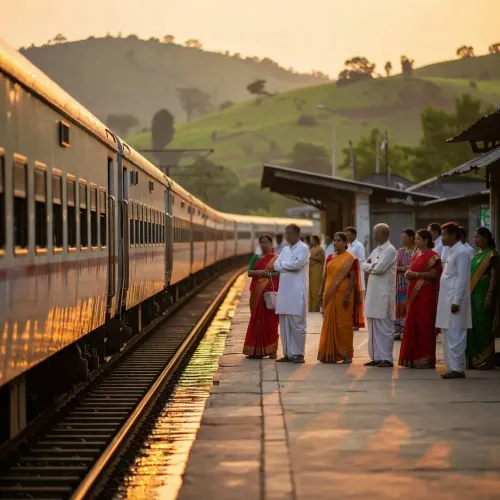
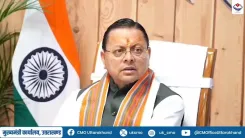
CM Sai launches Raipur-Rawghat, Raipur-Kurud rail services
Synopsis
Chhattisgarh CM Vishnu Deo Sai launched two new rail services — Raipur-Rawghat and Raipur-Kurud — on Vijayadashami 2026, positioning them as catalysts for trade, industry, and employment under PM Modi's 'double engine' development model.
Key Takeaways
Two new rail services — Raipur–Rawghat and Raipur–Kurud — were launched on Vijayadashami, 20 October 2026 .
CM Vishnu Deo Sai credited the launches to PM Narendra Modi's guidance and the 'double engine' governance model.
The Raipur–Rawghat corridor is strategically significant for freight movement through Chhattisgarh's mineral-rich interior.
The Raipur–Kurud route improves commuter and trader access to the state capital.
Union Budget rail investments in Chhattisgarh since 2014 have focused on connecting tribal and mineral districts to economic hubs.
Utilisation data on passenger and freight volumes will determine the scale of future network expansion in the state.
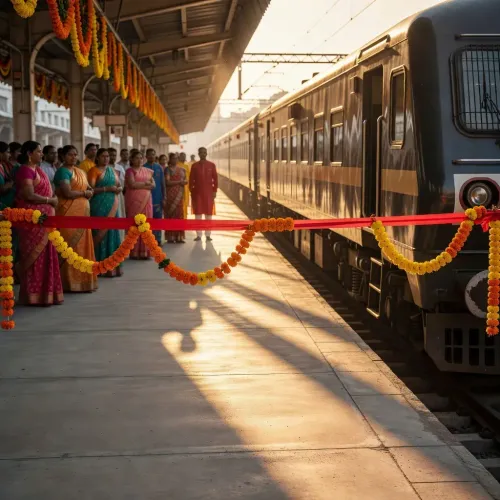
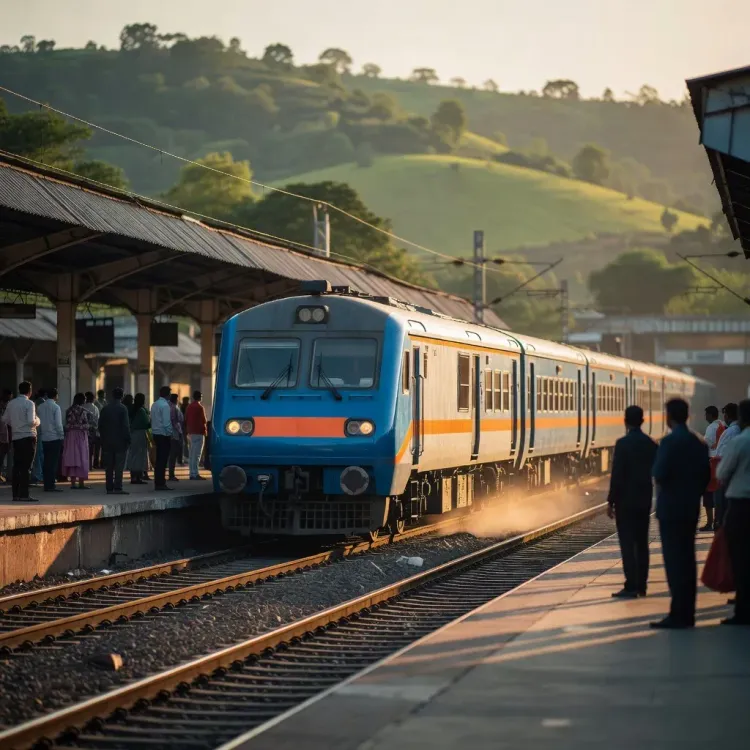
On the auspicious occasion of Vijayadashami, Chhattisgarh Chief Minister Vishnu Deo Sai flagged off two new rail services — the Raipur–Rawghat and Raipur–Kurud routes — opening a fresh chapter in modern rail connectivity for the state. The launches, credited to the guidance of Prime Minister Narendra Modi, arrive on Tuesday, 20 October 2026, framed as a milestone in the 'double engine' development model that the BJP deploys to describe coordinated central-state governance.
Two routes, two distinct economic corridors
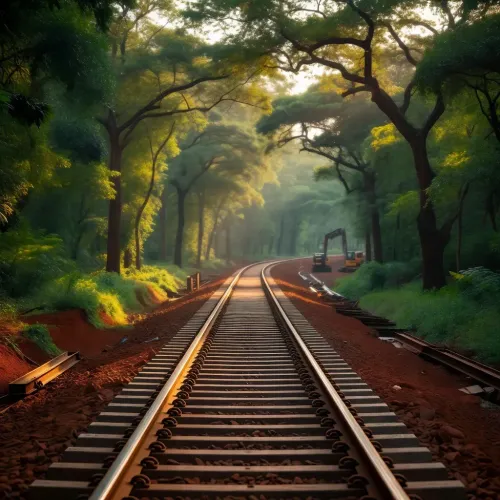
The Raipur–Rawghat line is the one with larger strategic weight. Rawghat, located in the mineral-rich interior of Chhattisgarh, has long been identified as a critical freight corridor — dense with iron-ore deposits and surrounded by tribal hinterland that has historically remained poorly connected to the state capital. A rail link here does not just move passengers; it moves ore, agricultural produce, and opportunity.
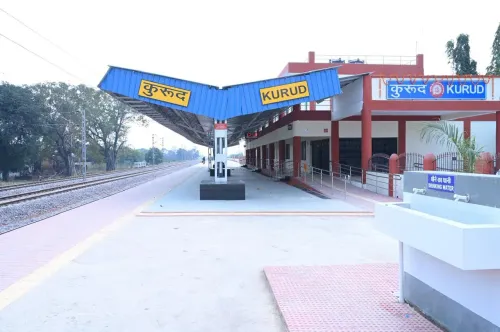
The Raipur–Kurud service, meanwhile, stitches a smaller but economically active town into the capital's orbit, easing daily commuter pressure and giving local traders faster access to Raipur's markets. Together, the two routes extend the network from the state's nerve centre outward in two directions — one toward industrial promise, one toward commuter relief.
Vijayadashami as a launch platform
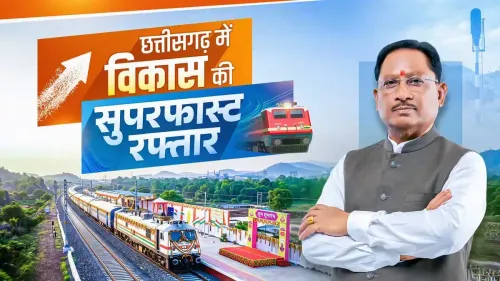
The choice of Vijayadashami as the inauguration date is deliberate political theatre — the festival, symbolising the victory of good over evil, has long been a preferred moment for government launches in India. CM Sai posted in Hindi: 'डबल इंजन की रफ्तार से विकास की पटरी पर दौड़ रहा नया छत्तीसगढ़' ('New Chhattisgarh is racing on the track of development at double-engine speed'). The phrase 'double engine' — Modi government at the Centre, BJP government in the state — is the BJP's go-to metaphor for aligned fiscal and administrative momentum.
Rail investment as a BJP signature in Chhattisgarh
Since 2014, Union Budget allocations have repeatedly included new rail lines, doubling projects, and electrification works across Chhattisgarh, with a stated aim of connecting tribal and mineral districts to economic hubs. The Rawghat corridor, in particular, has featured in central railway planning for years given its freight potential. Today's launch represents one visible output of that long-budget lineage arriving at an operational reality.
For Chhattisgarh's industrial base, better rail connectivity directly reduces logistics costs — a factor that shapes whether mining and manufacturing clusters in the state's interior can compete. For commuters and small traders along the Kurud belt, the calculus is simpler: fewer hours on roads, lower transport costs, a faster link to the capital.
The real test now is utilisation — whether freight volumes and passenger loads on both routes grow fast enough to justify the next phase of network expansion the state is clearly signalling it wants.
Point of View
And operationalising it signals that years of budgetary allocations are finally converting into ground reality. For CM Sai, who took office in late 2023, visible infrastructure launches are essential to building an independent governance identity ahead of future electoral cycles. The broader pattern — BJP-ruled states co-branding central rail investments as joint achievements — is becoming a durable feature of India's infrastructure communication playbook.
NationPress
20 Oct 2026
Frequently Asked Questions
What are the new train services launched in Chhattisgarh on Vijayadashami 2026?
Two new rail services were launched: the Raipur–Rawghat route and the Raipur–Kurud route, inaugurated on Vijayadashami, 20 October 2026, by Chhattisgarh Chief Minister Vishnu Deo Sai.
What is the significance of the Raipur–Rawghat rail line?
The Raipur–Rawghat corridor connects the state capital to a mineral-rich interior region of Chhattisgarh, making it strategically important for freight movement, particularly iron ore, as well as for improving connectivity in tribal areas.
What does 'double engine' development mean in this context?
'Double engine' is a BJP phrase describing the coordination between the BJP-led central government and a BJP-led state government, implying faster and better-funded development outcomes due to aligned political leadership.
Who launched the new Chhattisgarh rail services in October 2026?
Chhattisgarh Chief Minister Vishnu Deo Sai announced the launches, attributing them to the guidance of Prime Minister Narendra Modi.
How does the Raipur–Kurud rail route benefit locals?
The Raipur–Kurud service gives commuters and small traders in the Kurud area faster, more affordable access to Raipur, reducing travel time and logistics costs.