CM Rio backs FCRA Bill referral to JPC, cites Home Ministry

Synopsis
Nagaland Chief Minister Neiphiu Rio has welcomed the Lok Sabha motion to refer the FCRA Amendment Bill to a Joint Parliamentary Committee, crediting Union Home Minister Amit Shah and the central government for responding to stakeholder concerns and enabling wider public consultation on the foreign-funding legislation.
Key Takeaways
Nagaland Chief Minister Neiphiu Rio publicly welcomed the Lok Sabha motion to refer the FCRA Amendment Bill to a Joint Parliamentary Committee on August 13, 2026 .
Rio credited Union Home Minister Amit Shah and the central government for being responsive to concerns raised about the bill.
A JPC referral is a formal parliamentary mechanism that allows detailed, bipartisan scrutiny and wider stakeholder consultation before a bill is put to a vote.
The Foreign Contribution (Regulation) Act, 2010 governs foreign funding of Indian NGOs and civil society organisations; its 2020 Amendment drew criticism for stricter compliance requirements.
Northeastern states, including Nagaland, have a direct stake in FCRA regulations given the significant role of civil society organisations in the region.
The JPC's composition, terms of reference, and reporting timeline will determine the shape of the final legislation.
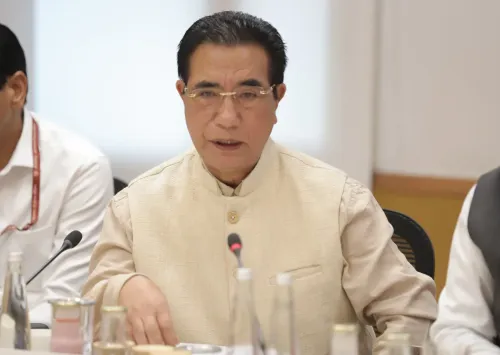
A regional leader's endorsement of a parliamentary procedure became a window into how India's foreign-funding law is being renegotiated — and who is driving that conversation. Nagaland Chief Minister Neiphiu Rio on Thursday, August 13, 2026, publicly welcomed the Lok Sabha motion to refer the FCRA Amendment Bill to a Joint Parliamentary Committee (JPC), praising Union Home Minister Amit Shah and the central government for responding to concerns raised about the proposed legislation.
Why the JPC route signals a deliberate pause
Referring a bill to a JPC is not a retreat — it is a calculated step toward building broader consensus. The mechanism brings together members from both houses of Parliament to examine legislation clause by clause, invite expert testimony, and surface stakeholder objections before a final vote. When the government chooses this path on a bill as consequential as an FCRA amendment, it signals that the concerns in circulation are serious enough to warrant structured scrutiny rather than a floor vote on a tight timeline.
The Foreign Contribution (Regulation) Act, 2010 governs how Indian individuals, associations, and NGOs receive and deploy foreign funds. Its last major overhaul — the 2020 Amendment — drew sustained criticism from civil society for tightening sub-granting rules, mandating Aadhaar linkage for registrations, and restricting the flow of foreign money through intermediary organisations. Any fresh amendment to the Act lands in that charged context.
Rio's role and the Northeast's stake in FCRA
Chief Minister Rio, who leads the Nationalist Democratic Progressive Party (NDPP) and heads the government in Nagaland, represents a state where civil society organisations — many of them church-linked — have historically relied on foreign contributions for development and humanitarian work. His public appreciation for the government's 'responsiveness to concerns raised' and its decision to 'facilitate wider consultation in the larger public interest' is therefore not merely procedural courtesy. It reflects a direct stake that northeastern states have in how FCRA regulations are calibrated.
The post also underlines the coordination between regional leaders and the Ministry of Home Affairs, which administers the FCRA. Rio's explicit acknowledgement of Amit Shah's leadership on this issue points to active back-channel engagement between state governments and the Union Home Ministry before the parliamentary motion was moved.
What the JPC process means for NGOs and civil society
For the thousands of NGOs and civil society organisations operating under FCRA registration, the JPC referral buys time and opens a formal channel for their concerns to be placed on record. The committee's eventual report will shape the contours of the final bill — and the breadth of consultation it conducts will determine whether the legislation that emerges addresses the compliance burden that the 2020 amendments imposed or tightens the framework further.
The JPC's composition, its terms of reference, and its timeline for reporting back to Parliament are the numbers to watch now.
Point of View
Which is disproportionately dependent on foreign contributions. By publicly crediting Amit Shah, Rio also reinforces the BJP-allied regional coalition's alignment with the Home Ministry on sensitive internal-security legislation — a relationship that matters when FCRA rules can determine the operational viability of church and humanitarian organisations in border states. The move fits a broader pattern of the Union government using JPC referrals to absorb political friction on contentious regulatory bills while retaining control over the final legislative outcome. Whether the JPC process translates into substantive relief for NGOs or merely delays a tighter framework will be the real test of the consultation Rio has praised.
NationPress
27 Sept 2026
Frequently Asked Questions
What is the FCRA Amendment Bill referred to a JPC?
The FCRA Amendment Bill proposes changes to the Foreign Contribution (Regulation) Act, 2010, which governs how Indian individuals, associations, and NGOs receive and use foreign funds. The Lok Sabha moved to refer it to a Joint Parliamentary Committee for wider consultation before a final vote.
What is a Joint Parliamentary Committee (JPC) in India?
A JPC is a bipartisan committee of members from both the Lok Sabha and the Rajya Sabha, formed to examine a specific bill or matter in detail. It can call witnesses, review evidence, and submit a report with recommendations to Parliament.
Why did Nagaland CM Neiphiu Rio welcome the FCRA Bill JPC referral?
Rio welcomed the referral because it allows wider public consultation on legislation that directly affects civil society organisations in states like Nagaland, where many NGOs and church-linked groups rely on foreign contributions for development and humanitarian work.
What did the 2020 FCRA Amendment change?
The Foreign Contribution (Regulation) Amendment Act, 2020, introduced stricter rules including a ban on sub-granting of foreign funds to other organisations, mandatory Aadhaar linkage for FCRA registrations, and tighter restrictions on how foreign money flows through intermediary bodies.
What should we watch next on the FCRA Amendment Bill?
Key things to watch include the composition and terms of reference of the JPC, which stakeholders it consults, and the timeline for its report — all of which will shape the final form of the legislation before it returns to Parliament for a vote.