Manish Tewari Highlights Constitutional Flaws in FCRA Amendment Bill
Synopsis
Congress MP Manish Tewari raises alarm over the Foreign Contribution (Regulation) Amendment Bill, 2026, citing serious constitutional concerns and potential threats to civil society organizations. He advocates for a thorough review before its passage.
Key Takeaways
Manish Tewari criticizes the FCRA Amendment Bill for constitutional flaws.
The Bill may affect civil society organizations reliant on foreign funding.
Concerns raised include arbitrary executive power.
Opposition calls for the Bill to be reviewed by a parliamentary committee.
The government emphasizes transparency and accountability in foreign fund usage.
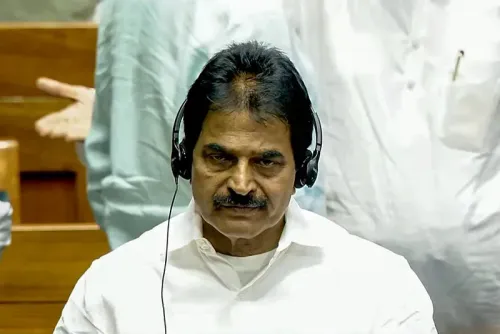
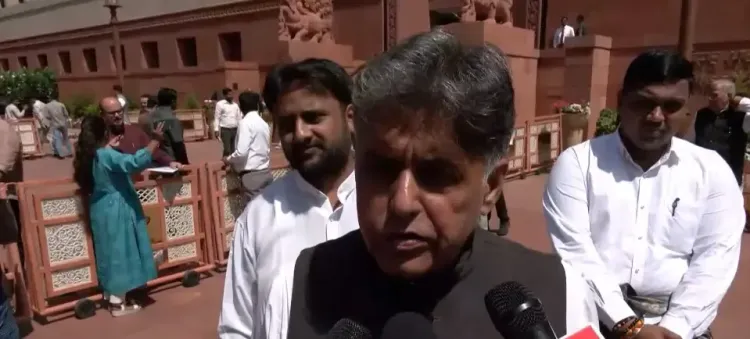
New Delhi, March 25 (NationPress) Congress MP Manish Tewari strongly condemned the introduction of the Foreign Contribution (Regulation) Amendment Bill, 2026, in the Lok Sabha, pointing out that the proposed measure is plagued by serious constitutional issues.
The Bill was presented by Union Minister of State for Home Affairs Nityanand Rai during the ongoing Budget Session.
Tewari indicated that the Congress party would urge the Speaker to send the Bill to a Standing Committee or a Joint Parliamentary Committee for thorough evaluation when it is discussed.
In comments to the media, Tewari expressed that the Bill poses major constitutional challenges. “The Foreign Contribution (Regulation) Amendment Bill suffers from grave constitutional flaws, particularly as Article 300A of the Constitution protects the right to property. This Bill jeopardizes that guarantee by permitting arbitrary disposal of immovable property,” he stated.
He also suggested that the legislation might negatively impact civil society organizations that depend on foreign funding.
“It grants unchecked authority to the executive, potentially leading to targeted actions against organizations that do not align with the government’s objectives,” Tewari asserted.
Highlighting further concerns, he noted that the Bill contains multiple problematic provisions that warrant close examination.
“Thus, when the Bill is up for discussion, we will advocate for it to be assessed by either a Standing Committee or a Joint Parliamentary Committee,” he reiterated.
During the Bill's introduction in the Lok Sabha, MoS Home Nityanand Rai stated that the legislation aims to promote transparency and ensure the appropriate use of foreign contributions.
While presenting the Bill, Rai mentioned its primary goal is to enhance the transparency and accountability of foreign fund usage. He asserted that the government would not tolerate any activities that contravene the spirit of the Constitution, the law, or national interests and would take necessary measures accordingly.
Rai further emphasized that the legislation is not designed to obstruct genuine institutions. “Any organization, whether an educational entity or an NGO, that operates in accordance with the sovereignty and integrity of India will not encounter any barriers,” he claimed.
In response to the opposition's assertion that the Bill is “hazardous,” Rai maintained that it would only be “dangerous” for those involved in coercive religious conversions using foreign funds or those misappropriating such contributions for personal gain.
Point of View
It is crucial to recognize the implications of the proposed FCRA Amendment Bill. While the government emphasizes transparency, concerns raised by opposition leaders highlight potential dangers to civil liberties and the functioning of civil society organizations. A thorough review is essential to balance these interests.
NationPress
24 Sept 2026
Frequently Asked Questions
What is the Foreign Contribution (Regulation) Amendment Bill, 2026?
The Foreign Contribution (Regulation) Amendment Bill, 2026, aims to regulate the acceptance and utilization of foreign contributions by organizations in India.
Why is Manish Tewari opposing the Bill?
Manish Tewari opposes the Bill due to serious constitutional concerns, particularly regarding property rights and the potential negative impact on civil society organizations.
What are the proposed changes in the Bill?
The Bill proposes changes aimed at enhancing transparency and accountability in the usage of foreign funds, but critics argue it grants excessive power to the executive.
What does Article 300A of the Constitution state?
Article 300A of the Constitution guarantees the right to property, preventing arbitrary dispossession without due process.
What is the role of the Standing Committee in this context?
The Standing Committee reviews proposed legislation and can provide recommendations for amendments, ensuring thorough scrutiny before laws are enacted.