Rajasthan Assembly Enacts 2026 Bill to Protect Property Rights and Tenants
Synopsis
In a significant move, the Rajasthan Legislative Assembly has passed the 2026 Bill designed to regulate property transactions in disturbed areas while ensuring tenant protection against eviction. This legislation aims to foster social harmony and prevent demographic imbalance amid communal tensions.
Key Takeaways
Legislation passed to protect tenants in disturbed areas.
Prior approval required for property transfers in designated regions.
Landlords must rebuild riot-damaged properties.
Severe penalties imposed for violations of the Bill.
Monitoring and advisory committees to be established for oversight.
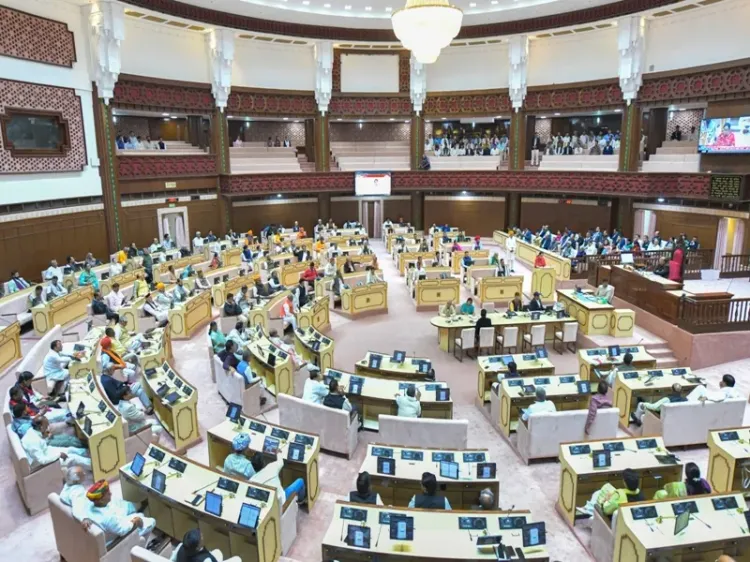
Jaipur, March 6 (NationPress) The Rajasthan Legislative Assembly voted on Friday to enact the Rajasthan Prohibition of Transfer of Immovable Property and Tenant Protection from Eviction in Disturbed Areas Bill, 2026. This legislation is designed to govern property transactions in areas designated as disturbed while safeguarding tenants from eviction.
In response to the discussion surrounding the Bill, Parliamentary Affairs Minister Jogaram Patel stated that the legislation was crafted to uphold social equilibrium and cohesion, without favoring any specific religion or community.
Minister Patel emphasized that the law was developed by taking into account the unique conditions and needs of Rajasthan, following consultations with legal experts.
“Have we referenced Hindu or Muslim in the Bill or structured it on that basis?” Patel inquired, asserting that the government honors all communities and faiths.
He explained that the aim of the legislation is to ensure that communal harmony is preserved, and that the government remains proactive during instances of unrest or instability in any area.
The Bill authorizes the state government to categorize certain regions as “disturbed areas” if public order is compromised due to riots, mob violence, or if there is a potential for clustering individuals from a specific community that could disrupt the demographic equilibrium of the locality.
As per the law's provisions, any transfer of immovable property in these designated areas during the specified timeframe will be rendered null and void. Individuals looking to transfer property in a disturbed area must secure prior approval from an authority not lower than the rank of Sub-Divisional Magistrate.
This authority will conduct an inquiry to establish whether the transfer is being executed with genuine consent, whether the price is fair, and whether the transaction may lead to a demographic imbalance in the area.
The Bill defines “fair value” as either the market value of the property or the rate determined by the District Level Committee, whichever is greater.
Additionally, the legislation protects tenants in areas affected by riots. Should a building be destroyed during riots, the owner will be mandated to rebuild and provide accommodation to the tenant in the new structure.
Any individual wishing to transfer immovable property in a notified disturbed region will be required to file an application in the specified format to the competent authority for prior approval.
Upon receiving the application, the authority will carry out a formal inquiry, allowing the applicant a chance to present their case and review any evidence submitted.
During the inquiry, the authority will ascertain if the property transfer aligns with the definitions outlined in the Act, whether both parties have provided their consent freely as per the Indian Contract Act, 1872, and if the transaction reflects the fair value of the property in question.
The authority will also evaluate whether the transfer could result in the improper clustering of individuals from a single community, potentially disturbing the demographic balance or peaceful coexistence among various communities in the area.
Patel asserted that the law aims to protect demographic balance and social harmony by preventing distress sales of property during periods of communal strife or unrest.
He noted that experiences across the country have shown that following riots or communal tensions, individuals often sell their properties at below-market prices out of fear, leading to swift changes in the demographic make-up of neighborhoods.
“This is not just a property matter; it’s about maintaining social balance,” he stated.
The minister clarified that areas would not be designated as disturbed without thorough examination of facts, reports, and administrative feedback.
The Bill also suggests forming a monitoring and advisory committee along with a special investigation team to aid the government in identifying disturbed areas and ensuring public order.
It stipulates severe penalties for breaches of the law. Anyone who disobeys or facilitates violations of an order from the competent authority could face imprisonment for three to five years along with a fine of at least Rs 1 lakh or 10 percent of the fair value of the property, whichever is higher.
Patel affirmed that the government would resist pressure tactics and uphold citizens' rights while fostering peace and communal harmony in the state.
Following the minister's remarks, the House passed the Bill via a voice vote.
Earlier, during the discussion, Congress MLA and state Congress chief Govind Singh Dotasra criticized the Bill, accusing the state government of inciting religious polarization and infringing on constitutional rights.
Dotasra claimed that the government was attempting to replicate the “Gujarat model” by instituting legislation that could provoke religious tensions and consolidate majority support. He argued that the Bill was aimed at increasing control over land and property transactions.
“The right to buy and sell property is enshrined in the Constitution. Government interference in these rights will only fuel corruption and is a plot to disrupt peaceful communities,” he asserted.
He questioned how the government would identify which areas would be labeled as “disturbed” and which communities were being referenced.
Dotasra further stated that if Congress regains power, the law would be repealed.
He also alleged that the Bill indirectly targets a specific community while the government has failed to clarify its intentions in the legislation.
Congress MLA Rajendra Pareek also questioned the motives behind the legislation, while ruling party members expressed their support for the Bill.
Meanwhile, Chief Minister Bhajan Lal Sharma, in the Bill's objects and reasons statement, remarked: “To ensure effective execution, the Bill establishes a Monitoring and Advisory Committee and a Special Investigation Team to assist the government in identifying disturbed areas and maintaining public order.
“Severe penalties, including imprisonment of up to five years, are prescribed to deter violations of these provisions and safeguard the legal interests of all residents. The Bill aims to achieve these objectives.”
Point of View
The legislation aims to address the unique challenges faced by disturbed areas, ensuring fair property transactions while preventing demographic imbalances. It emphasizes the importance of social balance in a diverse society.
NationPress
29 Sept 2026
Frequently Asked Questions
What is the purpose of the Rajasthan 2026 Bill?
The Rajasthan 2026 Bill aims to regulate property transactions in disturbed areas and protect tenants from eviction, ensuring social harmony and preventing demographic imbalances.
Who must approve property transfers in disturbed areas?
Property transfers in disturbed areas must receive prior approval from an authority not below the rank of Sub-Divisional Magistrate.
What happens if a building is destroyed during riots?
If a building is destroyed during riots, the landlord is required to reconstruct it and provide accommodation to the tenant in the new building.
What penalties are prescribed for violating the Bill?
Violators of the Bill may face imprisonment from three to five years and a fine of at least Rs 1 lakh or 10 percent of the fair value of the property, whichever is higher.
How does the Bill define 'fair value'?
The Bill defines 'fair value' as either the market value of the property or the rate determined by the District Level Committee, whichever is higher.