Gujarat Assembly Approves Disturbed Areas Amendment Bill Amidst Controversial Debate
Synopsis
The Gujarat Legislative Assembly has passed an amendment to the Disturbed Areas law, now known as 'specified areas', aimed at regulating property transfers. The bill has sparked intense debate regarding its implications for social harmony and property rights.
Key Takeaways
The Gujarat Assembly has renamed 'Disturbed Areas' to 'specified areas'.
The amendment aims to regulate property transfers more strictly.
The Collector gains significant powers over property transactions.
Concerns regarding the law's long-term application were raised by opposition members.
The government asserts that the law is essential for maintaining social harmony.
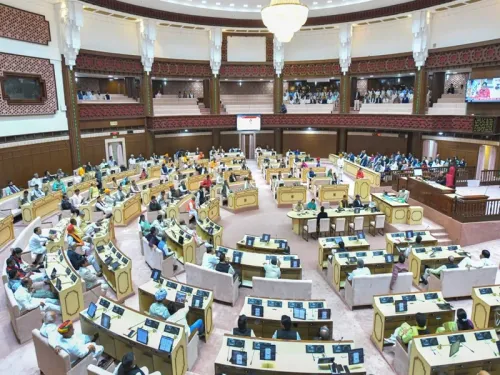
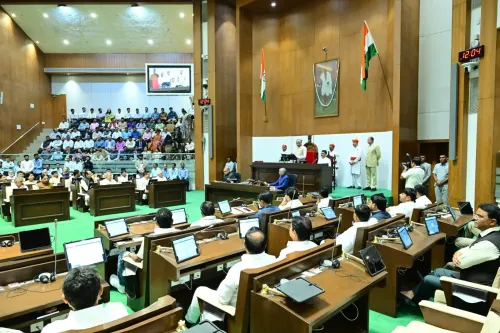
Gandhinagar, March 25 (NationPress) The Gujarat Legislative Assembly approved an amendment to the state’s Disturbed Areas law on Wednesday, rebranding these zones as “specified areas” while implementing a range of modifications to manage the transfer of immovable property amidst a vigorous debate.
After the assembly discussions, government spokesperson and minister Jitu Vaghani addressed the media, claiming that the objections to the legislation stemmed from a “political lens.”
“Those who interpret everything politically will raise concerns,”
he noted, emphasizing that the law aims to uphold social harmony and ensure stability in sensitive regions.Minister of State for Revenue, Sanjaysinh Mahida, who presented the Gujarat Prohibition of Transfer of Immovable Property and Provision for Protection of Tenants from Eviction from Premises in Disturbed Areas (Amendment) Bill, 2026, stated that these amendments are designed to avert involuntary property migration in designated areas and to protect the rights of legitimate owners.
“The primary goal of this amendment is to prevent the involuntary migration of properties in specified areas and to safeguard the interests of lawful proprietors,”
he asserted.The bill broadens the definition of an “aggrieved person,” allowing any resident from a designated area to petition the Collector for the protection of their rights.
It grants the Collector the authority to conduct inquiries either 'suo motu' or based on applications, to scrutinize property transactions.
If a transfer is deemed objectionable, the Collector has the power to seize the property.
The revised law also allows the government to designate any area as a “specified area” where public order may be threatened, extending beyond the current criteria.
Additionally, it allows property owners in these regions to use their immovable assets as collateral for loans or financial support from institutions.
The bill also enhances the role of a special inquiry mechanism along with monitoring and advisory committees, which will evaluate the situation before areas are designated and oversee the implementation process.
During the assembly debate, Congress MLA Imran Khedawala questioned the ongoing applicability of the law, arguing that it was initially intended as a temporary measure.
He referenced earlier versions from 1986 and 1991, noting that the law has persisted for decades, despite claims that communal disturbances have subsided in the state.
“Why are extensive parts of Ahmedabad and other areas still designated if peace prevails, and why do these restrictions on property transactions conflict with constitutional guarantees?”
he asked.Khedawala expressed concerns regarding delays in receiving Collector approval for property transfers and the lack of de-notification of areas when conditions improve.
He urged for a reconsideration and repeal of the law, labeling it as discriminatory and against constitutional principles.
In response, BJP MLA Mahesh Kaswala asserted that the state has enjoyed peace for nearly 30 years and that the law has been pivotal in maintaining that stability.
“The state has been peaceful for the past three decades, and even children today do not know what a curfew means,”
he remarked.He further stated that the provisions are essential for preventing involuntary migration and ensuring orderly transactions.
“For those engaging in genuine and lawful transactions, this law does not pose an obstacle,”
he added.Kaswala mentioned that when new areas are to be designated, committees will assess the ground realities and submit reports before a competent authority makes decisions, ensuring fairness.
The legislation aims to maintain social harmony and balance within sensitive areas, as the government reiterated that the amendments would bolster protections surrounding property transactions in designated locations while striving to uphold social cohesion.
Point of View
The recent amendment to the Disturbed Areas law in Gujarat reflects ongoing tensions between maintaining social order and preserving individual property rights. The controversy surrounding the bill underscores the complexities of governance in sensitive regions, where history and politics intertwine. It is crucial for lawmakers to balance these interests while ensuring transparency and fairness in property transactions.
NationPress
23 Sept 2026
Frequently Asked Questions
What is the Disturbed Areas Amendment Bill?
The Disturbed Areas Amendment Bill modifies the existing law to regulate property transfers in designated zones, now referred to as 'specified areas', aiming to maintain social harmony and protect legal owners' interests.
Why was the law amended?
The amendments were introduced to prevent involuntary migration of properties and enhance the protection of lawful owners in sensitive areas.
What powers does the Collector have under the new amendment?
The Collector is empowered to initiate inquiries into property transactions and can take possession of properties deemed objectionable.
What concerns were raised during the Assembly debate?
Concerns included the law's prolonged applicability, potential discrimination, and delays in property transfer approvals.
What is the government's stance on the amendment?
The government believes the amendment strengthens safeguards for property transactions in designated areas while promoting social stability.