Rajasthan's Disturbed Areas Bill: Up to 5 Years' Imprisonment for Violations

Synopsis
The Rajasthan government has introduced a crucial bill aimed at protecting tenants and regulating property transactions in riot-affected areas, imposing stringent penalties for violations, including imprisonment of up to five years. This legislation will be debated in the assembly soon.
Key Takeaways
Rajasthan’s new Bill regulates property transactions Violations can lead to jail terms of 3 to 5 years Approval needed from local authorities for property deals Focus on protecting tenants in riot-affected areas Offenses are non-bailable and cognizable
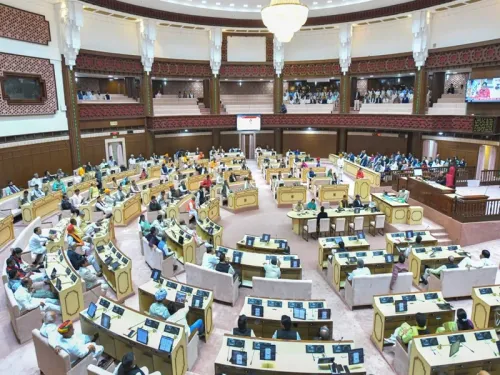
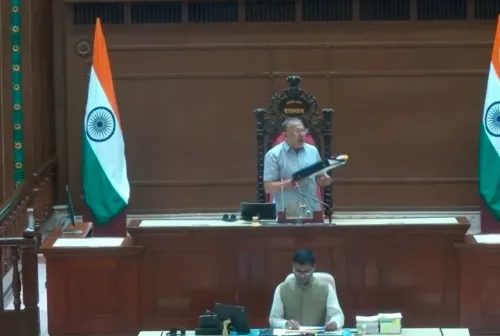
Jaipur, Feb 25 (NationPress) The Rajasthan Prohibition of Transfer of Immovable Property and Provision for Protection of Tenants from Eviction from Premises in Disturbed Areas Bill, 2026, was presented in the Rajasthan Legislative Assembly on Wednesday. This legislation is anticipated to undergo thorough examination and approval during the current session following the conclusion of debates.
This proposed law allows the state government to officially designate areas affected by riots or communal tensions as “disturbed areas” to regulate property transactions and safeguard tenants from unlawful evictions in these designated zones.
According to the Bill's provisions, any immovable property situated within a designated disturbed area cannot be transferred, purchased, sold, or registered without prior written consent from the relevant authority, specifically the District Collector or the Additional District Magistrate (ADM) of the respective district.
If there is a notable surge in the population of a specific community within a given locality, or if there are allegations of intentional efforts to modify the demographic makeup of that area in a way that could disrupt communal harmony, the state government has the authority to declare that locality a disturbed area and enforce restrictions on property dealings there.
Non-compliance with the regulations established by this Bill may result in severe penalties, including imprisonment for a period ranging from a minimum of three years to a maximum of five years.
Moreover, the Bill stipulates that anyone who disobeys, aids, conspires, or knowingly facilitates the disobedience of an order issued by the competent authority under clause (b) of sub-section (4) of Section 6 shall face punishment of no less than three years in prison, which can extend up to five years.
In addition to imprisonment, offenders will be subject to fines of at least ₹1 lakh or an amount equivalent to 10 percent of the property's fair market value involved in the transaction, whichever amount is greater.
The Bill also states that, irrespective of the provisions in the Bharatiya Nagarik Suraksha Sanhita, 2023 (Central Act No. 46 of 2023), all offenses punishable under Section 8 of this proposed legislation will be categorized as cognizable and non-bailable offenses.
Such offenses will be tried by the courts specified in Column No. 4 of Part II of the First Schedule of the Bharatiya Nagarik Suraksha Sanhita, 2023, following the legal procedures outlined in the law.
It further clarifies that all inquiries, proceedings, and actions taken before the competent authority or the state government under this Act will be considered judicial proceedings under Sections 229, 257, and 267 of the Bharatiya Nagarik Suraksha Sanhita, 2023.
Furthermore, it outlines that the authorities must adhere to due legal process and procedural safeguards as specified under the Act when conducting such inquiries and proceedings.
Point of View
It raises questions about the balance between state intervention and individual rights. As discussions unfold, it will be essential to monitor its implementation and impact on community relations.
NationPress
19 Sept 2026
Frequently Asked Questions
What is the Rajasthan Disturbed Areas Bill?
The Rajasthan Disturbed Areas Bill aims to regulate property transactions and protect tenants from eviction in riot-affected areas, allowing the government to designate such areas.
What penalties does the Bill impose for violations?
Violators could face imprisonment of three to five years, along with fines of at least ₹1 lakh or 10 percent of the property's fair market value.
Who must approve property transactions in disturbed areas?
Any property transaction in disturbed areas requires prior written approval from the District Collector or Additional District Magistrate.
What constitutes a 'disturbed area' under the Bill?
A disturbed area is defined as any locality significantly affected by riots or communal tensions, where property transactions may disrupt communal harmony.
Will offenses under this Bill be bailable?
No, all offenses punishable under the Bill are considered cognizable and non-bailable.