Did the Gujarat Assembly Just Pass the Saurashtra Garkhed Amendment Bill to Combat Illegal Land Transfers?
Synopsis
The Gujarat Legislative Assembly has made a significant move by passing an amendment to the Saurashtra Gharkhed Ordinance, aimed at addressing illegal land transfers and providing clarity in land transactions, which is expected to protect farmers' rights across the state.
Key Takeaways
Legal clarity in land transactions is now established.
Illegal transfers will be swiftly addressed.
Farmers can reclaim land within three months .
Penalties for illegal transfers are three times the market value.
Uniformity across land laws enhances administrative efficiency .
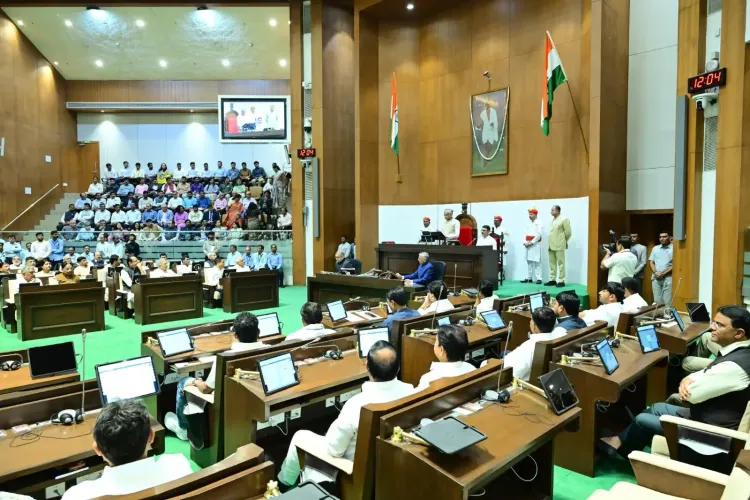
Gandhinagar, Feb 17 (NationPress) The Gujarat Legislative Assembly has recently approved a Bill to amend Sections 75 and 75(A) of the Saurashtra Gharkhed, Tenancy Settlement and Agricultural Lands Ordinance of 1949. The primary objective of this amendment is to bring legal clarity to land transactions and to effectively curb illegal transfers of agricultural land.
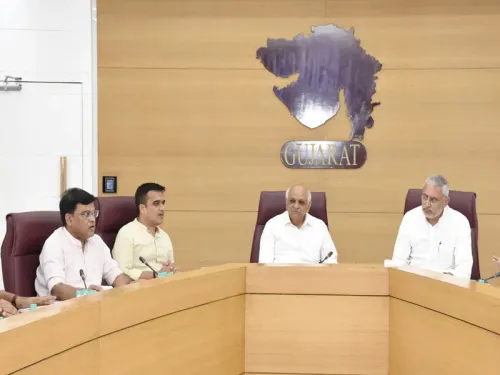
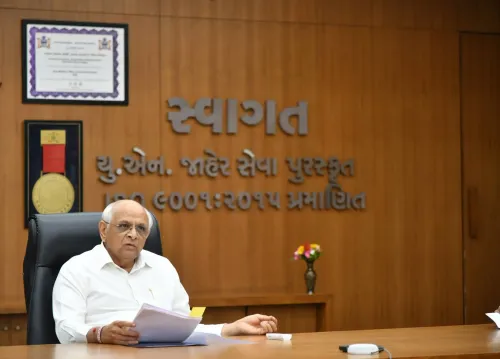
This Bill was put forward during the Assembly's Budget session by Revenue Minister Sanjaysinh Mahida, who highlighted the amendments as crucial for safeguarding the interests of farmers across the state.
Mahida elaborated on the rationale behind these amendments, indicating that the current legislation only permits the District Collector to take summary action to vacate land held without proper authorization. However, it lacks a defined process for reclaiming illegally transferred land or for the government to assume possession in such scenarios.
The new amendment stipulates that if a land transfer is deemed illegal, the Collector, either independently or upon a request from an interested party, will instruct the seller to revert the land to its original owner within a three-month timeframe.
The buyer is mandated to comply with this directive. Should the land not be restored within the specified period, the transfer will be classified as illegal, leading to government seizure of the land, which will then be categorized as public property.
Furthermore, under Section 75(A), the amendment imposes a penalty of three times the current market value on any agricultural land transferred to individuals or entities that are not farmers, necessitating payment within one month.
Subsequently, the land must be returned to the original farmer. Mahida asserted that these provisions are designed to enhance oversight over illegal land transactions and to protect farmers’ rights.
Currently, Gujarat has three distinct land laws, including the Gujarat Tenancy and Agricultural Lands Act of 1948 and the Gujarat Tenancy and Agricultural Lands (Vidarbha Region and Kutch Area) Act of 1958.
According to Mahida, achieving uniformity across the various land laws in effect throughout the state is vital for administrative efficiency and legal clarity.
He further noted that consistent enforcement of these laws would not only minimize legal conflicts but also enable the government to utilize land reclaimed from illegal transfers for public benefits such as schools, hospitals, and roads.
These amendments are anticipated to provide a clear and prompt mechanism for farmers to regain their land, deter illegal acquisitions, and align with other land regulations present in Gujarat.
Point of View
Their implementation will be key in ensuring that farmers can reclaim their land effectively.
NationPress
27 Sept 2026
Frequently Asked Questions
What is the Saurashtra Garkhed Amendment Bill?
The Saurashtra Garkhed Amendment Bill amends certain sections of the Saurashtra Gharkhed Ordinance to provide clarity in land transactions and combat illegal transfers.
Who introduced the amendment bill?
The amendment bill was introduced by Revenue Minister Sanjaysinh Mahida during the Budget session of the Gujarat Legislative Assembly.
What happens if a land transfer is declared illegal?
If a land transfer is found illegal, the District Collector will direct the seller to return the land within three months, failing which the government will seize the land.
Is there a penalty for illegal land transfers?
Yes, if agricultural land is transferred to a non-farmer, a penalty of three times the current market value must be paid within a month.
How will this amendment help farmers?
This amendment provides a clear process for farmers to reclaim their land and helps protect their rights against illegal transactions.