Has the Maha government abolished the ‘Sanad’ requirement after scrapping non-agricultural permission?
Synopsis
In a groundbreaking decision, the Maharashtra government has eliminated the need for a ‘Sanad’, simplifying land revenue processes. This major shift aims to ease the burden on landowners, allowing smoother transitions in land use without bureaucratic delays. This initiative is expected to directly benefit millions of families across the state.
Key Takeaways
Maharashtra government abolished the Sanad requirement.
New premium structure simplifies land use regularization.
Legislation aims to benefit millions of families.
Local bodies assured no revenue loss.
Streamlining land revenue processes fosters economic growth.
Nagpur, Dec 10 (NationPress) In a significant move aimed at streamlining land revenue processes, the Maharashtra government has entirely eliminated the necessity of acquiring a ‘Sanad’.
This decision follows a prior easing of Non-Agricultural (NA) permissions.
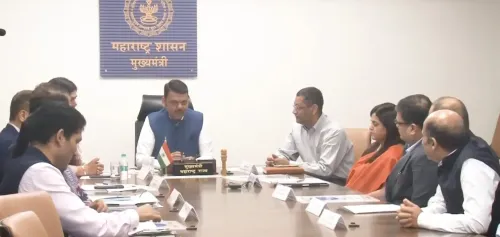
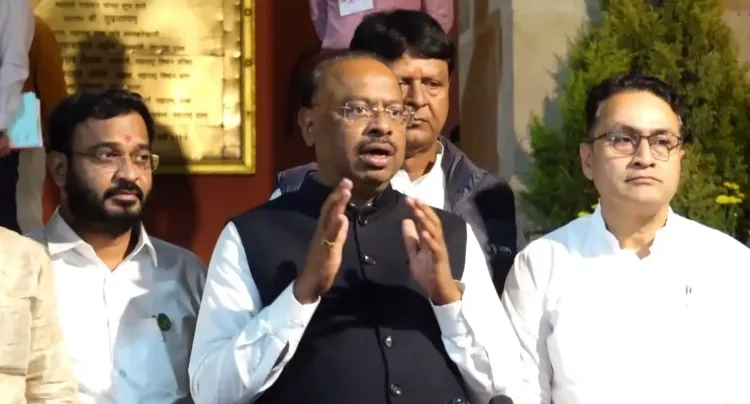
On Tuesday, Revenue Minister Chandrashekhar Bawankule presented the Maharashtra Land Revenue Code (Second Amendment) Bill, 2025, in the Legislative Assembly to formalize this shift.
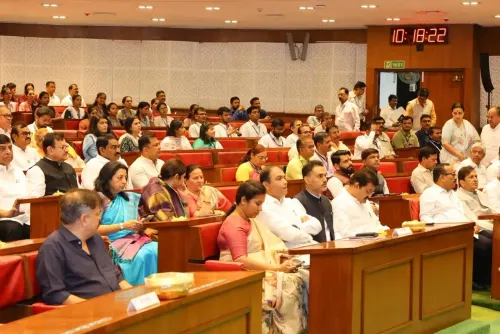
The bill received unanimous approval from the state assembly.
Minister Bawankule elaborated that while the mandatory NA permission for residential and commercial developments had been loosened through amendments made between 2014 and 2018, the ongoing requirement for a Sanad continued to create difficulties and delays. The new amendment abolishes this final obstacle entirely.
Under the new regulations, landowners will now only need to pay a minimal premium to regularize changes in land use instead of obtaining a Sanad. The updated premium structure (based on the Ready Reckoner rate) includes: Up to 1,000 sq. meters: 0.1% of Ready Reckoner value, 1,001 to 4,000 sq. meters: 0.25% of Ready Reckoner value, and 4,001 sq. meters and above: 0.5% of Ready Reckoner value, according to the minister.
He assured the assembly that local authorities would not experience any revenue loss and would continue to receive their full share of taxes and fees.
The revenue department clarifies that a Sanad is a government-issued certificate, typically granted by the Collector or Deputy Collector of the district. Its primary purpose is to authorize the change of land use (e.g., from agricultural to residential, commercial, or industrial development).
Without this conversion, development on agricultural land is typically restricted or deemed illegal.
The Sanad functions as a vital piece of prima facie evidence of land title and represents an agreement between the government and the landholder, stipulating the conditions under which non-agricultural use is permitted.
Additionally, the state council today unanimously approved the Maharashtra Prevention of Fragmentation and Consolidation of Holdings (Amendment) Act, 2025, which significantly relaxes the stringent provisions of the land fragmentation (Tukdebandi) law in urban and planned areas.
Minister Bawankule asserted that this bill marks a substantial step toward addressing longstanding property ownership challenges faced by ordinary citizens.
The assembly unanimously passed the bill on Tuesday. Responding to opposition concerns, Minister Bawankule assured the House that this initiative is not intended to benefit any builders; rather, it aims to provide legal ownership rights to the approximately 60 lakh families residing on small land fragments in the state.
According to Minister Bawankule, the bill will directly aid about 60 lakh families (nearly 3 crore citizens) living on small plots, gunthewari layouts, and fragmented land holdings across cities and towns in Maharashtra.
Thanks to this bill, the buying and selling of small plots will now become more straightforward, and arrangements have been made for the respective owner's name to be recorded on the 7/12 land record (Satbara).
Point of View
It's essential to recognize the profound impact of Maharashtra's decision to abolish the ‘Sanad’ requirement. This reform reflects a commitment to simplifying bureaucratic processes and addressing the property ownership challenges faced by citizens. By prioritizing the needs of landowners, the government is fostering economic growth and stability in the state.
NationPress
19 Sept 2026
Frequently Asked Questions
Why was the Sanad requirement abolished?
The requirement was removed to eliminate bureaucratic hurdles and streamline land revenue procedures, making it easier for landowners to regularize land use.
What changes are included in the new premium structure?
The new premium structure is based on the Ready Reckoner rate and includes varying percentages depending on the size of the land.
How will this change affect local bodies?
The government has assured that local bodies will not experience any revenue loss and will continue to receive their full share of taxes and fees.
Who will benefit from these amendments?
Approximately 60 lakh families, or nearly 3 crore citizens, living on small plots and fragmented land holdings will benefit from these changes.