Maharashtra Government Unveils Micro-Zoning for Ready Reckoner Rates, Starting with MMR

Synopsis
The Maharashtra government is set to implement a groundbreaking micro-zoning initiative for Ready Reckoner rates, which aims to address economic disparities in property taxation. This reform is expected to start in the Mumbai Metropolitan Region and provide significant relief to low-income residents.
Key Takeaways
Maharashtra Stamp (Amendment) Bill, 2026 passed unanimously.
Micro-zoning to enhance accuracy in property taxation.
Initial focus on Mumbai Metropolitan Region and Pune.
Use of Geographic Information System (GIS) technology for property mapping.
Targeted relief for low-income residents .
Mumbai, March 18 (NationPress) – The Maharashtra state Assembly has unanimously approved the Maharashtra Stamp (Amendment) Bill, 2026, designed to decentralize administrative authority and facilitate the resolution of a significant backlog of stamp duty refund applications.
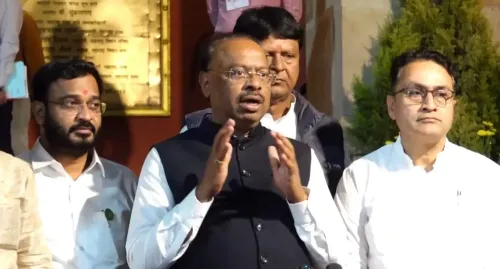
During the deliberation, Minister Chandrashekhar Bawankule emphasized that the current centralized system necessitated citizens to travel to Mumbai for even moderate refund claims, resulting in considerable delays and bureaucratic hurdles.
Minister Bawankule introduced the concept of “micro-zoning” to determine Ready Reckoner (RR) rates. This policy shift transitions from broad, zone-based valuations to a more detailed, scientific methodology aimed at addressing economic inequalities in property taxation.
Upon completion of the survey, the zone-specific and plot-specific RR rates will be accessible in a transparent, downloadable PDF format via the Inspector General of Registration (IGR) portal.
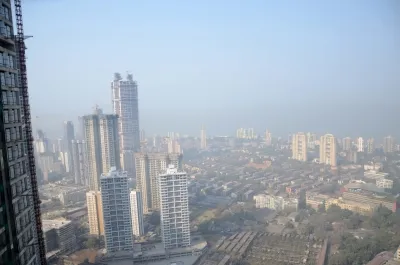
“The initial launch of micro-zoning is set to commence on April 1, 2027, concentrating on the Mumbai Metropolitan Region (MMR) and Pune, where socio-economic differences within small areas are most evident, such as in Worli, Parel, and Borivali,” the minister stated.
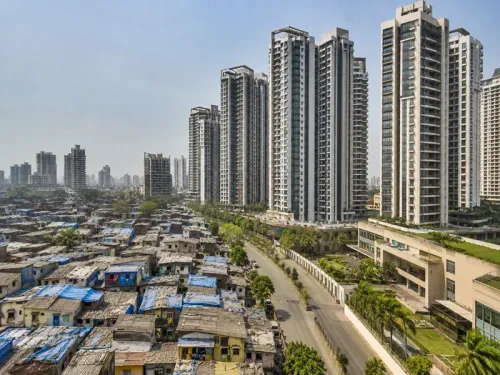
The revenue department has been tasked with establishing distinct rates for slums and Slum Rehabilitation Authority (SRA) projects, as well as for chawls and older, non-redeveloped buildings, alongside industrial, commercial, and residential classifications.
Micro-zoning for RR fixation will subsequently be rolled out across the rest of Maharashtra, he added.
The minister pointed out a significant flaw in the current system, where small houses, slums, and chawls situated next to luxury towers are taxed at the same RR rate. Micro-zoning will enable the department to distinguish between these buildings even if they reside within the same geographical area.
The government plans to utilize Geographic Information System (GIS) technology to accurately map every property, ensuring plot-wise and building-wise precision instead of applying a uniform rate to an entire street or neighborhood.
Minister Bawankule noted that purchasers of smaller or older flats often find themselves paying disproportionately high stamp duties compared to the actual purchase price, as RR rates are inflated by nearby new developments.
Micro-zoning aims to align RR rates more closely with the actual market conditions of specific micro-markets. While this initiative is anticipated to offer relief to low-income residents, it will also guarantee that high-end commercial and residential projects are valued accurately, preventing developers from exploiting lower average rates to minimize development charges and premiums.
Point of View
2026, marks a significant step toward decentralizing administrative powers and addressing the backlog of stamp duty refunds. The introduction of micro-zoning presents a promising opportunity to rectify property taxation disparities, particularly in socio-economically diverse areas. It reflects a proactive approach to governance, emphasizing transparency and fairness in property assessments.
NationPress
6 Oct 2026
Frequently Asked Questions
What is micro-zoning?
Micro-zoning is a new policy approach that focuses on detailed, plot-specific property valuations rather than broad zone-based assessments, aimed at correcting economic disparities in property taxation.
When will micro-zoning be implemented?
The initial rollout of micro-zoning is scheduled to begin on April 1, 2027, starting with the Mumbai Metropolitan Region and Pune.
How will this affect stamp duty for residents?
The implementation of micro-zoning is expected to align stamp duty rates more closely with actual market values, potentially reducing the burden on low-income residents.
What technology will be used for micro-zoning?
The government will utilize Geographic Information System (GIS) technology to accurately map properties for precise plot-wise and building-wise valuations.
Will micro-zoning apply to all of Maharashtra?
Initially, micro-zoning will be implemented in the Mumbai Metropolitan Region and Pune, with plans to extend it to the rest of Maharashtra thereafter.