How Will the New Maharashtra Land Bill Regularise Decades of Irregular Plot Transactions?

Synopsis
The Maharashtra government has introduced a significant bill aimed at amending land ownership laws, addressing decades of irregular transactions in urban areas. This effort seeks to provide legal clarity and support to millions of plot holders, easing the complexities of land ownership and enhancing transparency in property records.
Key Takeaways
The Maharashtra government has introduced a bill to amend land ownership laws.
The bill aims to regularise decades of irregular urban land transactions.
Legal ownership will be granted to approximately 60 lakh small plot holders.
Restrictions on land fragmentation will be repealed in specific areas.
No premium will be charged for regularising certain transactions.
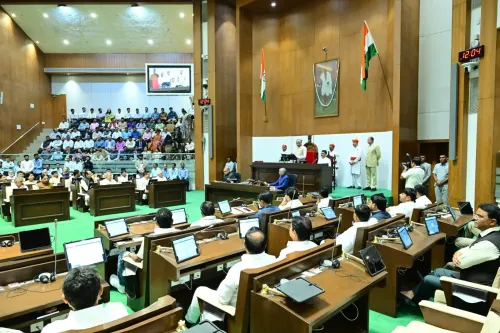
Nagpur, Dec 8 (NationPress) On Monday, the state government introduced a bill aimed at amending the Maharashtra Prevention of Fragmentation and Consolidation of Holdings Act to tackle the intricate issues surrounding land ownership in urban and semi-urban regions. These areas have seen agricultural land converted and traded for non-agricultural purposes in small segments, breaching the stipulations of the original 1947 Act.
To alleviate the burden on millions of landowners, the government has unveiled a one-time scheme for the free regularisation of illegal land transactions that have persisted for nearly sixty years. This initiative strives to clarify land records, unleash development opportunities, and provide legal ownership to roughly 60 lakh small plot holders throughout the state.
The new legislation brings vital amendments to the longstanding law, which was initially designed to prevent the fragmentation of agricultural land into unviable portions. The most notable alteration is the effective repeal of the Act's restrictions for lands in designated areas, facilitating the regularisation of historical transactions.
Restrictions on fragmentation (Sections 7, 8, and 8AA of the Principal Act) will no longer apply to land located within the boundaries of a Municipal Corporation or Council (Nagar Parishad/Nagar Panchayat), under the jurisdiction of a Special Planning Authority or a New Town Development Authority established under the Maharashtra Regional and Town Planning Act, 1966. This also includes any land designated for residential, commercial, industrial, or other non-agricultural purposes in the draft or final Regional Plan.
Additionally, the government has proposed changes to enable the regularisation of previous land transfers or partitions that contravened the Act's provisions, especially for land designated for genuine non-agricultural use.
For irregular transactions that occurred between November 15, 1965, and October 15, 2024, if the land falls within the exempted urban/non-agricultural areas, these transfers or partitions will be considered regularised without incurring any premium. This adjustment aims to support millions of plot holders who faced challenges due to irregular land transactions.
The government has also paved the way for individuals who acquired land through notarised agreements or stamp papers but did not complete the formal registration of the sale deed. Talathis and Circle Officers are now directed to assist these buyers in finalising the registration process (after applicable stamp duty and fees) and ensuring their names are recorded as the legal occupants (kabjedar) on the 7/12 extract.
Previously, the state government had initiated a process for the regularisation of past fragmented land transactions (under Section 9(3)) through payment of a premium. This premium was significantly lowered through a recent amendment.
The premium for regularisation was set at up to 25 percent of the land's market value, as per the Annual Statement of Rates (ASR). However, the premium for regularising transfers or partitions made contrary to the Act's provisions during the specified period has been reduced to only 5 percent of the land's market value, according to the ASR.
According to government officials, rapid urbanisation in recent decades has turned agricultural land near major cities into residential plots. Millions of small plot transactions have taken place based on planning permissions but were, in fact, illegal under the 1947 Act, resulting in uncertainty regarding property titles.
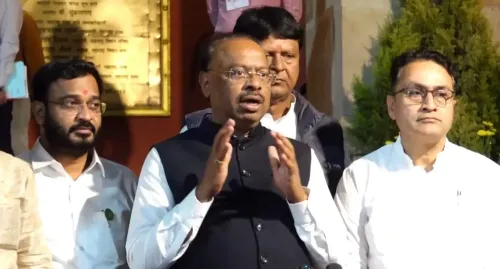
Revenue Minister Chandrashekhar Bawankule recently remarked that this initiative represents one of the most significant steps in recent history to streamline land ownership and enhance transparency in property records across Maharashtra, bringing much-needed clarity and peace of mind to families in urban and peri-urban locales.
Point of View
This initiative by the Maharashtra government stands to reshape land ownership dynamics in urban settings significantly. It showcases the government's commitment to resolving longstanding issues, enhancing transparency, and providing relief to millions affected by historical irregularities. By addressing these complexities, the government is taking a crucial step towards fostering development and stability in property ownership.
NationPress
30 Sept 2026
Frequently Asked Questions
What is the purpose of the new Maharashtra land bill?
The new Maharashtra land bill aims to amend the existing laws to regularise decades of irregular land transactions in urban and semi-urban areas, providing legal clarity to millions of property holders.
How does this bill benefit small plot holders?
The bill introduces a one-time scheme for the free regularisation of illegal land transactions, granting legal ownership status to approximately 60 lakh small plot holders across the state.
What changes are being made to the restrictions on land fragmentation?
The bill effectively repeals or excludes the restrictions on land fragmentation for specific areas, allowing for the regularisation of past transactions that were previously considered illegal.
What is the time frame for regularising irregular land transactions?
The bill allows for the regularisation of irregular transactions made on or after November 15, 1965, and before October 15, 2024, in exempted urban/non-agricultural areas.
Will there be any fees for the regularisation process?
No premium will be charged for the regularisation of eligible land transactions, providing significant relief to the plot holders.