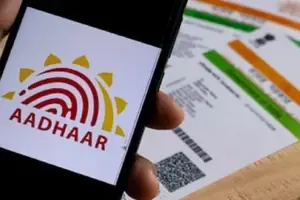
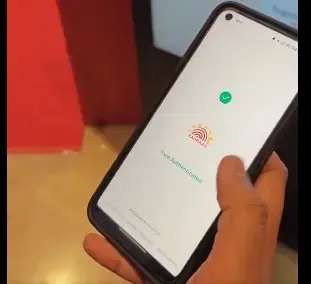
New Aadhaar App crosses 2.1 crore downloads in 3 months, 28 lakh update mobile numbers

Synopsis
India's new Aadhaar app has hit 2.1 crore downloads in just three months, with 28 lakh citizens already updating mobile numbers and 100 entities onboarded for paperless offline verification — a milestone that signals the country's digital identity infrastructure is maturing well beyond a simple ID card.
Key Takeaways
The new Aadhaar app surpassed 2.1 crore downloads within three months of launch, as of 6 May 2025 .
Over 28 lakh users have updated their mobile numbers and nearly 6 lakh have updated their address via the app.
The app offers face verification , biometric lock/unlock , authentication history, and a QR-based contact card .
UIDAI has onboarded at least 100 entities as Offline Verification Seeking Entities (OVSEs) in the same three-month period.
Offline verification enables paperless, consent-driven identity checks without real-time access to central databases.
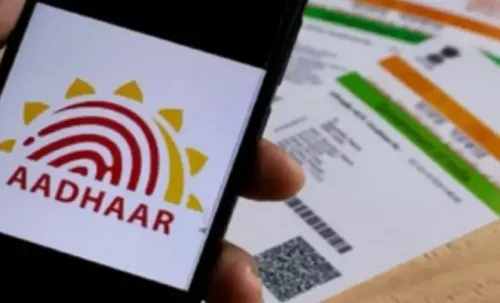
The new Aadhaar app has recorded over 2.1 crore downloads within just three months of its launch, the Ministry of Electronics and Information Technology (IT Ministry) announced on Wednesday, 6 May 2025, in New Delhi. The rapid uptake signals strong public trust in the platform, which is designed to bring identity services directly to citizens' smartphones.
Key Usage Milestones
According to the IT Ministry, over 28 lakh people have already updated their mobile numbers through the new app, while nearly 6 lakh users have used it to update their address. The app is available on both Android and Apple iOS platforms, ensuring wide accessibility across device ecosystems.
"So far over 2.8 million (28 lakh) people have updated their mobile numbers using the new Aadhaar App. Similarly, nearly 6,00,000 people have used the App to update their address," the official statement read.
What the New Aadhaar App Offers
Described as a next-generation mobile application, the app is built around a privacy-first framework, allowing Aadhaar Number Holders (ANH) to carry, show, share and verify their identity securely. Advanced features include face verification for proof of presence, biometric lock/unlock in a single click, authentication history, and a QR-based editable contact card for sharing contact details digitally — replacing the need for physical visiting cards.
The app supports a broad range of real-world use cases, including hotel check-ins via Offline Verification Seeking Entity (OVSE) QR code scanning, hospital admissions, age gating, visitors' management, event entries, and identity verification of gig workers and service partners.
100 Entities Onboarded for Offline Verification
In a parallel development, the Unique Identification Authority of India (UIDAI) has onboarded at least 100 entities as Offline Verification Seeking Entities (OVSEs) within the same three-month window. This milestone marks a significant step toward enabling secure, consent-driven and paperless identity verification using Aadhaar — without requiring real-time access to central databases.
This is notable because offline verification reduces the privacy risks associated with live database queries, a concern that has historically shadowed Aadhaar's implementation. The OVSE framework allows businesses and institutions to verify identity locally, using a digitally signed QR code, making the process both faster and more privacy-compliant.
What the Government Said
"The growing public adoption showcases not only the trust of residents, but also the new App's role in making Aadhaar services more accessible and user-friendly, thus enabling ease of living for Aadhaar number holders," the IT Ministry stated. The ministry positioned the app as a cornerstone of India's broader Digital Public Infrastructure (DPI) push, which aims to reduce paperwork and friction in everyday identity-related transactions.
What's Next
With 100 OVSEs already on board and downloads accelerating, UIDAI is expected to expand the offline verification ecosystem to more sectors. As digital identity adoption deepens, the app's role in enabling seamless, privacy-preserving verification across hospitality, healthcare, and the gig economy is likely to grow significantly in the months ahead.
Point of View
But the more consequential number may be the 100 OVSEs onboarded in three months — because offline verification is where Aadhaar's privacy architecture is actually being stress-tested. Past iterations of Aadhaar-based verification drew criticism for centralised data exposure; the OVSE framework attempts to address that structurally. Whether businesses adopt it at scale, or revert to easier but riskier real-time queries, will determine if this is a genuine privacy upgrade or a feature that looks good on paper. The gig economy use case, in particular, deserves scrutiny — worker consent and data retention by OVSEs remain areas where regulatory clarity is still catching up.
NationPress
22 Sept 2026
Frequently Asked Questions
How many times has the new Aadhaar app been downloaded?
The new Aadhaar app has been downloaded over 2.1 crore (21 million) times within three months of its launch, according to the IT Ministry's statement on 6 May 2025.
What services can you use the new Aadhaar app for?
The app allows users to update their mobile number and address, verify identity via face recognition, lock or unlock biometrics, and share contact details via a QR-based card. It also supports hotel check-ins, hospital admissions, age gating, and identity verification of gig workers through offline QR scanning.
What is an Offline Verification Seeking Entity (OVSE)?
An OVSE is an organisation authorised by UIDAI to verify a person's Aadhaar-based identity offline, using a digitally signed QR code, without needing real-time access to UIDAI's central databases. At least 100 such entities have been onboarded within three months of the framework's rollout.
Is the new Aadhaar app available on iPhone?
Yes, the new Aadhaar app is available on both Android and Apple iOS platforms, making it accessible to a wide range of smartphone users across India.
How many people have updated their mobile number on the new Aadhaar app?
Over 28 lakh (2.8 million) people have updated their mobile numbers using the new Aadhaar app, while nearly 6 lakh users have updated their address, according to the IT Ministry.