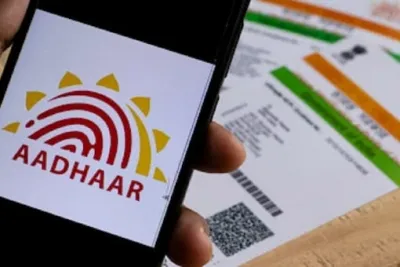
Aadhaar app hits 5 crore downloads, 60 lakh mobile updates logged

Synopsis
The Aadhaar app has crossed 5 crore downloads, with over 60 lakh mobile updates and 23 lakh email updates logged digitally. Simultaneously, UIDAI has quietly built a 200-plus entity offline verification network since January — a move that could reshape how India verifies identity without touching its central database.
Key Takeaways
The Aadhaar app crossed 5 crore downloads , according to the IT Ministry on 20 August .
More than 60 lakh residents updated their mobile numbers via the app; over 15 lakh address updates and 23 lakh email updates were also completed digitally.
UIDAI has onboarded more than 200 Offline Verification Seeking Entities (OVSEs) since January .
Offline verification uses QR codes and digitally signed documents, eliminating the need for real-time database connectivity.
The app operates on a 'Show, Share and Verify' model, giving residents control over minimum necessary data sharing.
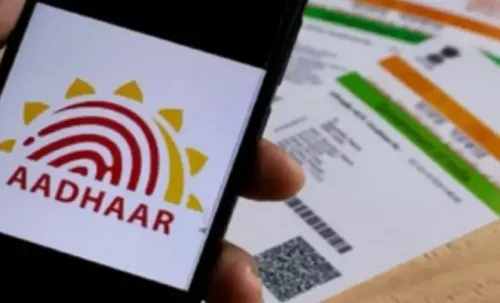
The Aadhaar app has surpassed 5 crore downloads, the Ministry of Electronics and Information Technology announced on Thursday, 20 August, marking a significant expansion in the digital delivery of identity services by the Unique Identification Authority of India (UIDAI). The milestone reflects a decisive shift among residents toward managing Aadhaar-linked services from their smartphones rather than visiting physical enrolment centres.
Key Usage Numbers
The scale of adoption is visible in transaction data released alongside the announcement. More than 60 lakh residents updated their mobile numbers through the app, while over 15 lakh address updates and more than 23 lakh email updates were completed digitally. These figures underscore that the app has moved well beyond a passive identity display tool into an active service channel.
What the App Offers
Built around the principle of 'Show, Share and Verify', the Aadhaar app enables holders to control how their identity information is accessed and shared. Core features include mobile number update, address update, email update, biometric lock and unlock, and e-Aadhaar download — all accessible without requiring a visit to an Aadhaar centre. The design prioritises resident consent and minimum necessary data sharing, according to the ministry's statement.
Offline Verification Ecosystem Expands
Alongside the app milestone, UIDAI has onboarded more than 200 entities as Offline Verification Seeking Entities (OVSEs) since the programme's rollout in January. These entities — spanning service providers across sectors — can now verify identity through QR code-based verification and secure digitally signed documents without requiring real-time connectivity to UIDAI's central database. This is a structurally important development: it decouples identity verification from live database access, reducing both latency and privacy risk.
Why This Matters
The convergence of a high-download app and a growing offline verification network signals a maturing Aadhaar ecosystem. Residents gain convenience and data control; service providers gain a scalable, paperless verification pathway. This comes amid the government's broader Digital India push to improve ease of living through technology-enabled public services. Notably, the offline mechanism's consent-driven architecture addresses longstanding privacy concerns that have historically shadowed Aadhaar's expansion.
What Comes Next
With 200-plus OVSEs already onboarded, the offline verification network is expected to deepen across banking, telecom, and welfare delivery channels. UIDAI has not specified a target for OVSE additions, but the pace of onboarding since January suggests continued momentum. The Aadhaar app's trajectory will likely be watched as a proxy for India's broader digital public infrastructure adoption curve.
Point of View
But the more consequential development is the quiet build-out of 200-plus offline verification entities since January. Decoupling identity verification from live UIDAI database access is architecturally significant — it reduces the single-point-of-failure risk and addresses, at least partially, the privacy objections that have dogged Aadhaar since its Supreme Court challenge. The real test is whether OVSEs are distributed across sectors and income groups, or concentrated in urban, high-volume use cases. If the offline network reaches last-mile welfare delivery, this becomes a genuine infrastructure story. If it stays in fintech and telecom, it is a convenience upgrade for the already-connected.
NationPress
5 Oct 2026
Frequently Asked Questions
What is the Aadhaar app and what can it do?
The Aadhaar app is UIDAI's official smartphone application that lets residents manage their Aadhaar-linked identity digitally. It supports mobile number update, address update, email update, biometric lock and unlock, and e-Aadhaar download — all without visiting an Aadhaar enrolment centre.
How many people have downloaded the Aadhaar app?
The Aadhaar app has crossed 5 crore downloads, according to a statement issued by the Ministry of Electronics and Information Technology on 20 August.
What are Offline Verification Seeking Entities (OVSEs)?
OVSEs are organisations authorised by UIDAI to verify a resident's identity offline, using QR codes or digitally signed documents, without accessing UIDAI's central database in real time. More than 200 such entities have been onboarded since January.
Why is offline Aadhaar verification important?
Offline verification allows identity checks without live internet connectivity to UIDAI's servers, reducing privacy risk and infrastructure dependency. It also gives residents control over sharing only the minimum data required for a transaction.
How does the Aadhaar app protect user privacy?
The app is built on a 'Show, Share and Verify' model that requires resident consent before any data is shared. Offline verification methods ensure that only the minimum necessary information is disclosed, and no real-time database query is made.