What Key Policies Did the Rajasthan Cabinet Approve?

Synopsis
In a decisive move, the Rajasthan Cabinet, led by Chief Minister Bhajan Lal Sharma, has greenlit a bill to safeguard resident properties and tenant rights in disturbed areas. The meeting also introduced ambitious policies to elevate the state's aerospace, defense, and semiconductor sectors, marking a significant step towards economic growth.
Key Takeaways
Legislation to protect resident properties and tenant rights.
Cabinet supports aerospace and defense manufacturing growth.
New semiconductor policy aims to boost local production.
Incentives are available for qualified enterprises.
Focus on maintaining communal harmony and social fabric.
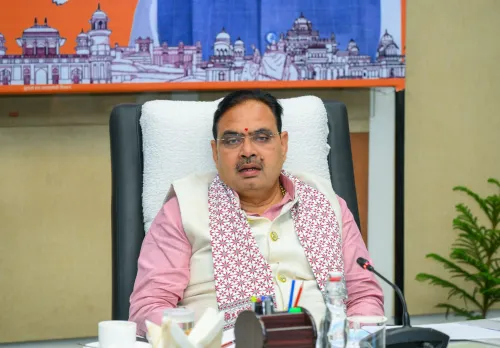
Jaipur, Jan 21 (NationPress) The Cabinet of Rajasthan, under the leadership of Chief Minister Bhajan Lal Sharma, convened on Wednesday to endorse a series of significant measures, including a legislative proposal aimed at safeguarding the properties of permanent residents and the rights of tenants in regions designated as disturbed. Additionally, the Cabinet approved new policies designed to stimulate growth in aerospace, defense manufacturing, and semiconductor production within the state.
Following the Cabinet meeting, Industry and Commerce Minister Col Rajyavardhan Rathore, Parliamentary Affairs Minister Jogaram Patel, and Food and Civil Supplies Minister Sumit Godara addressed the media.
They reported that the Cabinet has sanctioned the draft of The Rajasthan Prohibition of Transfer of Immovable Property and Provision for Protection of Tenants from Eviction from Premises in Disturbed Areas Bill, 2026.
Minister Patel noted that issues such as population imbalance and communal discord frequently disrupt public order and harmonious living, compelling permanent residents in affected areas to sell their properties at significantly reduced prices.
According to the proposed legislation, any transfer of immovable property in a declared disturbed area will be deemed invalid without prior consent from the competent authority.
Property transfers will only occur post-approval, with violations classified as cognizable and non-bailable offenses, subject to imprisonment of three to five years and hefty fines.
Patel emphasized that the bill, scheduled to be presented in the forthcoming Legislative Assembly session, aims to protect permanent residents' properties and tenants' rights, while also striving to maintain communal harmony and the state's social fabric.
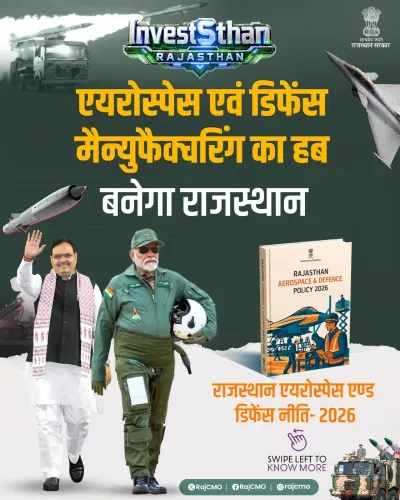
Minister Rajyavardhan Rathore announced the Cabinet's approval of the Rajasthan Aerospace and Defence Policy, targeting the enhancement of defense and space technology, and establishing Rajasthan as a crucial hub for aerospace and defense manufacturing.
This policy aims to fortify MSMEs, startups, and an innovation-centric environment, promoting the setup of manufacturing units, equipment suppliers, precision engineering operations, and maintenance, repair, and overhaul (MRO) facilities.
Per the policy, projects with fixed capital investments of Rs 50 crore to Rs 300 crore will fall under the classification of Large, Rs 300 crore to Rs 1,000 crore as Mega, and above Rs 1,000 crore as Ultra Mega.
In the service sector, projects with investments of Rs 25 crore to Rs 100 crore will be termed Large, Rs 100 crore to Rs 250 crore as Mega, and above Rs 250 crore as Ultra Mega.
Qualified enterprises may benefit from incentives including a 75% reimbursement of state taxes for seven years as an asset creation incentive, capital grants over a decade, or annual turnover-linked incentives over ten years. Additional advantages encompass employment generation, sunrise, anchor, and thrust boosters.
Mega and ultra-mega units acquiring land from RIICO will gain access to flexible land payment plans for up to 10 years and lease rental subsidies for office space.
The policy also outlines exemptions and reimbursements concerning electricity duties, mandi taxes, stamp duties, conversion charges, and financial benefits related to banking, wheeling, and transmission costs.
Col Rathore further mentioned that the Cabinet has endorsed the state's inaugural Rajasthan Semiconductor Policy, designed to enhance domestic production and establish Rajasthan as a frontrunner in semiconductor manufacturing, design, packaging, and related electronics sectors.
This policy is anticipated to bolster the state's industrial landscape and attract significant investments in high-tech manufacturing.
Point of View
The Rajasthan Cabinet's recent deliberations underscore the government’s commitment to addressing the challenges faced by residents in disturbed areas. By prioritizing property protection and fostering growth in high-tech industries, the state is taking vital steps towards ensuring stability and prosperity, reflecting a balanced approach to governance.
NationPress
10 Oct 2026
Frequently Asked Questions
What is the purpose of the Rajasthan Prohibition of Transfer of Immovable Property Bill?
The bill aims to protect the properties of residents in disturbed areas and ensure tenant rights, preventing forced sales at distress prices.
What incentives are offered under the Rajasthan Aerospace and Defence Policy?
Eligible enterprises can receive tax reimbursements, capital grants, and various incentives aimed at fostering a robust aerospace and defense manufacturing ecosystem.
How does the Rajasthan Semiconductor Policy benefit the state?
This policy is designed to promote indigenous semiconductor production, making Rajasthan a leader in manufacturing and attracting major investments in high-tech sectors.