CM Samrat Choudhary transfers Rs 1,423 cr pension funds in Bihar
Synopsis
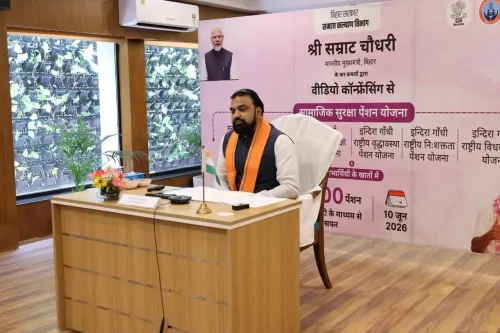
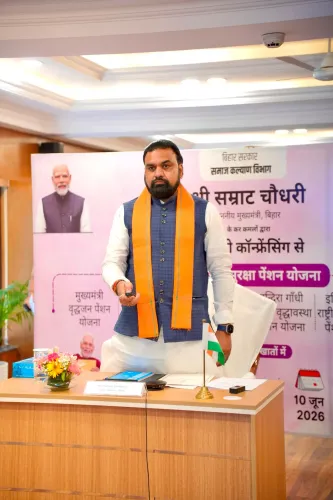
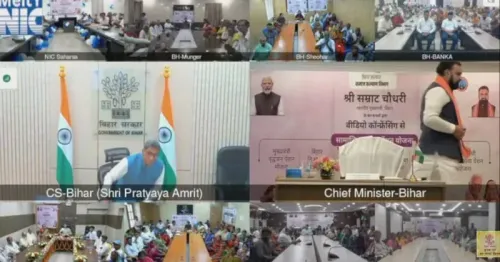
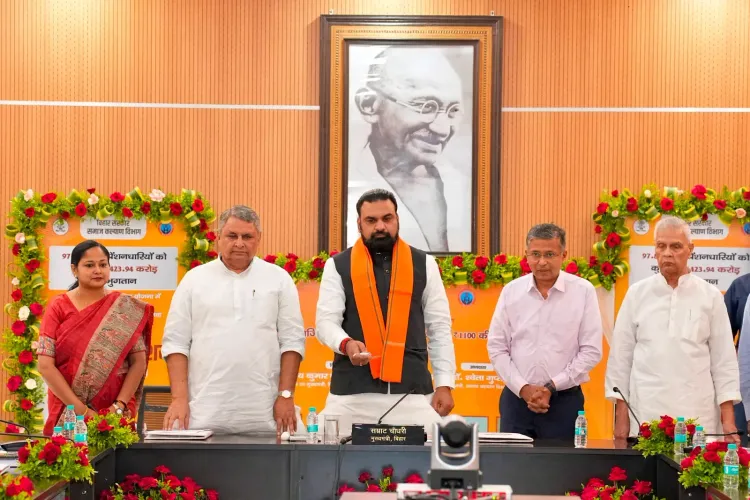
Bihar Chief Minister Samrat Choudhary on 10 July 2026 transferred Rs 1,423.94 crore to 97.84 lakh social security pension beneficiaries via DBT from the Sankalp auditorium in Patna, covering elderly, widows, and persons with disabilities under state and central pension schemes.
Key Takeaways
Rs 1,423.94 crore transferred in a single disbursement event on 10 July 2026 .
97.84 lakh beneficiaries — elderly, widows, and persons with disabilities — received funds directly in their bank accounts.
Transfer was executed via the Direct Benefit Transfer (DBT) mechanism, eliminating intermediaries.
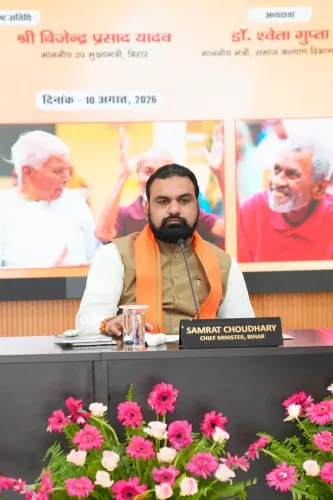
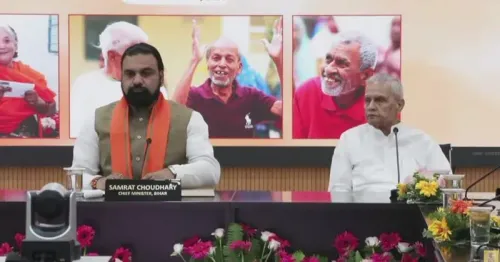
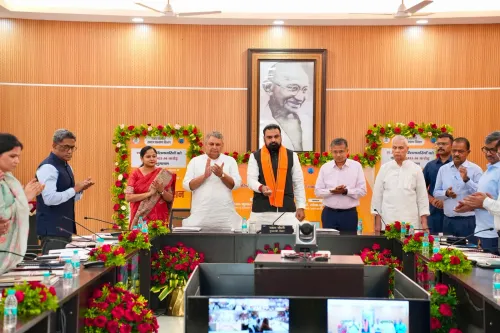
Chief Minister Samrat Choudhary initiated the transfer from the Sankalp auditorium at Lok Sevak Avas, Patna .
Bihar's pension framework combines NSAP (launched 1995) with state-funded top-ups to enhance beneficiary payouts.
Next key milestones include the upcoming state budget and the next pension disbursement cycle.
The Chief Minister's Office of Bihar announced on Friday, 10 July 2026 that Chief Minister Samrat Choudhary transferred Rs 1,423.94 crore to the accounts of 97.84 lakh beneficiaries of social security pension schemes via Direct Benefit Transfer (DBT), disbursing the funds from the Sankalp ('Resolve') auditorium at Lok Sevak Avas, the state secretariat complex in Patna.
Context
The post states that the Chief Minister personally initiated the transfer from the Sankalp Sabhagar (Sankalp auditorium), a practice that underscores the government's intent to attach political visibility to welfare disbursements. The single-day transfer of over Rs 1,423 crore to nearly 98 lakh recipients represents one of the larger single-event pension disbursements recorded under the current administration. The beneficiaries span categories including the elderly, widows, and persons with disabilities covered under Bihar's social security pension framework.
Policy Backdrop
Bihar's social security pension architecture draws from the National Social Assistance Programme (NSAP), launched by the Central government in 1995, which provides old-age, widow, and disability pensions. States including Bihar supplement NSAP payouts with state-funded top-ups to raise the monthly pension amount received by each beneficiary. The Direct Benefit Transfer mechanism, introduced nationally in 2013, was designed to route subsidies and entitlements directly into beneficiaries' bank accounts, eliminating intermediaries and reducing leakages that had historically afflicted welfare programmes. Bihar integrated its pension disbursements into the DBT platform as part of this broader national push for digital financial inclusion.
Indian states have progressively moved bulk pension transfers to DBT-linked bank accounts, and Bihar has periodically conducted such large-scale disbursements from the secretariat to signal administrative efficiency. The exercise also serves as a measurable indicator of the state's welfare reach, given Bihar's large rural population and the high share of households dependent on social protection income.
Stakeholders and Impact
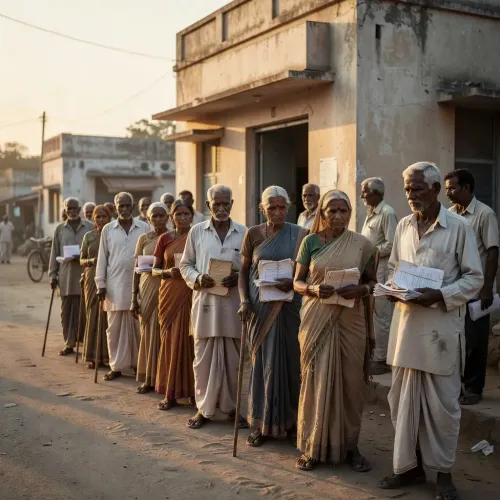
The 97.84 lakh beneficiaries receiving funds in this cycle include elderly citizens, widows, and persons with disabilities — among the most economically vulnerable segments of Bihar's population. For many rural households, the monthly pension constitutes a critical, often sole, source of regular income. The DBT route ensures funds reach individual bank or post-office accounts directly, reducing the risk of diversion that was common under older cash-distribution systems.
Civil society groups and welfare economists have consistently noted that timely and full pension delivery is essential for food security and basic dignity among these groups. Any delay in a disbursement cycle can have an immediate impact on household consumption in low-income rural districts, making the scale and speed of such transfers a governance metric in its own right.
What's Next
Attention will now turn to the next pension disbursement cycle and whether the state government announces any revision in monthly pension amounts in the upcoming Bihar state budget. Advocacy groups have long argued that the per-beneficiary monthly pension under NSAP and state top-ups remains below the cost-of-living threshold, and budget season typically brings renewed calls for enhancement. The government's ability to sustain and expand DBT-linked social security coverage will be a key measure of Bihar's welfare commitments going forward.
Point of View
424 crore to close to 98 lakh people — reflects how central DBT-linked welfare delivery has become to Bihar's governance narrative. Conducting the disbursement from the Chief Minister's official auditorium rather than through a routine administrative process signals a deliberate effort to associate political leadership with tangible welfare outcomes. This fits a broader pattern across Indian states where direct transfers serve both as social protection tools and as electoral signalling devices. The more substantive policy question — whether pension amounts are adequate for genuine income support — remains unaddressed by the announcement and is likely to resurface in budget discussions.
NationPress
9 Oct 2026
Frequently Asked Questions
How much money did Bihar CM Samrat Choudhary transfer to pension beneficiaries?
Bihar Chief Minister Samrat Choudhary transferred Rs 1,423.94 crore to social security pension beneficiaries on 10 July 2026 via Direct Benefit Transfer.
How many people received pension money in Bihar's July 2026 DBT transfer?
A total of 97.84 lakh beneficiaries — including elderly citizens, widows, and persons with disabilities — received pension funds in this disbursement cycle.
What is the Direct Benefit Transfer (DBT) scheme used for Bihar pensions?
DBT is a Central government mechanism introduced in 2013 that routes welfare payments directly into beneficiaries' bank accounts, cutting out middlemen and reducing leakages in subsidy and pension delivery.
Which social security pension schemes cover Bihar beneficiaries?
Bihar's pension beneficiaries are covered under the National Social Assistance Programme (NSAP) , launched in 1995, along with state-funded top-ups that supplement the central pension amount for elderly, widows, and disabled persons.
Where did CM Samrat Choudhary initiate the Bihar pension transfer?
The transfer was initiated from the Sankalp auditorium at Lok Sevak Avas , the state secretariat complex in Patna , Bihar.