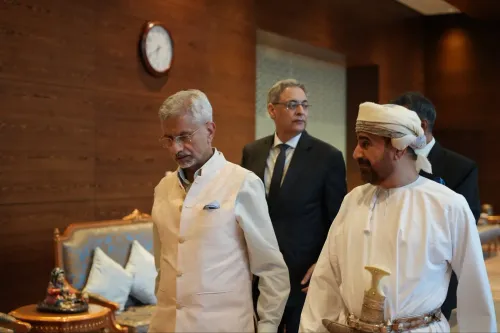
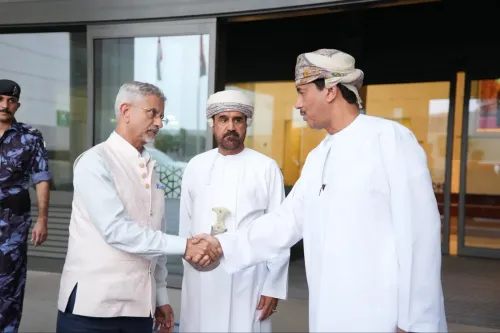
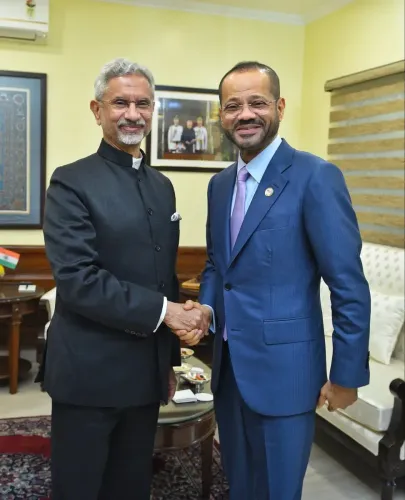
Jaishankar Meets Oman FM Albusaidi in Muscat, Reviews Strategic Ties
Synopsis
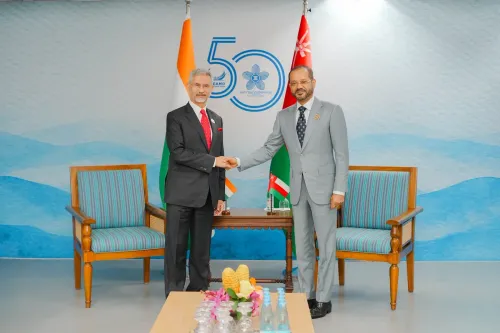
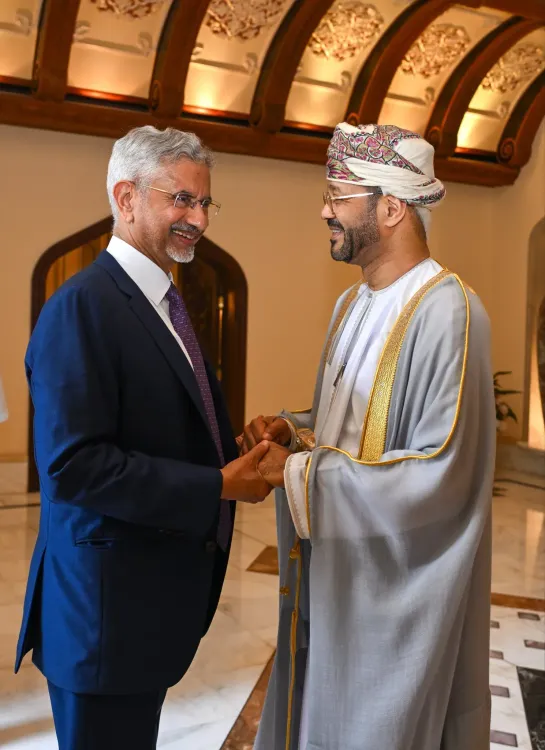
EAM Dr. S. Jaishankar met Omani FM Badr Albusaidi in Muscat on 10 July 2026, reviewing the India-Oman Strategic Partnership across trade, investments, connectivity, maritime, defence, and cyber and AI domains, while exchanging views on Gulf peace and stability.
Key Takeaways
Jaishankar met Omani FM Badr Albusaidi in Muscat on 10 July 2026 .
Talks covered trade, investments, connectivity, maritime, technology, defence, cyber and AI domains.
Ministers held a 'comprehensive exchange of views on developments in the Gulf' and efforts toward peace and stability .
The meeting was framed as reflecting the 'trust and strength' of the India-Oman Strategic Partnership .
India and Oman have conducted the bilateral naval exercise Naseem Al Bahr annually since 1993 .
PM Modi last visited Muscat in 2018 to review the strategic partnership and expand Indian diplomatic facilities.
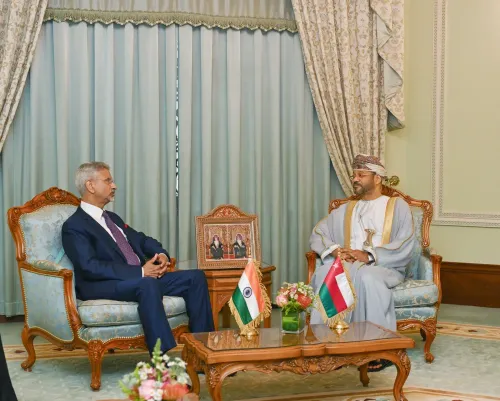
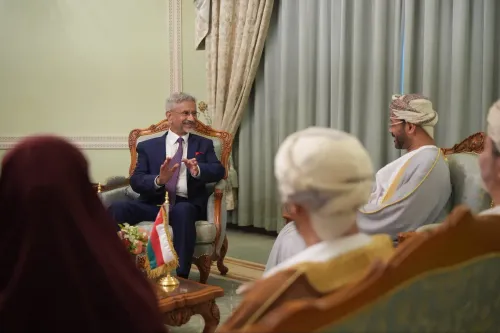
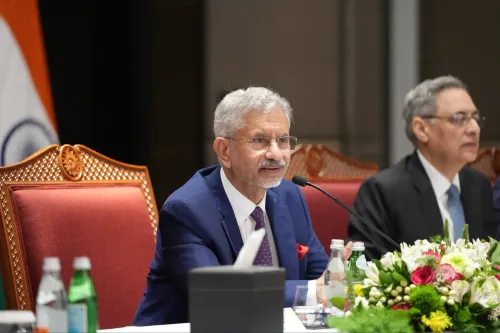
Union External Affairs Minister Dr. S. Jaishankar met Omani Foreign Minister Badr Albusaidi in Muscat on Friday, 10 July 2026, holding wide-ranging discussions spanning trade, defence, maritime security, technology, and emerging domains including cyber and artificial intelligence.
Context
Jaishankar described the meeting as 'delighted', noting that the two ministers held 'discussions on various facets of our cooperation' with a focus on 'trade, investments, connectivity, maritime, technology, defence and cyber and AI domains.' The talks also included 'a comprehensive exchange of views on developments in the Gulf, and efforts to ensure peace and stability,' he wrote on X.
The bilateral conversation, he noted, 'reflected the trust and strength of our Strategic Partnership' — the formal framework that anchors India-Oman ties across political, economic, and security dimensions.
Policy Backdrop
India and Oman formalised their Strategic Partnership to deepen multifaceted cooperation, building on decades of people-to-people links, trade, and defence engagement. Prime Minister Narendra Modi visited Muscat in 2018 to review the partnership and expand Indian diplomatic facilities in the country.
On the defence front, the two countries have convened the India-Oman Joint Military Cooperation Committee since the early 2000s, and have conducted the bilateral naval exercise Naseem Al Bahr annually since 1993 to enhance maritime interoperability. Oman, a Gulf Cooperation Council member, occupies a strategically vital position at the mouth of the Strait of Hormuz, making maritime cooperation with India particularly significant for energy and trade route security.
The 10 July 2026 meeting fits within India's broader 'Act West' approach toward GCC states — a sustained diplomatic effort centred on economic diversification, maritime security, and technology partnerships amid evolving regional dynamics.
Stakeholders and Impact
The large Indian expatriate community in Oman — one of the most significant in the Gulf — has a direct stake in the health of bilateral ties, particularly in areas of labour mobility, remittances, and consular services. Trade and investment sectors on both sides stand to benefit from any follow-on agreements emerging from the ministerial-level engagement.
The explicit mention of cyber and AI domains signals that the partnership is evolving beyond traditional pillars, reflecting a shared interest in emerging-technology governance and digital connectivity. Defence industries and maritime agencies in both countries are also closely watching the trajectory of cooperation in those sectors.
What's Next
Diplomatic observers will look to the next round of India-Oman Foreign Office Consultations for any formalisation of agreements in defence technology, connectivity infrastructure, or digital cooperation discussed during the Muscat meeting. The mention of 'peace and stability' in the Gulf context also suggests that regional security architecture — including developments in the Red Sea and broader West Asia — featured in the conversation.
As India deepens its strategic footprint across the Gulf, the Jaishankar-Albusaidi meeting reinforces New Delhi's intent to treat Muscat not merely as a bilateral partner but as a node in its wider regional connectivity and security calculus.
Point of View
Especially as tensions elsewhere in West Asia remain elevated. The meeting also keeps the bilateral institutional machinery — Joint Military Cooperation Committee, Foreign Office Consultations, naval exercises — primed for follow-on deliverables.
NationPress
9 Oct 2026
Frequently Asked Questions
Why did Jaishankar visit Muscat in July 2026?
Jaishankar visited Muscat on 10 July 2026 to meet Omani Foreign Minister Badr Albusaidi and hold discussions on trade, investments, connectivity, maritime security, defence, and cyber and AI cooperation under the India-Oman Strategic Partnership.
What is the India-Oman Strategic Partnership?
The India-Oman Strategic Partnership is a bilateral framework covering trade, defence, maritime security, and connectivity, deepened significantly during PM Modi's 2018 visit to Muscat.
What is Naseem Al Bahr?
Naseem Al Bahr is an annual bilateral naval exercise between India and Oman, conducted since 1993 to enhance maritime interoperability between the two countries.
What did Jaishankar and Albusaidi discuss regarding the Gulf?
The two ministers held a comprehensive exchange of views on developments in the Gulf region and discussed efforts to ensure peace and stability in the area.
What new domains were added to India-Oman cooperation talks in 2026?
Cyber and artificial intelligence were explicitly highlighted as new domains of focus in the 10 July 2026 Muscat talks, alongside traditional areas like trade, defence, and maritime cooperation.