Trump Declares Ceasefire with Iran 'OVER,' Agrees to Resume Talks
Synopsis
President Donald J. Trump, via the White House, declared on July 10, 2026 that the US ceasefire with Iran is 'OVER' while agreeing to continue diplomatic talks at Tehran's request. The statement signals a hardened American posture even as a diplomatic channel remains open.
Key Takeaways
The White House posted a statement from President Donald J.
Trump on July 10, 2026 declaring the US ceasefire with Iran is over.
Iran requested a continuation of talks; the United States agreed to do so while simultaneously ending the ceasefire.
Trump's statement used capitalised emphasis — 'OVER' — signalling deliberate rhetorical escalation.
The Trump administration previously withdrew from the JCPOA in 2018 and has consistently favoured bilateral pressure over multilateral frameworks with Iran.
The dual-track approach — open talks combined with a declared end to the ceasefire — creates significant uncertainty for regional stakeholders including India , Israel , and Gulf states .
Official Iranian and US State Department responses will be critical in determining the next phase of this diplomatic standoff.
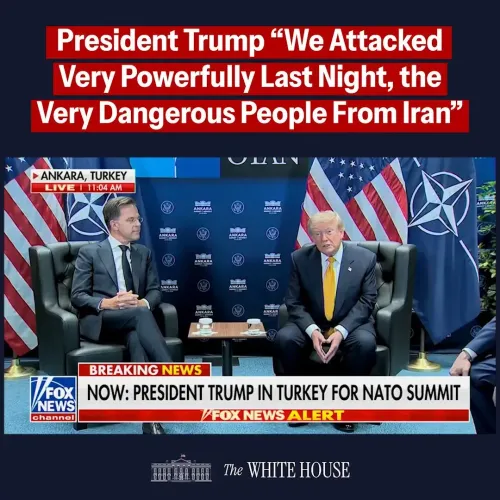
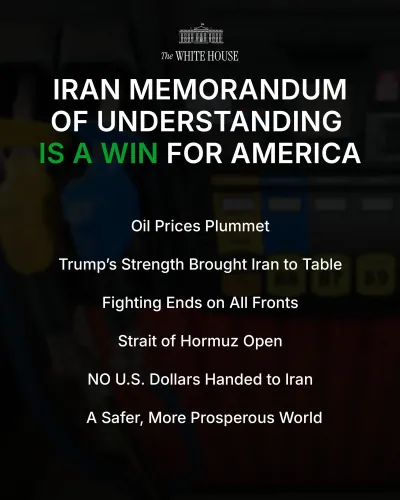
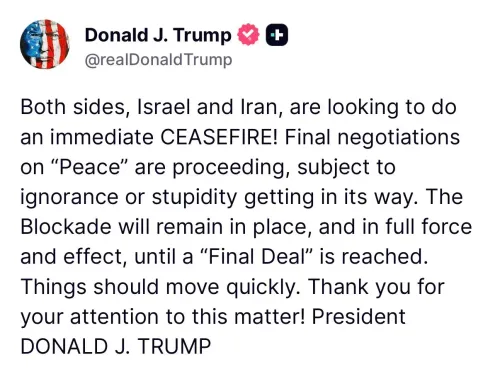
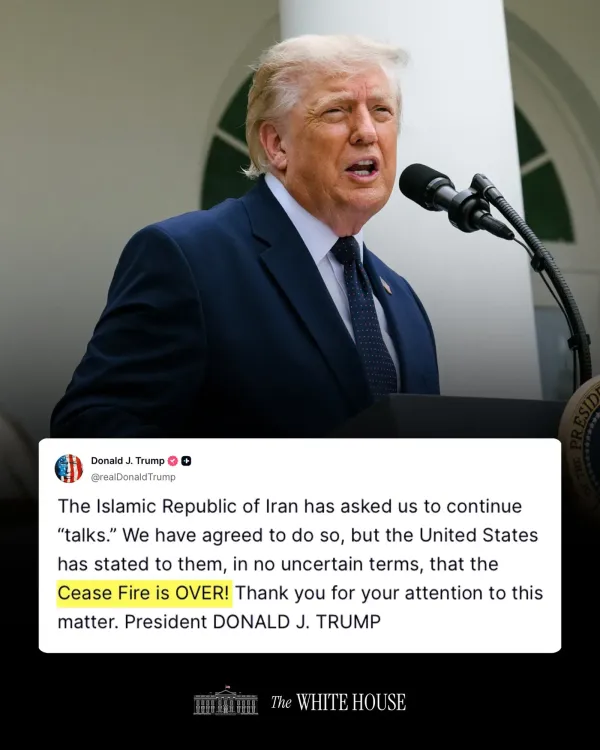
The White House announced on Friday, July 10, 2026 that President Donald J. Trump has declared the ceasefire with Iran is over, even as the United States agreed to continue diplomatic talks at Tehran's request. The statement, posted on the official White House account, signals a sharp shift in the posture of the ongoing US-Iran engagement.
Context
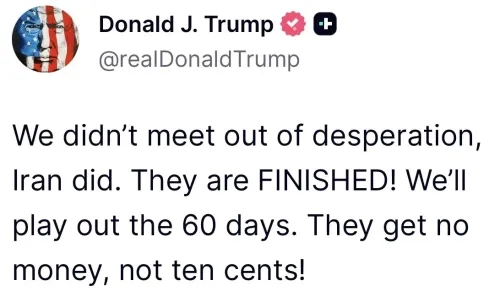
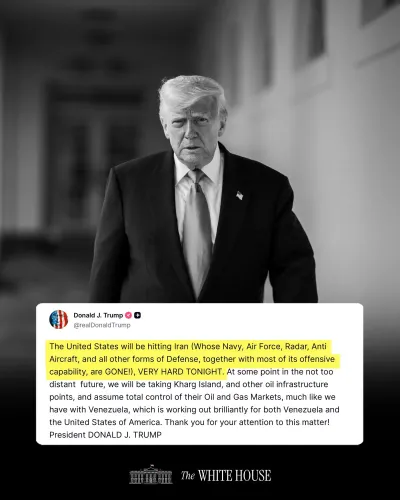
In his own words, President Trump stated: 'The Islamic Republic of Iran has asked us to continue talks. We have agreed to do so, but the United States has stated to them, in no uncertain terms, that the Cease Fire is OVER!' The capitalised emphasis on 'OVER' in the official communication underscores the administration's intent to project resolve. The statement closed with the phrase 'Thank you for your attention to this matter,' a rhetorical flourish consistent with Trump's direct communication style.
The declaration comes amid a broader pattern of US-Iran tensions that have persisted for decades. The simultaneous affirmation of continued talks and the announcement that a ceasefire has ended presents a complex diplomatic signal — Washington is keeping a channel open while asserting that any prior pause in hostilities no longer holds.
Policy Backdrop
US-Iran relations have long oscillated between periods of negotiated restraint and maximum pressure. During Trump's first term, the administration withdrew from the Joint Comprehensive Plan of Action (JCPOA) — the 2015 multilateral nuclear deal — and reimposed sweeping economic sanctions on Tehran. That withdrawal in 2018 marked a decisive break from the multilateral framework negotiated under the previous administration.
Tensions further escalated in January 2020 when a US strike killed senior Iranian military commander Qasem Soleimani, bringing the two countries to the brink of direct military confrontation. The Trump administration's approach has consistently favoured bilateral leverage over multilateral frameworks, using public statements as instruments of diplomatic pressure.
Stakeholders and Impact
The Iranian government finds itself in a delicate position: it has sought to keep diplomatic channels alive by requesting continued talks, but now faces a unilateral American declaration that any ceasefire arrangement is terminated. How Tehran responds — whether through escalation, silence, or a counter-statement — will be closely watched by regional actors including Israel, Saudi Arabia, and Gulf states, all of whom have significant stakes in the trajectory of US-Iran relations.
For India, which imports energy from the region and maintains diplomatic ties with both Washington and Tehran, any escalation in the Persian Gulf carries direct implications for oil prices, shipping routes, and the security of the large Indian diaspora in the Gulf Cooperation Council states. Indian foreign policy observers will be monitoring whether the resumption of talks leads to any de-escalation or further deterioration.
What's Next
The White House statement leaves several critical questions unanswered: the nature of the ceasefire that has now been declared over, the format and timeline of the agreed-upon talks, and whether any third-party mediators are involved. Future communications from the US State Department and official Iranian channels will be crucial in determining whether the diplomatic track holds or collapses under the weight of the administration's hardened posture.
Analysts will be watching for Iranian official responses, any movement of US military assets in the region, and the posture of regional allies in the days ahead. The dual track of declared hostility and open diplomacy is a high-risk strategy that could either produce a breakthrough agreement or accelerate a confrontation.
Point of View
In this case a ceasefire. This approach mirrors the 'maximum pressure' doctrine of his first term, where economic and rhetorical escalation were used as leverage to extract concessions. The public, capitalised declaration that the ceasefire is 'OVER' is as much a message to domestic audiences and regional allies as it is to Tehran. Whether this posture produces a deal or a dangerous miscalculation will define a pivotal chapter in US foreign policy.
NationPress
10 Jul 2026
Frequently Asked Questions
What did Trump say about the Iran ceasefire?
President Trump, via the White House, declared on July 10, 2026 that the US ceasefire with Iran is 'OVER,' even as Washington agreed to continue diplomatic talks at Tehran's request.
Is the US still talking to Iran after the ceasefire ended?
Yes. The White House statement confirmed that Iran requested continued talks and the United States agreed to do so, even while declaring the ceasefire terminated.
What is the history of US-Iran relations under Trump?
During his first term, Trump withdrew the US from the 2015 JCPOA nuclear deal in 2018 and reimposed broad sanctions on Iran. A US strike killed Iranian General Qasem Soleimani in January 2020, sharply escalating tensions.
What does the end of the US-Iran ceasefire mean for India?
India, which depends on Gulf energy routes and has a large diaspora in the region, could face higher oil prices and shipping disruptions if US-Iran tensions escalate following the ceasefire declaration.
What happens next in US-Iran diplomacy?
Both sides have agreed to continue talks, but the terms, format, and timeline remain unclear. Responses from the Iranian government and the US State Department will indicate whether diplomacy holds or tensions escalate further.