White House Declares 'Iran Is Finished' in Stark Post
Synopsis
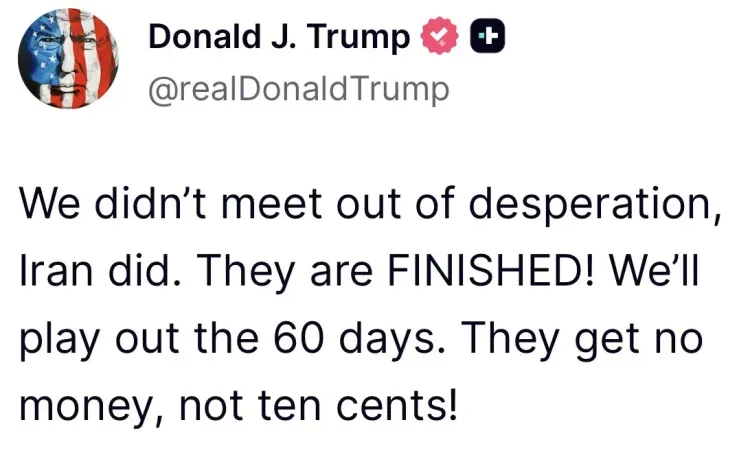
The White House declared 'Iran is FINISHED' in a blunt post on 19 June 2026, offering no elaboration. The statement is one of the starkest official US signals on Iran in recent memory, arriving against a backdrop of collapsed nuclear diplomacy and sustained sanctions pressure since the 2018 JCPOA withdrawal.
Key Takeaways
The White House posted 'Iran is FINISHED' on 19 June 2026 , with no accompanying explanation beyond a linked image.
The United States withdrew from the JCPOA in 2018 and has maintained broad economic sanctions on Iran since then.
The declaration is one of the most emphatic public statements on Iran from official US executive channels in recent years.
Gulf allies and Israeli officials are likely to interpret the statement as a signal of potential escalatory action against Tehran .
For India , any escalation in the US-Iran standoff has direct implications for energy security and the Chabahar port project.
No specific policy action — sanctions, military or diplomatic — has been announced alongside the statement at the time of publication.
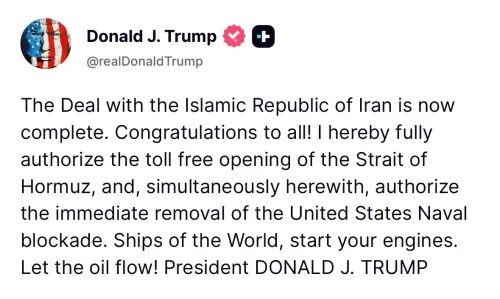
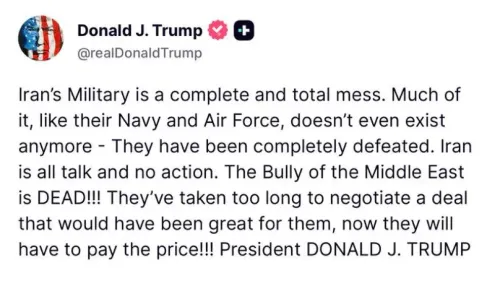
The White House, the official communications account of the Executive Office of the President of the United States, posted a blunt, two-word declaration on Friday, 19 June 2026, stating 'Iran is FINISHED' — one of the most stark public statements on Iran to emerge from official US government channels in recent memory.
Context
The post, shared at 1:45 PM UTC and accompanied by an image, offered no elaboration beyond the three-word assertion. The brevity and capitalisation of the word 'FINISHED' signal an emphatic, declaratory tone from the highest level of US executive communications. The linked media has not been independently reviewed by NationPress at the time of publication.
US-Iran relations have been in a state of sustained tension for decades, centring on Iran's nuclear programme, its regional proxy networks, and sweeping American economic sanctions. The statement lands against this long and fraught backdrop.
Policy Backdrop
The foundational diplomatic framework governing US-Iran nuclear talks was the Joint Comprehensive Plan of Action (JCPOA), signed in 2015 between Iran and the P5+1 — the five permanent UN Security Council members plus Germany. The agreement sought to cap Iran's uranium enrichment in exchange for phased sanctions relief.
The United States unilaterally withdrew from the JCPOA in 2018 and reimposed broad economic sanctions on Tehran, triggering a cycle of escalating Iranian nuclear activity and failed attempts at diplomatic re-engagement. Since then, no successor agreement has been concluded, and Iran has advanced its enrichment capacity significantly.
White House statements on Iran have historically served as signals — whether of impending sanctions action, a shift in negotiating posture, or a response to a regional security development. The current declaration, however stark, fits within a long pattern of high-pressure public rhetoric from Washington directed at Tehran.
Stakeholders and Impact
Iranian government officials have consistently dismissed maximalist US rhetoric as political theatre, though such statements have in the past preceded concrete policy moves including sanctions designations, military posturing, or diplomatic ultimatums. The Iranian economy, already under severe strain from existing sanctions, remains acutely sensitive to signals from Washington.
Gulf allies and Israeli officials — who have long urged a harder American line on Tehran — are likely to watch the statement closely for any accompanying policy announcement. European signatories to the JCPOA, including France, Germany, and the United Kingdom, have historically sought to preserve diplomatic channels and may seek clarification on what the declaration portends for multilateral engagement.
For India, which has historically maintained independent energy and trade ties with Iran while navigating US sanctions pressure, any escalation in the US-Iran standoff carries implications for energy security, the Chabahar port project, and broader regional stability in West Asia.
What's Next
The absence of specifics in the post leaves open the question of whether this declaration precedes a concrete policy action — such as new sanctions designations, a military development, or a diplomatic ultimatum — or represents a rhetorical escalation in an ongoing pressure campaign. Responses from Tehran, European capitals, and Gulf partners in the coming days will be closely watched.
If history is a guide, such declaratory language from the White House often functions as a pressure signal ahead of a formal policy move. Whether 'FINISHED' translates into a specific enforcement action, a negotiating demand, or marks a response to a development on the ground remains the central question for observers of US foreign policy.
Point of View
But its unusual bluntness suggests it may be anchored to a specific, as-yet-undisclosed development. Historically, such declaratory language from Washington has preceded concrete enforcement actions — sanctions packages, military posturing, or diplomatic ultimatums — rather than standing alone as pure rhetoric. For stakeholders from New Delhi to Riyadh to Brussels, the critical question is not whether the US is serious, but what specific policy instrument the declaration is designed to front-run. The lack of elaboration may itself be strategic, designed to maximise uncertainty in Tehran while Washington calibrates its next move.
NationPress
19 Sept 2026
Frequently Asked Questions
What did the White House mean by 'Iran is FINISHED'?
The White House posted 'Iran is FINISHED' on 19 June 2026 without elaboration. The statement appears to signal a sharp escalation in US rhetoric toward Iran, though no specific policy action was announced alongside it.
What is the current status of the US-Iran nuclear deal?
The United States withdrew from the Joint Comprehensive Plan of Action (JCPOA) in 2018 and reimposed broad sanctions on Iran. No successor agreement has been concluded, and Iran has significantly advanced its uranium enrichment since then.
How does the White House Iran statement affect India?
India has historically maintained trade and energy ties with Iran and has a strategic interest in the Chabahar port project. Any escalation in US-Iran tensions could pressure India to further limit its engagement with Tehran under the threat of secondary sanctions.
What is the JCPOA and why did the US leave it?
The JCPOA, signed in 2015 between Iran and the P5+1, restricted Iran's nuclear enrichment in exchange for sanctions relief. The United States withdrew in 2018, arguing the deal was insufficient to address Iran's nuclear ambitions and regional activities.
What happens next after the White House's Iran statement?
Observers will watch for responses from Iran, European JCPOA signatories, Gulf allies, and Israeli officials, as well as any follow-on policy announcements from Washington such as new sanctions designations or diplomatic ultimatums.