Trump Announces US-Iran Nuclear Deal Largely Negotiated
Synopsis
President Trump declared on 23 May 2026 that a nuclear agreement between the United States, Iran, and several other countries is 'largely negotiated' and subject to finalisation, marking a potential breakthrough after years of failed diplomacy following the 2018 US withdrawal from the JCPOA.
Key Takeaways
President Trump announced on 23 May 2026 that a nuclear agreement with Iran is 'largely negotiated, subject to finalization.' The deal involves the United States , the Islamic Republic of Iran , and 'various other Countries' not yet publicly confirmed.
Trump withdrew the US from the original JCPOA in May 2018 , triggering years of failed attempts to revive the accord.
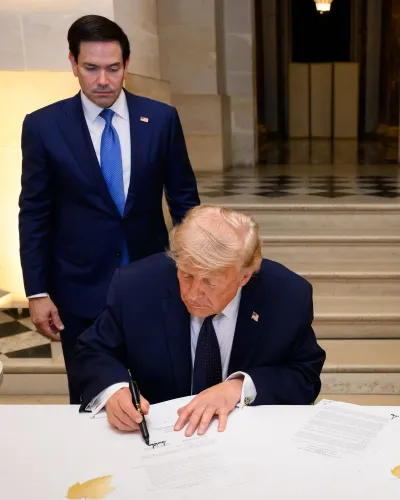
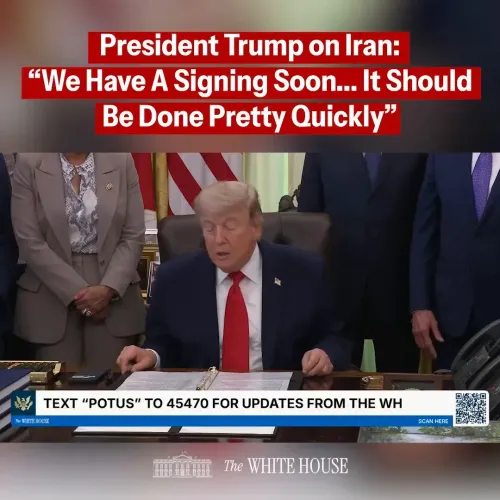
The agreement has not yet been formally signed; a full text, signing ceremony, and congressional notifications remain pending.
India , which has significant energy ties with Iran , could be directly affected by any new sanctions framework linked to the deal.
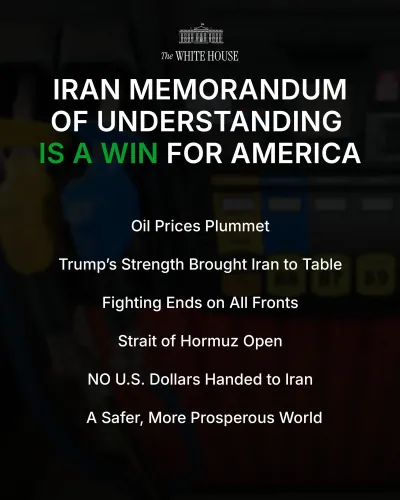
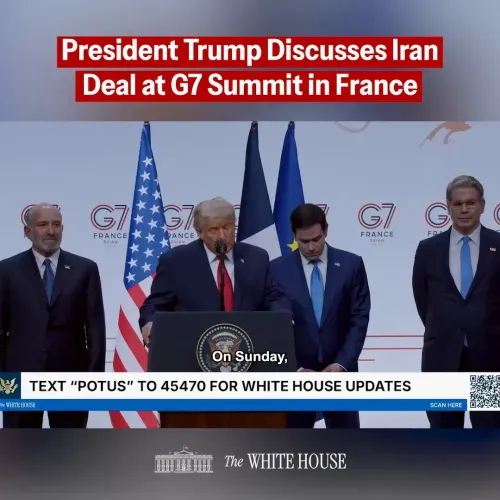
Washington DC, 23 May 2026 — The White House announced on Saturday that President Donald J. Trump has declared a nuclear agreement with Iran to be 'largely negotiated,' pending finalisation, with several other countries also listed as parties to the accord.
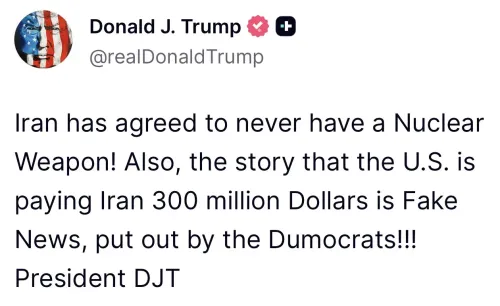
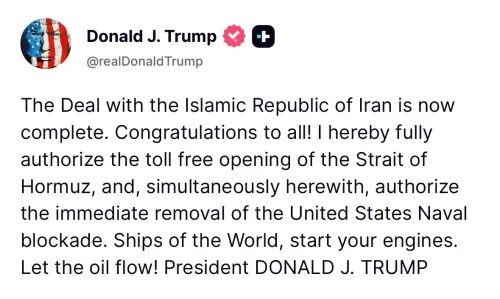
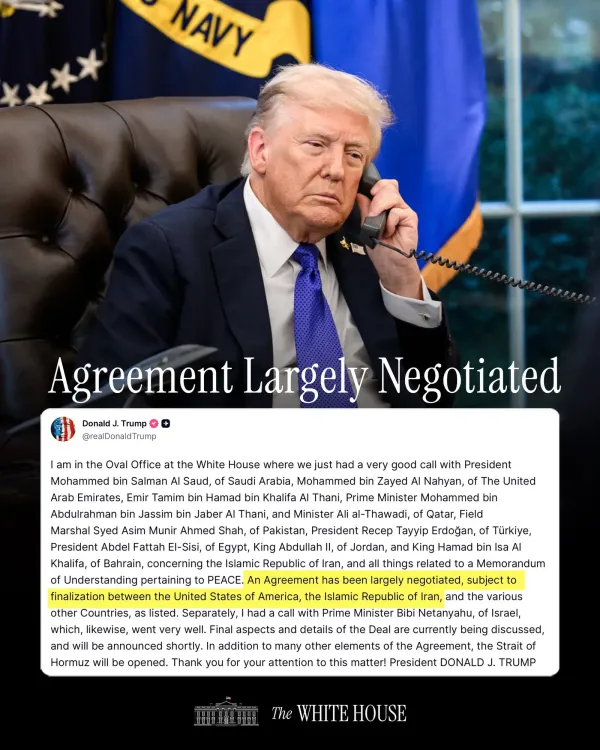
In a statement shared by the official White House account, President Trump said: 'An Agreement has been largely negotiated, subject to finalization between the United States of America, the Islamic Republic of Iran, and the various other Countries, as listed.' The post included a link to what appears to be the full text or a summary of the agreement.
Context
Trump, now serving his second term as the 47th President of the United States, had previously withdrawn the US from the landmark 2015 Joint Comprehensive Plan of Action (JCPOA) in May 2018, reimposing sweeping economic sanctions on Tehran. That withdrawal marked one of the most consequential unilateral foreign-policy moves of his first term and set off years of diplomatic turbulence.
The original JCPOA was concluded in July 2015 between Iran and the so-called P5+1 powers — the United States, United Kingdom, France, Russia, China, and Germany, along with the European Union. It placed verifiable caps on Iran's uranium enrichment activities in exchange for phased sanctions relief.
Policy Backdrop
Indirect talks aimed at reviving the JCPOA were held in Vienna from 2021 onward but failed to produce a restored agreement before the end of the Biden administration. Iran's nuclear programme advanced significantly in the intervening years, with Tehran enriching uranium to levels well beyond those permitted under the original accord.
Trump's second-term foreign-policy posture had signalled openness to a new deal, distinct from the JCPOA, that his administration argued would impose stricter and more durable constraints on Iran's nuclear activities. The announcement on 23 May 2026 suggests those back-channel or direct negotiations have now reached an advanced stage.
Stakeholders and Impact
The reference to 'various other Countries, as listed' in the presidential statement indicates the emerging agreement is likely multilateral in character, potentially involving European allies and possibly regional powers with strategic interests in Iran's nuclear status. The precise list of co-signatories has not been independently confirmed.
For India, which maintains significant energy and trade ties with Iran and was directly affected by US sanctions waivers during the first Trump term, the trajectory of any new nuclear agreement carries direct economic and strategic implications. Indian refiners had previously curtailed Iranian crude imports under US sanctions pressure.
What's Next
The deal remains 'subject to finalization,' meaning a formal signing ceremony, public release of the full agreement text, and any required congressional notifications under US law are still pending. Verification and implementation mechanisms — the most contested elements of the original JCPOA — will be closely scrutinised by lawmakers, allies, and regional actors alike.
If a final agreement is concluded and ratified, it would represent the most significant shift in US-Iran relations in more than a decade and could reshape sanctions regimes that have defined global energy markets and regional geopolitics since 2018.
Point of View
When he dismantled the 2015 JCPOA. The framing — 'subject to finalization' — is deliberate, preserving leverage while signalling momentum, a negotiating posture consistent with Trump's transactional style. For the broader non-proliferation architecture, the durability of any new deal will hinge on verification mechanisms and whether it commands enough multilateral buy-in to survive future political transitions in Washington. The inclusion of unnamed 'other Countries' suggests an attempt to build a wider coalition of guarantors, potentially addressing the fragility that plagued the JCPOA after the US exit.
NationPress
19 Sept 2026
Frequently Asked Questions
What is the US-Iran nuclear deal announced by Trump in 2026?
President Trump announced on 23 May 2026 that a nuclear agreement between the United States, Iran, and several other countries has been 'largely negotiated' and is pending finalisation. Full details of the deal's terms and co-signatories have not yet been publicly released.
How is this different from the JCPOA?
The original JCPOA was a 2015 multilateral accord that the US exited in 2018. The new agreement, if finalised, would be a distinct deal negotiated under Trump's second term, though its specific terms and verification mechanisms are not yet public.
Which countries are part of the new Iran nuclear agreement?
The White House statement refers to 'various other Countries, as listed,' but the full list has not been independently confirmed. The deal is expected to be multilateral in character.
How does the US-Iran deal affect India?
India has significant energy and trade ties with Iran and was directly affected by US sanctions during Trump's first term, which forced Indian refiners to curtail Iranian crude imports. A new deal and any associated sanctions changes could reopen or further restrict those trade channels.
Is the US-Iran deal finalised?
No. As of 23 May 2026, President Trump described it as 'largely negotiated, subject to finalization.' A formal signing, public text release, and congressional notifications are still pending.