Trump Says Iran Leaked False Nuclear Deal Terms to Media
Synopsis
The White House on June 12, 2026 quoted President Trump sharply disputing terms Iran allegedly leaked to the press about an ongoing nuclear agreement, insisting the leaked version has 'nothing to do' with what was actually agreed to in writing — reigniting a long-running US-Iran credibility dispute.
Key Takeaways
President Trump , quoted by The White House on June 12, 2026 , said Iran leaked nuclear deal terms to the media that do not reflect what was actually agreed upon.
Trump stated a written agreement exists, though its specific contents remain unverified.
Trump withdrew the US from the JCPOA in May 2018 , reimposing sanctions lifted under the 2015 deal.
Both Washington and Tehran have repeatedly accused each other of misrepresenting draft texts since the 2018 US exit from the JCPOA.
No formal US congressional notification confirming the new written agreement or its verification mechanisms has been issued as of publication.
The dispute has implications for India 's energy imports and diplomatic positioning in West Asia .
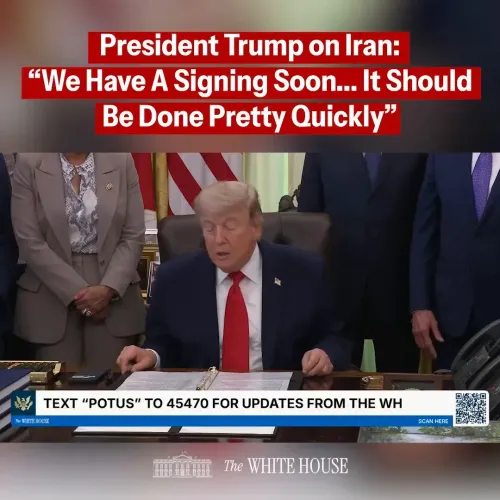
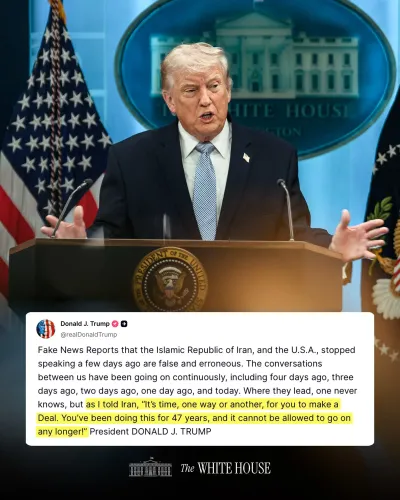
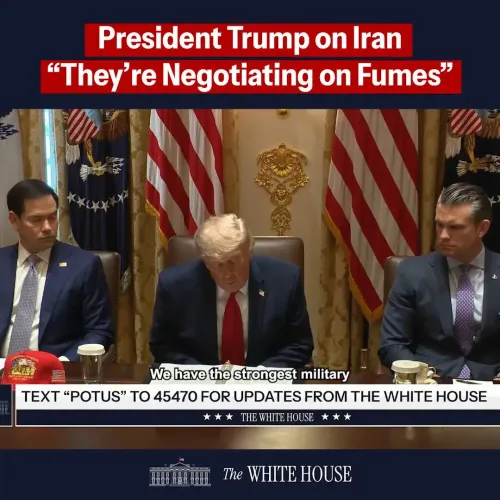
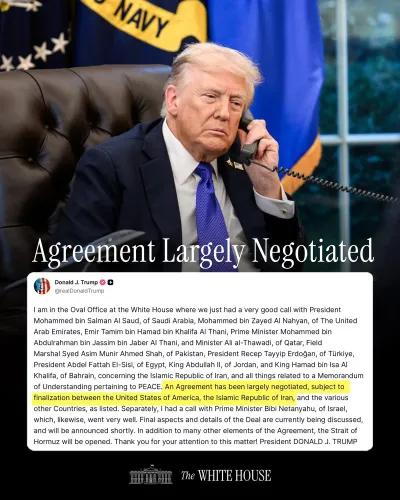
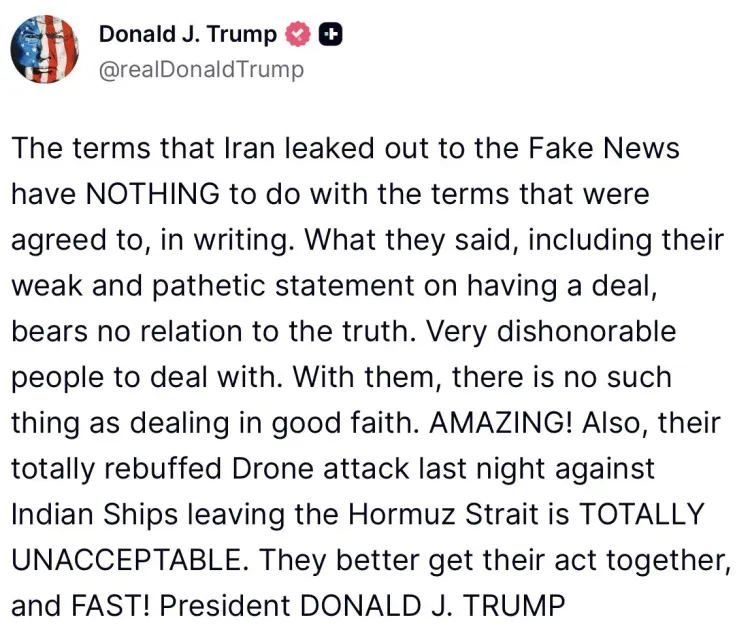
Washington DC, June 12, 2026 — The White House on Friday quoted President Donald J. Trump as directly disputing Iran's account of ongoing nuclear negotiations, asserting that terms attributed to a reported agreement and leaked to the press bear 'nothing to do' with what was actually agreed upon in writing.
Context
The White House post quotes President Trump as saying: 'The terms that Iran leaked out to the Fake News have NOTHING to do with the terms that were agreed to, in writing.' The statement signals a sharp public rupture in what appears to be an active — if fragile — diplomatic channel between Washington and Tehran.
The accusation is directed both at Iran for the alleged leak and at media outlets for reporting those terms, which Trump characterises as inaccurate. The reference to a written agreement suggests that some form of documented understanding between the two sides exists, though its specific contents remain unverified.
Policy Backdrop
Trump first withdrew the United States from the Joint Comprehensive Plan of Action (JCPOA) in May 2018, reimposing sweeping sanctions on Iran that had been lifted under the 2015 multilateral nuclear deal. The JCPOA had been negotiated between Iran and the P5+1 group — the five permanent UN Security Council members plus Germany — and placed verifiable limits on Iran's nuclear activities in exchange for economic relief.
Since the 2018 US exit, successive rounds of indirect talks have repeatedly stalled, in part because both sides have accused each other of misrepresenting draft texts and negotiating positions to the press. Trump's second administration has continued to apply a 'maximum pressure' sanctions posture while leaving open the possibility of a new written deal.
Stakeholders and Impact
Iranian officials, US negotiators, and the broader international community — including Europe, Russia, and China, all parties to the original JCPOA — have a direct stake in whether a new agreement holds. Any collapse of back-channel negotiations could accelerate Iran's nuclear timeline and trigger fresh calls for sanctions escalation or multilateral action at the UN Security Council.
For India, which imports energy from the region and maintains diplomatic ties with both Washington and Tehran, renewed US-Iran tension carries implications for oil supply chains, regional stability in West Asia, and New Delhi's own strategic balancing act.
What's Next
Observers will watch for any formal US statement or congressional notification confirming the existence and scope of a new written agreement, along with what verification mechanisms it contains. Iran's foreign ministry has not yet issued a public response to Trump's characterisation as of the time of publication.
The episode underscores a pattern in which public accusations of misrepresentation have historically derailed diplomatic progress between the two countries, raising questions about whether a durable framework can survive the current information environment.
Point of View
Even as the two sides contest its contents. This mirrors the breakdown dynamic seen repeatedly since 2018, where public accusations of bad faith have consistently eroded diplomatic momentum. For the broader non-proliferation architecture, the credibility gap between the two governments remains the single greatest obstacle to a durable agreement.
NationPress
24 Sept 2026
Frequently Asked Questions
What did Trump say about the Iran nuclear deal on June 12 2026?
President Trump, quoted by The White House, said the terms Iran leaked to the media have 'nothing to do' with what was actually agreed to in writing, disputing Iran's public account of the negotiations.
Is there a new US-Iran nuclear agreement in 2026?
Trump's statement implies a written agreement exists between the US and Iran, but its specific contents have not been officially confirmed or made public as of June 12, 2026.
What was the JCPOA and why did Trump leave it?
The JCPOA was a 2015 nuclear deal between Iran and the P5+1 nations that limited Iran's nuclear activities in exchange for sanctions relief. Trump withdrew the US from it in May 2018 and reimposed sanctions as part of a maximum pressure campaign.
How does the US-Iran nuclear dispute affect India?
India imports energy from the West Asia region and maintains diplomatic ties with both Washington and Tehran, meaning renewed US-Iran tension can affect oil supply chains, energy prices, and India's strategic balancing in the region.
What happens next in US-Iran nuclear talks?
Analysts are watching for a formal US statement or congressional notification confirming the written agreement and its verification mechanisms, as well as an official response from Iran's foreign ministry.