White House: Trump Warns Iran 'Time to Make a Deal' After 47 Years
Synopsis
The White House has amplified a stark warning from President Donald J. Trump to Iran, declaring it is 'time, one way or another' for Tehran to make a deal after 47 years of estrangement. The message revives the maximum pressure posture of Trump's first term and signals a hardening U.S. stance with implications for Gulf allies, India and global oil markets.
Key Takeaways
The White House quoted President Donald J.
Trump telling Iran it is 'time, one way or another' to make a deal.
The 47-year reference dates to the 1979 Islamic Revolution and the rupture in U.S.-Iran ties.
Mr Trump withdrew the United States from the JCPOA in May 2018 and imposed sweeping sanctions through 2020.
The post signals a preference for a bilateral deal over the multilateral 2015 framework.
India watches closely given its energy ties with Iran and its stake in the Chabahar port project.
Next markers include responses from Tehran and upcoming IAEA Board of Governors deliberations.
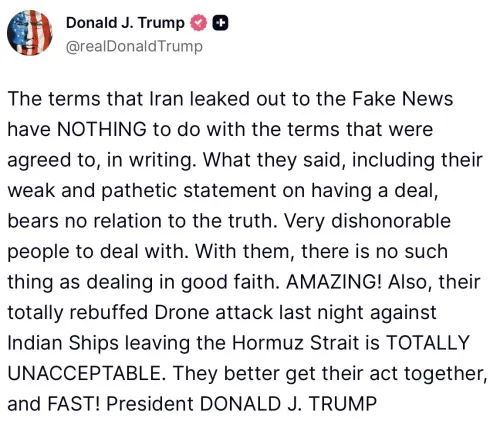
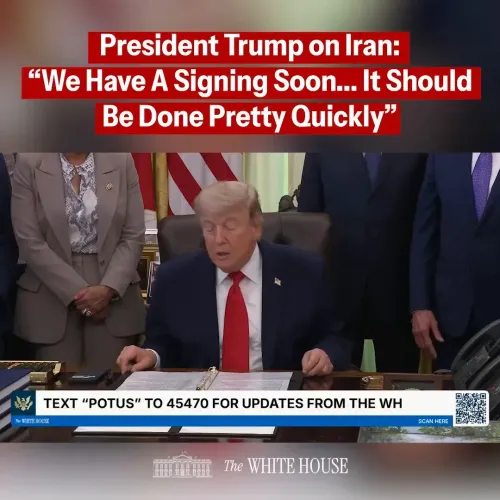
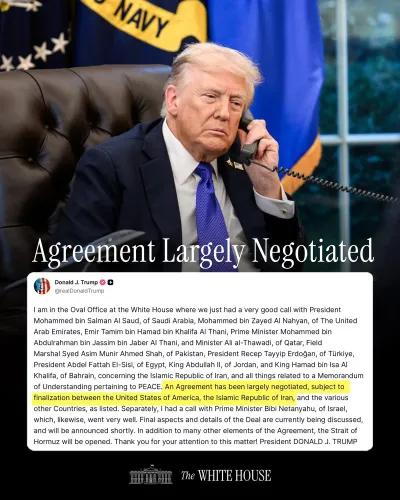
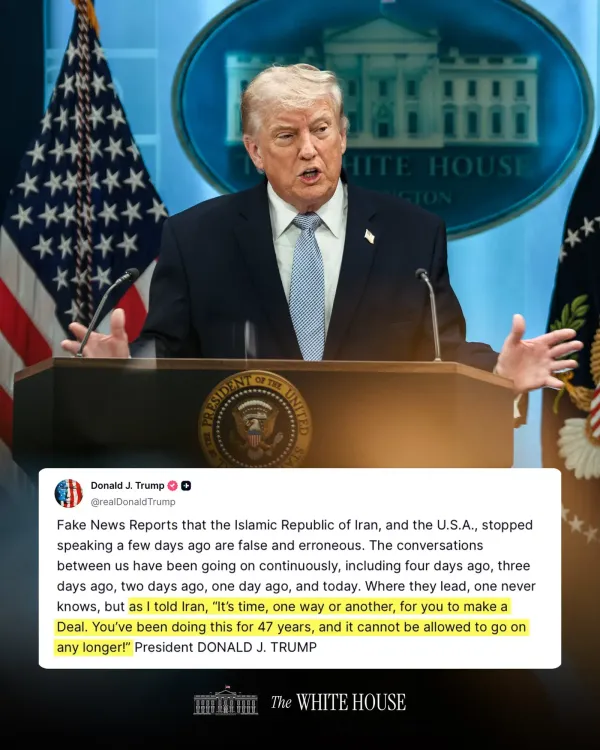
The White House, the official communications arm of the Executive Office of the President of the United States, on Tuesday, June 2, 2026, amplified a sharp message from President Donald J. Trump to the Islamic Republic of Iran, demanding that Tehran negotiate a fresh agreement with Washington. The post quoted the President warning that Iran's posture of the past several decades 'cannot be allowed to go on any longer'.
In the post, the White House carried Mr Trump's words verbatim: 'As I told Iran, It's time, one way or another, for you to make a Deal. You've been doing this for 47 years, and it cannot be allowed to go on any longer!' The 47-year reference points back to the 1979 Islamic Revolution and the U.S. embassy hostage crisis that ruptured ties between Washington and Tehran.
Context
Mr Trump's framing is consistent with the confrontational tone he adopted during his first term, when in May 2018 he announced the unilateral withdrawal of the United States from the Joint Comprehensive Plan of Action (JCPOA), the 2015 nuclear accord between Iran and six world powers.
That agreement had capped Iranian uranium enrichment in exchange for the lifting of major sanctions. Following the U.S. exit, the Trump administration between 2018 and 2020 reimposed and expanded a sweeping sanctions regime, branded the 'maximum pressure' campaign, targeting Iranian oil exports, shipping and financial institutions.
Policy backdrop
The President's insistence on a comprehensive bilateral deal, rather than a return to the multilateral JCPOA framework, mirrors his long-standing position that the 2015 accord was inadequate on enrichment timelines, missile development and regional activity. It also marks a clear departure from the diplomatic track pursued by the Obama and Biden administrations, which engaged Tehran through European intermediaries.
The phrase 'one way or another' has been read in policy circles as a signal that Washington is willing to combine economic coercion with the implicit threat of escalation if Tehran does not engage. The White House post did not, however, specify any new sanctions designations, deadlines or diplomatic channels.
Stakeholders and impact
The immediate audience for the message extends well beyond Tehran. Iranian leadership, including the Supreme Leader's office and the foreign ministry, will weigh whether to respond publicly or through back channels. Gulf allies of the United States, particularly Saudi Arabia and the United Arab Emirates, watch such statements closely for signs of either confrontation or accommodation that could reshape regional security calculations.
For India, the stakes are tangible. New Delhi has historically relied on Iranian crude and has invested in the Chabahar port project as a gateway to Afghanistan and Central Asia. A renewed tightening of secondary sanctions would once again force Indian refiners and shipping firms to recalibrate sourcing and payment arrangements.
Global energy markets are similarly sensitive: any perception that the United States is moving toward a harder line tends to put a risk premium on Brent crude, with knock-on effects for fuel prices in import-dependent economies.
What's next
Attention now shifts to whether Iranian officials, including the Supreme Leader, issue a formal rebuttal or signal openness to talks. Scheduled meetings of the International Atomic Energy Agency (IAEA) Board of Governors are the most likely near-term venues where Iran's enrichment levels and inspection access could be formally addressed.
Markets and chancelleries will also be looking for any follow-up from the White House clarifying the mechanism, timeline or preconditions the President envisages for a deal. Until then, the post stands as a presidential demand without an attached roadmap — a familiar pattern that has historically preceded both escalatory steps and surprise diplomatic openings.
Point of View
Ultimatum-driven diplomacy that defined the first Trump term on Iran. By anchoring the rhetoric in a 47-year arc rather than a specific provocation, the President frames the entire post-1979 order as the problem, not just current enrichment levels. For policy watchers, the key question is whether 'one way or another' is rhetorical scaffolding for a negotiated reset or a prelude to fresh coercive measures. Either way, it pressures U.S. partners — including India — to prepare contingency plans on energy sourcing and sanctions compliance.
NationPress
24 Sept 2026
Frequently Asked Questions
What did Trump say to Iran in the White House post?
President Donald J. Trump said it is 'time, one way or another' for Iran to make a deal with the United States, adding that Tehran's conduct over 47 years 'cannot be allowed to go on any longer'. The remark was carried on the official White House handle.
Why did Trump refer to 47 years in his Iran statement?
The 47-year reference points to the 1979 Islamic Revolution in Iran and the U.S. embassy hostage crisis, which severed diplomatic ties between Washington and Tehran. Mr Trump uses the timeline to argue that the entire post-revolutionary pattern of Iranian behaviour must change.
What is the JCPOA and why did the US withdraw?
The JCPOA is the 2015 nuclear agreement between Iran and six world powers that limited Iran's uranium enrichment in return for sanctions relief. President Trump withdrew the United States in May 2018, arguing the deal was too lenient on enrichment timelines, missiles and regional activities.
How does US-Iran tension affect India?
India is affected because it has historically imported Iranian crude oil and has invested in the Chabahar port as a route to Afghanistan and Central Asia. A tighter U.S. sanctions regime could force Indian refiners and shipping firms to alter sourcing and payment channels.
What happens next in US-Iran relations?
Attention shifts to any response from Iran's Supreme Leader and foreign ministry, and to upcoming meetings of the IAEA Board of Governors that could address enrichment and inspection access. Markets will also watch for any follow-up clarification from the White House on terms or timelines.