White House Claims Trump Solved Iran Nuclear Threat
Synopsis
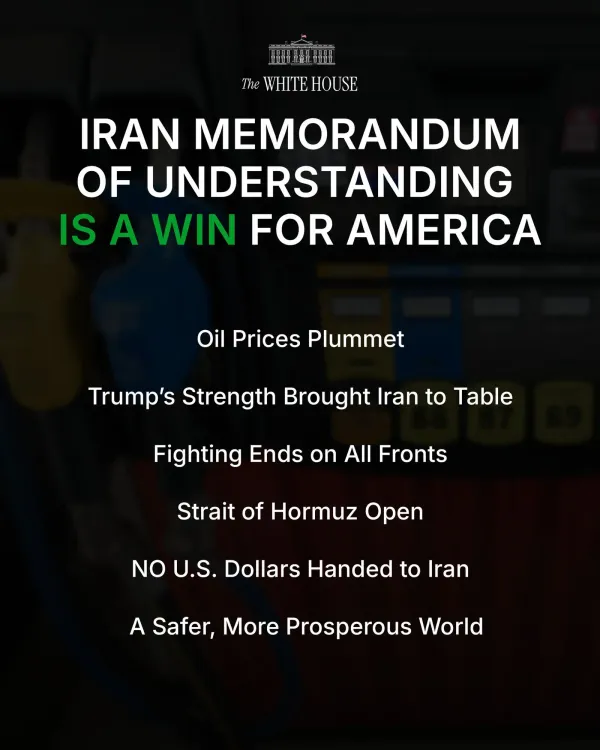
The White House declared on June 18, 2026, that President Donald J. Trump had resolved the Iran nuclear standoff that Washington managed for four decades, asserting Iran would never acquire a nuclear weapon. No mechanism for the resolution was specified in the post.
Key Takeaways
The White House posted on June 18, 2026 , claiming President Trump had permanently ended Iran 's nuclear threat.
The post asserted the threat had been managed by Washington for forty years without resolution until now.
The JCPOA , negotiated in 2015 , was the last major multilateral framework to cap Iran 's uranium enrichment; Trump withdrew the US from it in May 2018 .
No specific mechanism — agreement, military action, or sanctions deal — was named in the White House post.
The IAEA 's upcoming quarterly enrichment reports will serve as an independent check on the claim.
India , which maintains energy and economic ties with Iran , would be significantly affected by any lasting shift in the nuclear standoff.
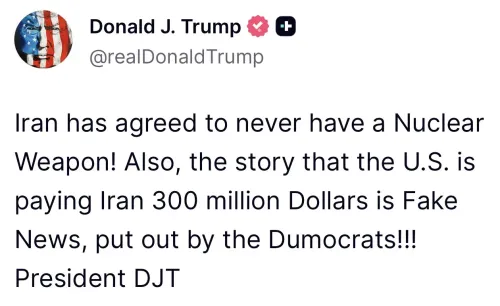
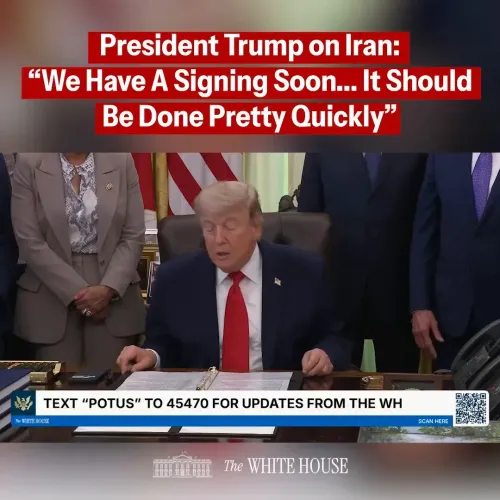
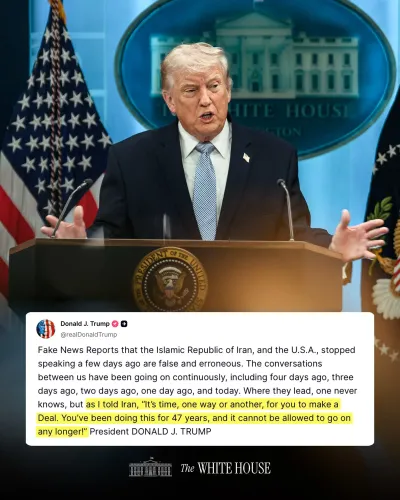
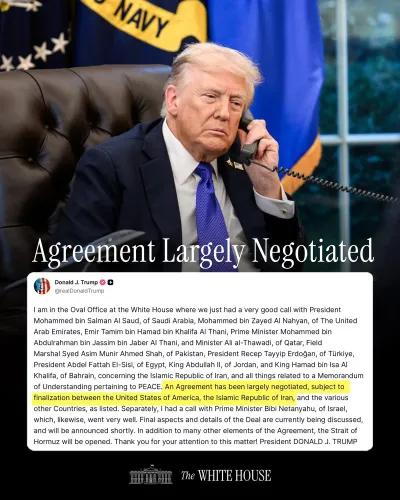
The White House, the official communications account of the Executive Office of the President of the United States, declared on Thursday, June 18, 2026, that President Donald J. Trump had resolved a nuclear standoff with Iran that successive American administrations had managed for four decades, asserting that Iran would 'never have a nuclear weapon.'
Context
The post stated that Trump had 'solved a threat Washington spent forty years managing,' framing the development as a definitive American victory. The claim marks one of the most sweeping assertions on Iran's nuclear programme made by any US administration in recent memory. No specific mechanism — diplomatic agreement, military action, or sanctions breakthrough — was named in the post itself.
The United States and Iran have been locked in a nuclear standoff since the early 1980s, with the proliferation risk posed by Tehran's uranium enrichment programme becoming a central axis of American foreign policy across both Republican and Democratic administrations.
Policy Backdrop
The most significant multilateral attempt to constrain Iran's nuclear ambitions was the Joint Comprehensive Plan of Action (JCPOA), negotiated in 2015 under the Obama administration. The deal, backed by the United States, United Kingdom, France, Germany, Russia, and China, capped Iran's uranium enrichment levels and subjected the country to enhanced international inspections in exchange for sanctions relief.
In May 2018, during his first term, President Trump unilaterally withdrew the United States from the JCPOA and reimposed sweeping economic sanctions on Iran under a 'maximum pressure' campaign. Tehran subsequently stepped up its enrichment activities, and subsequent diplomatic efforts to revive the deal stalled repeatedly. The Trump administration's second term has continued to reject the multilateral framework in favour of direct, unilateral pressure.
Stakeholders and Impact
Israel, the United States' closest ally in the Middle East, has long maintained that a nuclear-armed Iran poses an existential threat and has consistently pressed Washington for a harder line. Any credible resolution of the nuclear question would carry enormous strategic weight for Tel Aviv and reshape security calculations across the region.
Nonproliferation experts and international watchdogs, including the International Atomic Energy Agency (IAEA), have periodically flagged concerns about Iran's enrichment levels. The broader global community — including India, which maintains significant economic and energy ties with Iran — would be directly affected by any durable settlement or, conversely, by an escalation in tensions.
What's Next
The specific terms, verification mechanisms, or diplomatic instruments underpinning the White House's claim remain to be detailed publicly. Upcoming quarterly reports from the IAEA on Iran's enrichment levels will be closely watched as an independent benchmark against which the assertion can be measured.
Congressional action on sanctions authorities and any formal treaty or executive agreement between Washington and Tehran — or among broader multilateral partners — will determine whether the claim translates into a durable, verifiable outcome. The post's sweeping language signals that the Trump administration intends to frame this as a landmark foreign-policy achievement heading into the domestic political calendar.
Point of View
Going beyond prior claims of 'pressure' or 'containment' to assert permanent resolution. It fits a deliberate pattern of the Trump administration positioning unilateral American action as superior to the multilateral JCPOA framework it dismantled in 2018. The absence of any named mechanism — treaty, agreement, or military outcome — leaves the claim open to scrutiny from nonproliferation bodies and allied governments. For India, which balances strategic ties with Washington against longstanding economic engagement with Tehran, the implications of any genuine shift in Iran's nuclear status would be significant and immediate.
NationPress
19 Sept 2026
Frequently Asked Questions
What did the White House say about Iran's nuclear programme in June 2026?
The White House posted on June 18, 2026, that President Donald J. Trump had 'solved' the Iran nuclear threat, asserting that Iran would never have a nuclear weapon — a claim described as a win for America.
What is the JCPOA and why did Trump withdraw from it?
The JCPOA, signed in 2015, was a multilateral deal that capped Iran's uranium enrichment in exchange for sanctions relief. President Trump withdrew the United States from the agreement in May 2018, calling it flawed, and reimposed broad economic sanctions on Iran under a 'maximum pressure' strategy.
Has Iran's nuclear threat actually been permanently resolved?
The White House has asserted this, but no specific mechanism — diplomatic agreement, military action, or verification framework — was detailed in the post. Independent bodies such as the IAEA publish quarterly reports on Iran's enrichment levels that will serve as an objective benchmark.
How does this affect India's relationship with Iran?
India maintains significant energy and trade ties with Iran, and any durable resolution — or escalation — of the nuclear standoff would directly affect New Delhi's foreign policy calculations, energy imports, and regional connectivity projects such as the Chabahar port.
What happens next after the White House's Iran nuclear claim?
Upcoming IAEA enrichment reports, potential congressional action on US sanctions authorities, and any formal agreement between Washington and Tehran will determine whether the assertion translates into a verifiable, lasting outcome.