Trump Claims Iran Agreed to No Nuclear Weapon, Denies $300M Payment
Synopsis
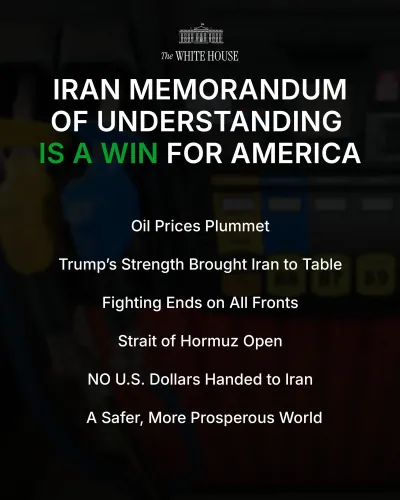
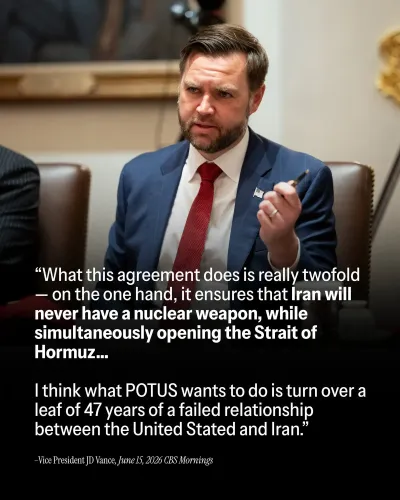
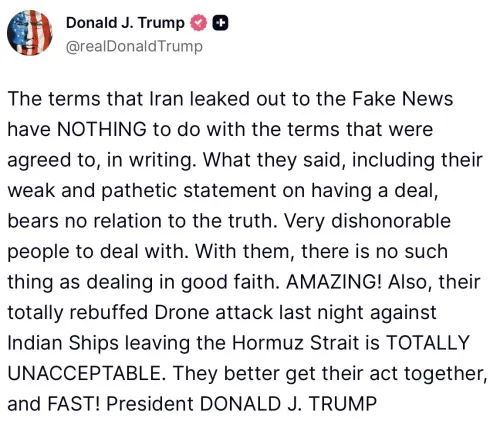
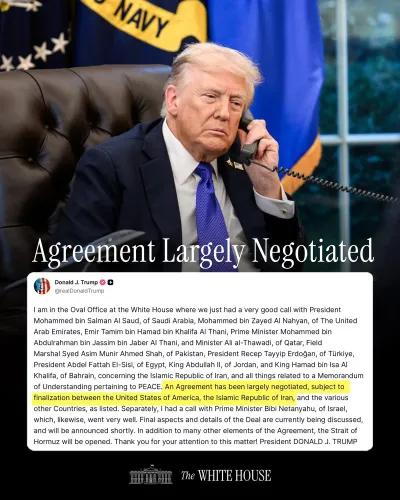
The White House posted a statement from President Trump on June 15, 2026, claiming Iran has agreed to never develop a nuclear weapon. Trump also denied reports of a $300 million US payment to Iran, calling it 'Fake News.' No supporting documentation or State Department briefing accompanied the post.
Key Takeaways
Trump claimed on June 15, 2026 that Iran has agreed to never develop a nuclear weapon.
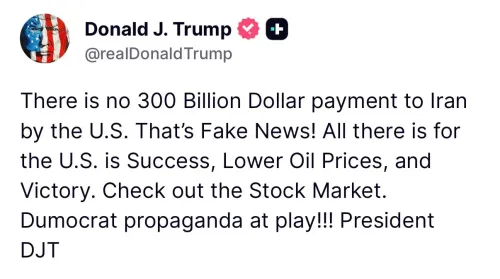
Trump dismissed reports of a $300 million US payment to Iran as 'Fake News' attributed to Democrats.
The statement was published via the official White House account on X, with no accompanying State Department briefing or treaty text.
The JCPOA , the last major multilateral nuclear deal with Iran, was abandoned by the US in 2018 during Trump's first term.
Any binding nuclear commitment with Iran would ordinarily require Senate ratification or a formal executive agreement subject to congressional review.
The claim carries significant implications for India , which maintains ties with both Washington and Tehran and relies on Iranian trade routes.
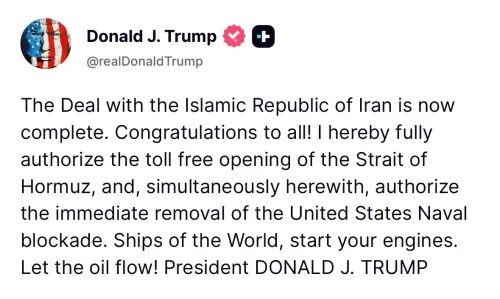
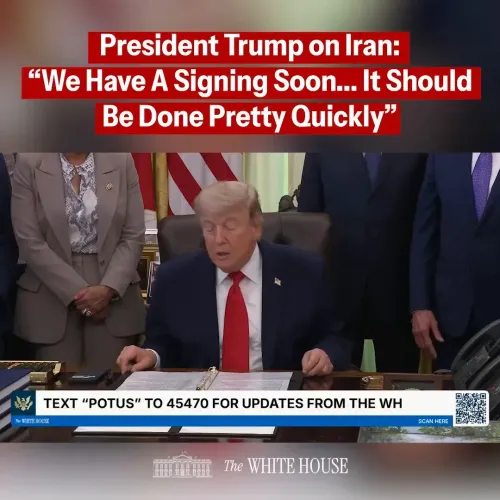
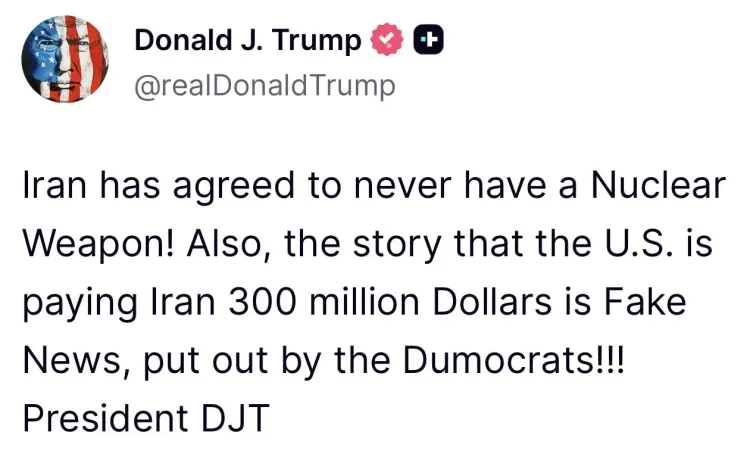
The White House posted a statement attributed to President Donald J. Trump on Monday, June 15, 2026, claiming that Iran has agreed to never develop a nuclear weapon and dismissing reports of a $300 million US payment to Iran as false.
Context
In the post, Trump is quoted as saying: 'Iran has agreed to never have a Nuclear Weapon!' He also categorically denied a separate claim, stating that reports of the United States paying Iran $300 million constitute 'Fake News, put out by the Dumocrats.' The statement was shared via the official White House account on X, lending it the weight of an executive communication.
No supporting details — such as the format of any agreement, the parties involved in negotiations, or the timeline of any deal — were provided in the post itself. The White House has not, as of this report, issued a formal treaty text, joint statement, or State Department briefing to accompany the claim.
Policy Backdrop
The question of Iran's nuclear capabilities has been a central fault line in US foreign policy for over two decades. The landmark Joint Comprehensive Plan of Action (JCPOA), signed in 2015 between Iran and the P5+1 powers, capped Iran's uranium enrichment in exchange for sanctions relief. Trump, during his first term, withdrew the United States from the JCPOA in May 2018 and reimposed sweeping nuclear-related sanctions on Tehran as part of a 'maximum pressure' strategy.
The financial allegation Trump dismissed also has roots in prior controversy. In 2016, the Obama administration transferred approximately $1.7 billion in previously frozen Iranian funds to settle a pre-1979 claims dispute — a payment that Trump repeatedly criticised during and after his first campaign. The current claim of a $300 million payment to Iran echoes that earlier political battleground, though the specific allegation referenced in the post could not be independently verified.
Stakeholders and Impact
The statement carries immediate implications for US Congress, which holds oversight authority over executive agreements and financial transfers to foreign governments. Any binding commitment regarding Iran's nuclear programme would typically require Senate ratification if structured as a treaty, or at minimum a formal executive agreement subject to congressional review.
Gulf allies — including Saudi Arabia, the UAE, and Israel — have long viewed Iran's nuclear ambitions as an existential threat and will be closely watching for official confirmation of any deal's terms. The International Atomic Energy Agency (IAEA), which monitors Iran's nuclear activities under existing safeguards agreements, has not issued any corresponding statement as of this report.
For India, which maintains strategic ties with both Washington and Tehran and has historically relied on Iranian oil and the Chabahar port corridor, any shift in the Iran nuclear equation carries significant diplomatic and energy-security implications.
What's Next
Observers will look for follow-up communications from the US State Department, including any formal briefings, treaty texts, or joint communiqués that substantiate the claimed Iranian commitment. IAEA Board of Governors meetings and US Treasury sanctions designations will also be closely monitored for signals of any formal policy shift.
If a verifiable agreement is confirmed, it would mark a significant diplomatic development — potentially reshaping the regional security architecture of the Middle East and reopening debates in Washington over the future of multilateral nuclear non-proliferation frameworks. Until official documentation is released, the claim remains an executive assertion without publicly available corroboration.
Point of View
Echoing controversies over the 2016 asset transfer that defined much of Trump's first-term Iran rhetoric. The lack of corroboration from the State Department or the IAEA means the claim sits, for now, in the contested space between executive communication and verifiable diplomacy. For India and other regional stakeholders, the gap between assertion and confirmed agreement will determine whether this represents a genuine shift in the Iran nuclear calculus or an opening salvo in a broader negotiating posture.
NationPress
16 Sept 2026
Frequently Asked Questions
Has Iran agreed to never build a nuclear weapon?
President Trump claimed on June 15, 2026 that Iran has agreed to never develop a nuclear weapon, but no formal treaty text, joint statement, or State Department confirmation has been made public as of this report.
What is the $300 million payment to Iran that Trump denied?
Trump dismissed as 'Fake News' reports that the US paid Iran $300 million. The specific allegation could not be independently verified; a separate $1.7 billion transfer to Iran was made by the Obama administration in 2016 to settle a pre-1979 claims dispute.
What was the JCPOA and why did the US leave it?
The JCPOA, signed in 2015, capped Iran's nuclear enrichment in exchange for sanctions relief. The United States withdrew from the agreement in May 2018 under President Trump, who reimposed sanctions as part of a 'maximum pressure' strategy.
What does a US-Iran nuclear agreement mean for India?
India maintains strategic ties with both Washington and Tehran, relying on Iranian trade routes including the Chabahar port corridor. Any shift in the US-Iran nuclear relationship could affect India's energy security, sanctions exposure, and regional diplomacy.
Will the US Congress need to approve a nuclear deal with Iran?
Any binding nuclear commitment structured as a treaty would require Senate ratification. A formal executive agreement would also be subject to congressional review, making legislative oversight a key next step if an agreement is confirmed.