Trump: Iran Has Agreed to Zero Nuclear Weapons, My One Guarantee
Synopsis
President Trump, in an interview shared by the White House on 1 June 2026, declared that Iran has agreed to his singular condition for any deal: zero nuclear weapons. The statement marks a sharp departure from the multilateral JCPOA framework and raises immediate questions about verification and diplomatic structure.
Key Takeaways
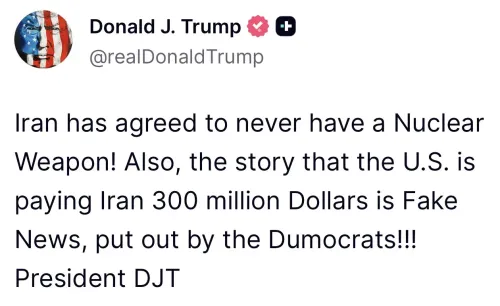
President Trump stated that Iran has agreed that there will be 'no nuclear weapons' — his self-described 'one guarantee' for any deal.
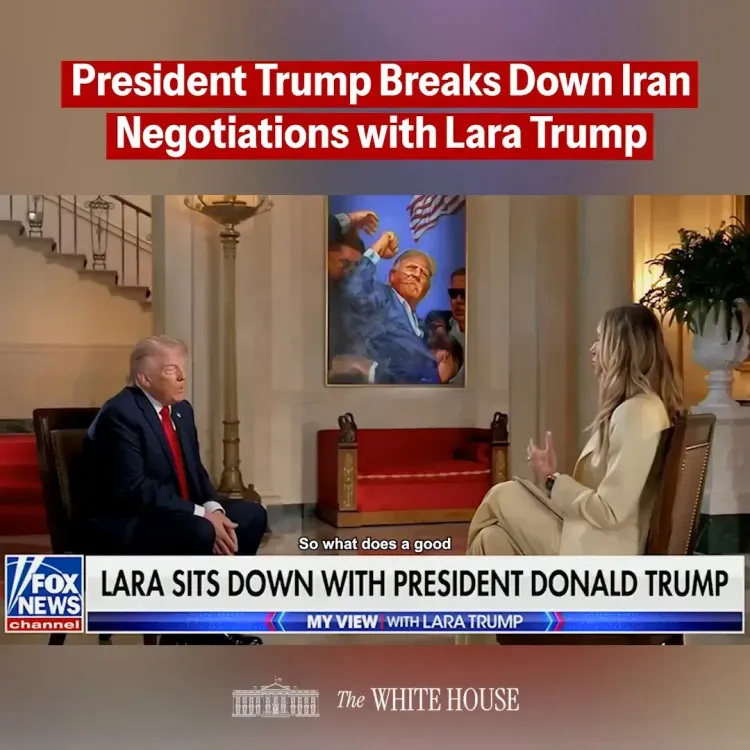
The statement was made in a wide-ranging interview with Lara Trump , shared by the White House on 1 June 2026 .
Trump withdrew the US from the JCPOA in May 2018 during his first term, citing the deal's inadequacy.
No formal text, verification mechanism, or term sheet has been released by the White House to substantiate the claimed agreement.
The Iranian government has not publicly confirmed the agreement as described by President Trump .
Regional stakeholders including Israel and Gulf states have long demanded a complete prohibition on Iranian nuclear weaponisation, aligning with Trump's stated red line.
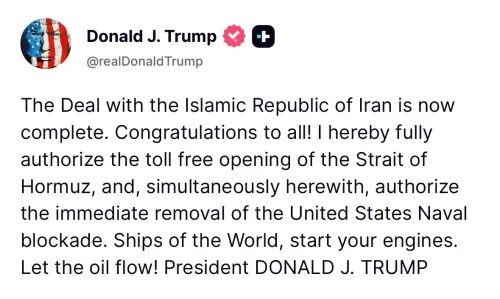
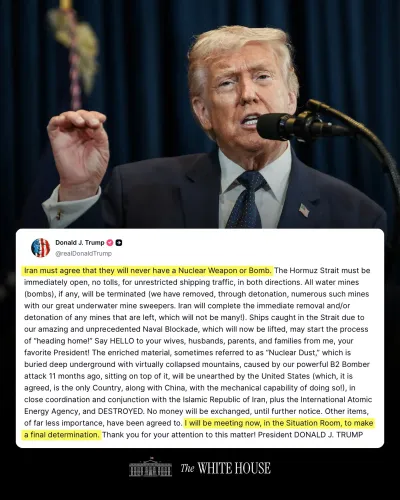
The White House shared a wide-ranging interview on Sunday, 1 June 2026, in which President Donald J. Trump stated that Iran has agreed to a core condition he has set for any deal: the complete absence of nuclear weapons. Speaking with Lara Trump, the President said, 'The one guarantee that I have to have is that there will be no nuclear weapons, they've agreed to that.'
Context
The statement, made in an interview that also touched on ballroom construction and other topics, represents President Trump's clearest public articulation yet of the singular red line he has drawn in ongoing diplomatic engagement with Iran. The White House post included a video clip of the interview hosted by Lara Trump, a member of the Trump family who has previously hosted political programming.
The remark is notable for its directness: rather than citing a framework of enrichment caps or inspection regimes, Trump frames the entire negotiation around one personal guarantee — that Iran will not possess nuclear weapons. He did not specify the form or verification mechanism of the agreement referenced.
Policy Backdrop
The United States and Iran have been locked in a decades-long dispute over Tehran's nuclear programme. The landmark Joint Comprehensive Plan of Action (JCPOA), signed in 2015, imposed verifiable limits on Iran's uranium enrichment in exchange for sanctions relief. It was a multilateral accord involving the United States, United Kingdom, France, Germany, Russia, and China.
In May 2018, during his first term, President Trump withdrew the United States from the JCPOA and re-imposed sweeping economic sanctions, arguing the deal was too weak and did not address Iran's ballistic missile programme or regional activities. Between 2019 and 2020, his administration also designated the Islamic Revolutionary Guard Corps a foreign terrorist organisation and conducted targeted military strikes. The current statement suggests a second-term approach that prioritises a direct, unambiguous commitment over a complex multilateral architecture.
The International Atomic Energy Agency (IAEA) has for years reported on Iran's expanding enrichment activities, with Tehran at points enriching uranium to levels far beyond what the JCPOA permitted, raising alarms among US allies including Israel and Gulf states.
Stakeholders and Impact
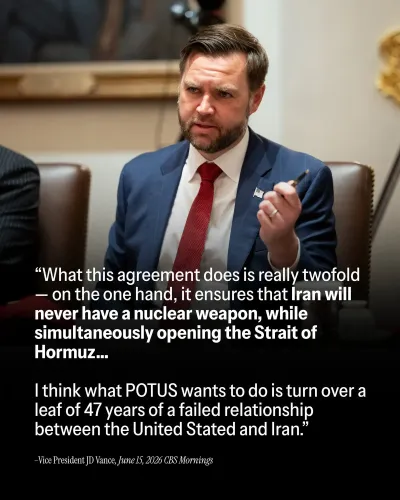
US allies in the Middle East, particularly Israel and Saudi Arabia, have long pressed Washington to ensure any deal with Iran contains ironclad prohibitions on weaponisation rather than merely enrichment limits. Trump's framing — a personal guarantee of zero nuclear weapons — aligns with their core demand, though questions about verification and enforcement will determine whether regional partners view it as credible.
For Iran, publicly agreeing to such a condition, if confirmed through official channels, would mark a significant diplomatic concession. Tehran has historically maintained that its nuclear programme is entirely civilian in nature, even as international inspectors have raised concerns. The Iranian government has not independently confirmed the agreement as described by President Trump.
European powers that co-signed the JCPOA and have pursued their own diplomatic track will be watching closely to determine whether a new bilateral or multilateral framework is taking shape, and whether it would supersede or complement existing international mechanisms.
What's Next
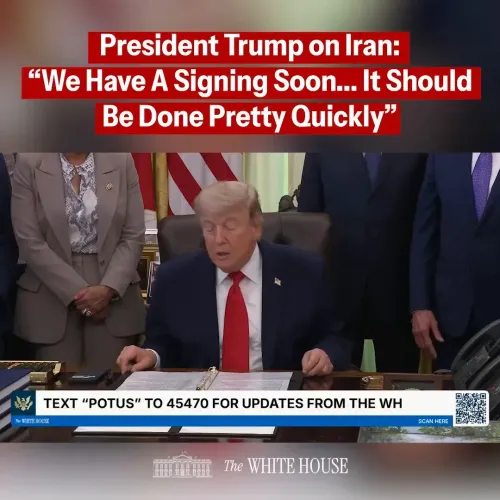
The White House has not released a formal text or term sheet of any understanding with Iran. Future statements from the State Department, the IAEA Board of Governors, or Iranian officials will be critical in establishing whether the agreement Trump referenced has a concrete diplomatic basis. Congressional oversight committees are also likely to seek a briefing on the nature and verifiability of any such commitment.
The broader trajectory of US-Iran relations — and whether this moment leads to a formal agreement or remains a statement of intent — will have significant implications for nuclear non-proliferation norms, regional security architecture, and the global sanctions regime currently in place against Tehran.
Point of View
Personal guarantee — a style consistent with his first-term approach to high-stakes diplomacy. By anchoring the entire negotiation to a single, absolute condition rather than enrichment percentages and inspection protocols, Trump makes the standard for success easy to communicate but potentially difficult to verify. The absence of any corroborating statement from Tehran or a multilateral body means the claim exists, for now, in a diplomatic grey zone that allies and adversaries will probe aggressively. If substantiated, it would represent a historic shift in the US-Iran nuclear standoff; if not, it risks undermining credibility at a moment of acute regional tension.
NationPress
15 Sept 2026
Frequently Asked Questions
What did Trump say about Iran and nuclear weapons?
President Trump said that his 'one guarantee' for any deal with Iran is that there will be no nuclear weapons, and that Iran has agreed to this condition. He made the statement in an interview shared by the White House on 1 June 2026.
Has Iran agreed to give up nuclear weapons?
According to President Trump's interview shared by the White House, Iran has agreed to his core condition of no nuclear weapons. However, the Iranian government has not independently confirmed this, and no formal agreement text has been released.
What was the JCPOA and why did Trump leave it?
The JCPOA, or Joint Comprehensive Plan of Action, was a 2015 multilateral deal that capped Iran's uranium enrichment in exchange for sanctions relief. President Trump withdrew the United States from the agreement in May 2018, arguing it was insufficient and did not address Iran's missile programme or regional conduct.
Who is Lara Trump and why did she interview the President?
Lara Trump is a member of the Trump family who has hosted political interview programmes. The White House shared a clip of her wide-ranging interview with President Trump, which covered Iran, ballroom construction, and other topics.
What happens next in US-Iran nuclear talks?
No formal agreement text has been made public. Observers will watch for statements from the US State Department, the IAEA Board of Governors, and Iranian officials to determine whether the understanding Trump described has a concrete diplomatic basis.