Trump Warns Iran Would Use Nuclear Weapon 'Within One Day'
Synopsis
President Trump declared Iran's leadership 'crazy' and warned the country would deploy a nuclear weapon within a single day of acquiring one, in remarks amplified by the White House on 13 July 2026. The statement sharpens Washington's already hardline posture toward Tehran amid ongoing nuclear tensions.
Key Takeaways
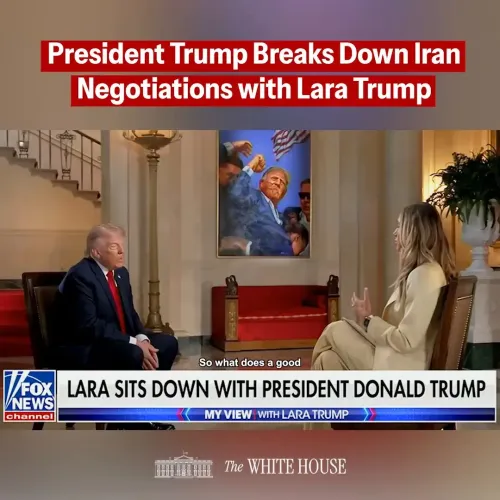
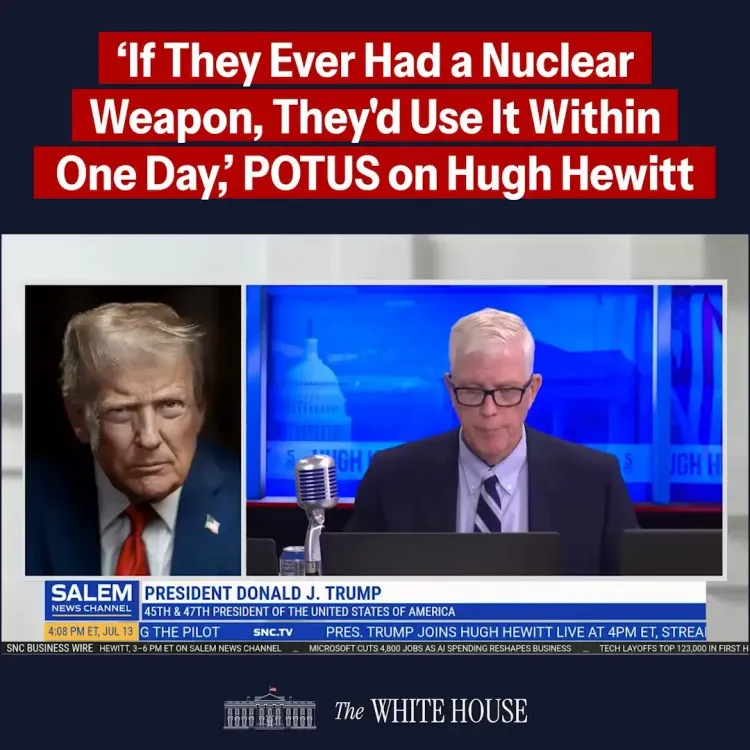
The White House shared President Trump's remarks from an interview with Hugh Hewitt on Salem News Watch on 13 July 2026 .
Trump stated Iran's leaders are 'crazy' and would use a nuclear weapon 'within one day' of obtaining one.
Trump withdrew the US from the JCPOA in May 2018 and reimposed sweeping nuclear-related sanctions on Iran .
In April 2019 , his administration designated Iran's IRGC a foreign terrorist organisation.
European JCPOA signatories continue to advocate for a diplomatic resolution, diverging from Washington's maximum-pressure approach.
The White House's amplification of the interview signals the remarks carry official policy weight.
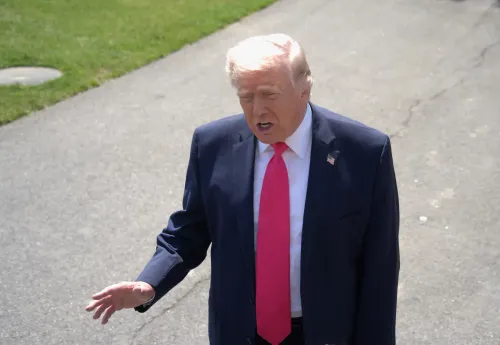
President Donald J. Trump issued a stark warning about Iran's nuclear ambitions during an interview with conservative radio host Hugh Hewitt on Salem News Watch, with the White House amplifying the remarks on Monday, 13 July 2026. Trump characterised Iran's leadership as dangerous and irrational, asserting that a nuclear-armed Iran would deploy such a weapon almost immediately.
In the interview, Trump stated: 'These people are crazy... If they ever had a nuclear weapon, they'd use it within one day.' The remarks represent one of the most direct and alarming public assessments Trump has made about Iran's nuclear intentions, framing the Islamic Republic not merely as a proliferation risk but as an active nuclear threat.
Context
Trump's warning arrives against the backdrop of long-running tensions between Washington and Tehran over Iran's nuclear programme. The Joint Comprehensive Plan of Action (JCPOA), a 2015 multilateral agreement that placed limits on Iran's nuclear activities in exchange for sanctions relief, was abandoned by Trump during his first term in May 2018. That withdrawal triggered a cascade of reimposed US sanctions and a steady Iranian rollback of its own nuclear commitments.
Since the JCPOA's collapse, Iran has advanced its uranium enrichment capacity significantly, bringing it closer to weapons-grade material — a trajectory that has alarmed nonproliferation experts and Middle East allies alike. Trump's latest remarks suggest his administration views the current moment as particularly acute.
Policy Backdrop
Trump's characterisation of Iran's leadership as irrational is consistent with the 'maximum pressure' doctrine he applied during his first term. In April 2019, his administration designated Iran's Islamic Revolutionary Guard Corps (IRGC) a foreign terrorist organisation — a step no prior US administration had taken against a state military body.
The current posture stands in sharp contrast to the engagement strategy pursued by the Obama administration, which produced the original JCPOA with the participation of the United Kingdom, France, Germany, Russia, and China. European signatories have repeatedly called for a diplomatic return to the agreement, putting them at odds with Washington's hardline stance.
Stakeholders and Impact
Israel and Gulf Arab states — long the most vocal advocates for containing Iran — are likely to view Trump's remarks as a reaffirmation of US commitment to preventing a nuclear-armed Tehran. For India, which has historically maintained energy and trade ties with Iran while also deepening its strategic partnership with the United States, the escalating rhetoric adds complexity to an already delicate balancing act.
Nonproliferation experts warn that inflammatory public statements, while serving a domestic political purpose, can narrow the diplomatic space needed for any eventual negotiated settlement. Iran has consistently denied seeking nuclear weapons, framing its programme as civilian and defensive.
What's Next
Observers will watch for follow-up statements from the Trump administration on sanctions enforcement timelines and any response from European JCPOA signatories who remain invested in preserving a diplomatic track. A formal administration policy statement or executive action on Iran sanctions would signal whether Monday's remarks translate into concrete escalatory steps. The interview's amplification by the White House official account suggests the remarks are intended as an authoritative policy signal, not an off-the-cuff remark.
Point of View
The administration removes the logic of deterrence from the equation, implying that containment alone is insufficient. This echoes the pre-JCPOA-withdrawal playbook: escalatory language followed by executive action on sanctions or designations. For countries like India that must navigate both Washington and Tehran, such absolute framing from the White House leaves little room for nuanced hedging.
NationPress
12 Oct 2026
Frequently Asked Questions
What did Trump say about Iran and nuclear weapons?
Trump said 'These people are crazy... If they ever had a nuclear weapon, they'd use it within one day,' in a radio interview shared by the White House on 13 July 2026.
Why did Trump withdraw from the Iran nuclear deal?
Trump withdrew the US from the JCPOA in May 2018, arguing the deal was too weak, failed to address Iran's ballistic missile programme, and did not permanently block Iran's path to a nuclear weapon.
What is the JCPOA and is it still active?
The JCPOA is the 2015 multilateral nuclear agreement between Iran and six world powers. After the US withdrew in 2018, Iran progressively rolled back its own commitments, and the deal has been in a state of collapse, though European parties have sought to revive it.
What is the US maximum pressure policy on Iran?
Maximum pressure is the Trump administration's strategy of imposing sweeping economic sanctions and diplomatic isolation on Iran to force it to renegotiate its nuclear and regional behaviour on US terms.
How do Trump's Iran remarks affect India?
India has historically balanced trade and energy ties with Iran alongside its strategic partnership with the US. Escalating American rhetoric and potential new sanctions complicate India's ability to maintain that balance.