Trump Says New Deal Ensures Iran Will Never Get Nuclear Weapon
Synopsis
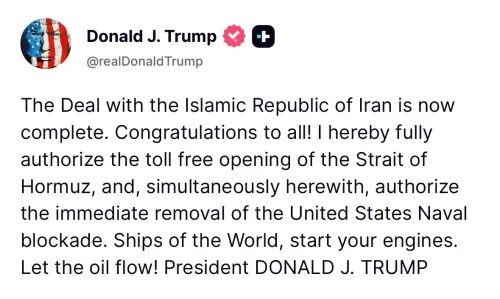
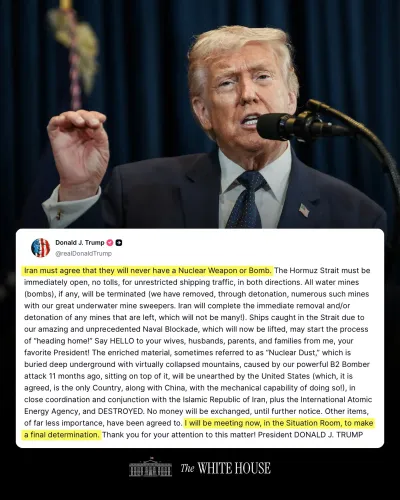
President Donald J. Trump has declared that a deal is in place ensuring Iran will never possess a nuclear weapon, the White House announced on June 11, 2026. The statement marks a significant milestone in US Iran nuclear diplomacy, coming years after Trump withdrew from the 2015 JCPOA during his first term.
Key Takeaways
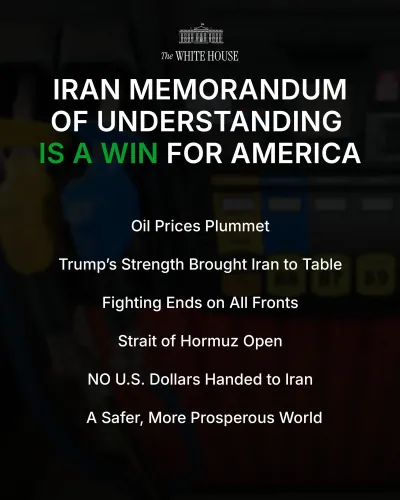
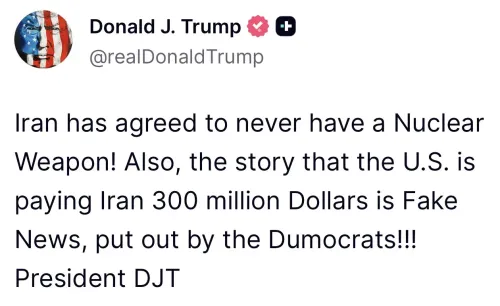
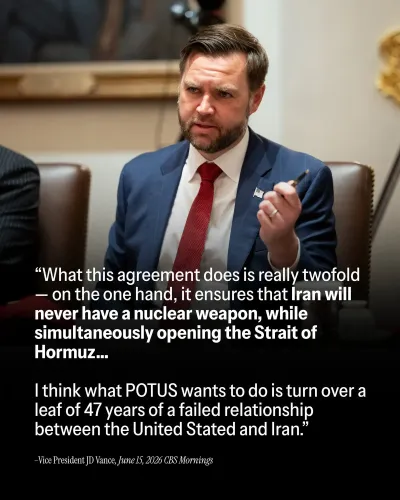
President Trump stated on June 11, 2026 that a deal has been reached under which Iran will never have a nuclear weapon.
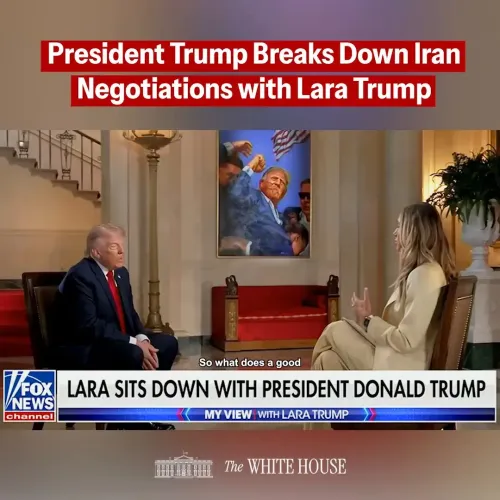
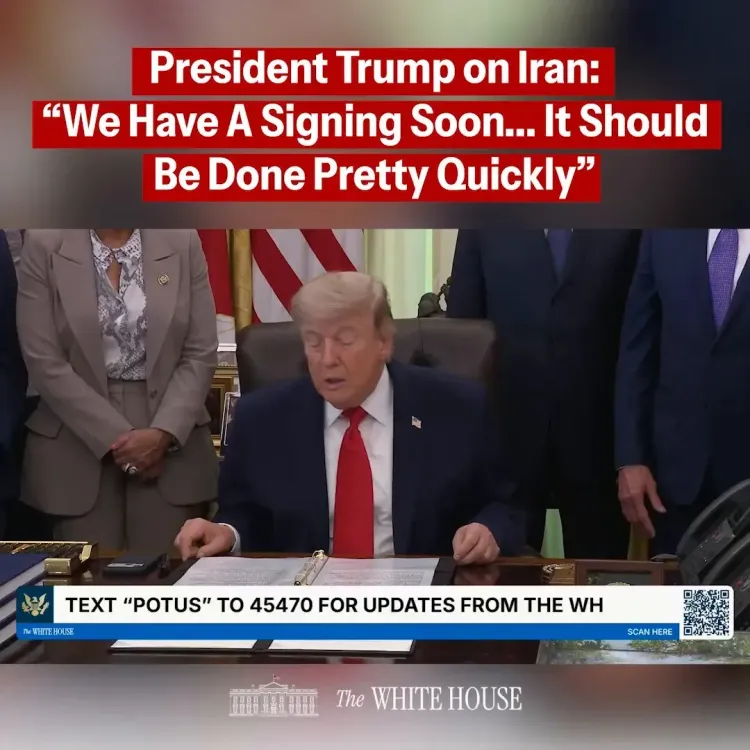
The announcement was made via the official White House account and was accompanied by a video of the President's remarks.
Trump withdrew the US from the JCPOA in May 2018 during his first term, calling it insufficient.
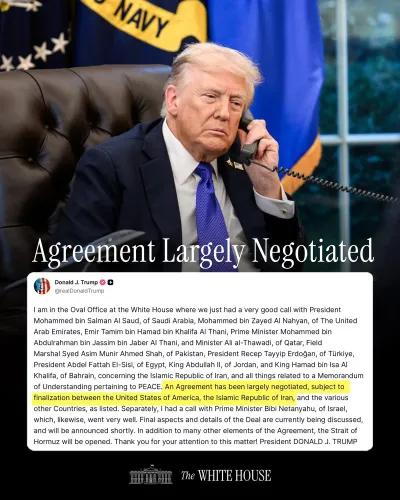
No specific terms, parties, or verification mechanisms of the new agreement were disclosed in the post.
Key stakeholders including Israel , Gulf Arab states , and India will be closely watching for formal details of the framework.
Upcoming IAEA Board of Governors meetings and Congressional action will be critical next steps to watch.
Washington DC, June 11, 2026 — The White House on Thursday quoted President Donald J. Trump declaring that a deal has been reached under which Iran will never possess a nuclear weapon, marking what the administration is presenting as a landmark achievement in its Iran policy.
Context
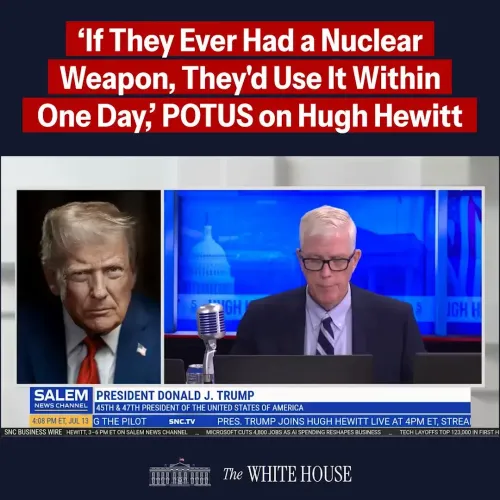
The statement, shared by the official White House communications account, quotes President Trump directly: 'Most importantly, we have a deal that Iran will never have a nuclear weapon.' The post was accompanied by a video, suggesting the remarks were drawn from a speech or press event. No further details of the agreement's parties, terms, or timeline were provided in the post itself.
The declaration carries significant weight given the decades-long international effort to prevent Iran from acquiring nuclear weapons capability. Iran has maintained an active nuclear enrichment programme that has been under scrutiny by the International Atomic Energy Agency (IAEA) for its possible military dimensions.
Policy Backdrop
The history of US-Iran nuclear diplomacy has been defined by sharp reversals. In 2015, the Joint Comprehensive Plan of Action (JCPOA) was concluded between Iran and six world powers, placing verifiable limits on Iran's enrichment activities in exchange for sanctions relief. President Trump, during his first term, withdrew the United States from the JCPOA in May 2018, arguing the deal was insufficient and temporary.
His administration then pursued a 'maximum pressure' campaign — reimposing and expanding sanctions to deny Iran revenue and curb its regional influence. Successive administrations have alternated between multilateral diplomacy and unilateral economic pressure, with Iran's enrichment levels continuing to rise in the intervening years. Trump's current claim of a deal shifts the emphasis from temporary limits to permanent prevention of weaponisation.
Stakeholders and Impact
The announcement, if borne out by a formal agreement, would have far-reaching consequences for the Middle East. Israel, which has long treated a nuclear-armed Iran as an existential threat, and Gulf Arab states such as Saudi Arabia and the UAE have closely watched every development in US-Iran nuclear talks. Any durable framework would also directly affect Iranian civilians, whose economy has been severely constrained by years of international sanctions.
For India, which maintains significant energy and trade ties with Iran and has a large diaspora in the Gulf, a stable resolution of the nuclear question would have direct implications for regional security and energy markets.
What's Next
Key milestones to watch include potential Congressional hearings or new sanctions legislation tied to any announced framework, as well as upcoming IAEA Board of Governors meetings that would assess Iran's current enrichment levels against any agreed benchmarks. The specific terms, verification mechanisms, and parties to the referenced deal have not yet been publicly detailed by the administration.
If confirmed and formalised, the agreement would represent the most consequential shift in US-Iran nuclear diplomacy since the JCPOA of 2015 — and would test whether a deal anchored in permanent prohibition, rather than temporary limits, can hold under international scrutiny.
Point of View
Permanent terms rather than the phased or conditional language typical of multilateral arms-control agreements. By asserting that Iran 'will never' have a nuclear weapon, the administration is staking a claim that goes beyond what even the original JCPOA promised, setting a high bar for verification. For regional powers like Israel and Saudi Arabia, the rhetoric is welcome, but the durability of any such framework will depend entirely on the enforcement mechanisms and whether Iran has formally consented to permanent limits. India, which balances ties with both Washington and Tehran, will be watching how any new agreement reshapes sanctions relief and energy access.
NationPress
29 Jul 2026
Frequently Asked Questions
What deal did Trump announce regarding Iran's nuclear programme?
President Trump declared on June 11, 2026 that a deal has been reached ensuring Iran will never possess a nuclear weapon. Specific terms of the agreement have not yet been publicly released by the administration.
What was the JCPOA and why did Trump leave it?
The JCPOA, signed in 2015, placed temporary limits on Iran's nuclear enrichment in exchange for sanctions relief. President Trump withdrew the US from the deal in May 2018, arguing its restrictions were insufficient and not permanent enough.
How does the new Iran deal differ from the 2015 JCPOA?
While the JCPOA imposed time-limited restrictions on Iran's enrichment, Trump's stated goal is permanent prevention of weaponisation. The specific terms of the 2026 agreement have not been disclosed, so a full comparison is not yet possible.
How does the US-Iran nuclear deal affect India?
India has significant energy and trade ties with Iran and a large diaspora in the Gulf region. A stable nuclear agreement could ease sanctions pressure, potentially reopening energy trade, and would reduce regional security risks that affect Indian interests.
What happens next after Trump's Iran nuclear announcement?
Congressional hearings and possible new sanctions legislation are expected to follow any formal framework. IAEA Board of Governors meetings will also assess Iran's current enrichment levels against any agreed benchmarks in the coming weeks.