CM Naidu Vows to Protect Lives as Cyclone Arnab Hits AP

Synopsis
Chief Minister N. Chandrababu Naidu has pledged to protect lives and property as Cyclone Arnab approaches Andhra Pradesh, invoking the state's long experience with Bay of Bengal storms and its responsibilities under India's Disaster Management Act.
Key Takeaways
Chandrababu Naidu posted a public pledge on October 28, 2026 , committing to protect lives and properties during Cyclone Arnab .
Andhra Pradesh is a repeat target of Bay of Bengal cyclones; the state's disaster-response machinery has been battle-tested since at least Cyclone Hudhud in 2014 .
Under the Disaster Management Act, 2005 , state governments hold primary responsibility for immediate cyclone response, with central NDRF support available on request.
Key metrics to watch include evacuation numbers, shelter occupancy in coastal districts, and any formal request for central government or NDRF reinforcement.
Naidu's post included a video, indicating the administration is using real-time digital communication as part of its crisis-response strategy.
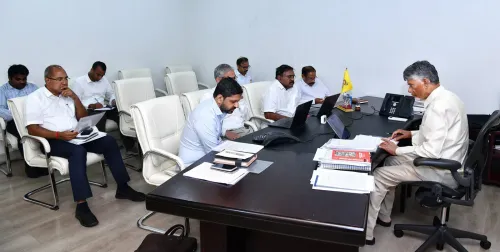
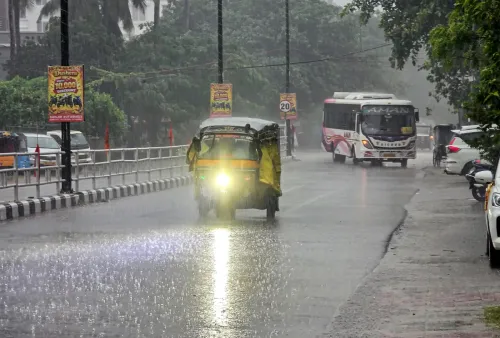
As Cyclone Arnab bears down on Andhra Pradesh's coastline, Chief Minister N. Chandrababu Naidu has issued a direct, unambiguous pledge to the state's residents: the government is present, it is active, and no community will face the storm alone.
Posting on Wednesday, October 28, 2026, Naidu wrote: 'Protecting lives and properties is our relentless mission. We are here for you, and we stand with you.' The message, hashtagged #CycloneArnab and #TogetherAgainstCycloneArnab, was accompanied by a video — a signal that the administration is pushing real-time reassurance alongside its on-ground response.
A coastline that has seen this before
Andhra Pradesh sits squarely in the Bay of Bengal's cyclone corridor, making it one of India's most repeatedly tested states when it comes to storm response. The institutional memory is deep and, at times, painful. When Cyclone Hudhud struck in October 2014 — also under Naidu's watch as Chief Minister — the government mounted mass evacuations across multiple coastal districts, a response that became a reference point for state-level disaster management in India. That experience matters now. Under the Disaster Management Act, 2005, primary responsibility for immediate cyclone response rests with the state administration, with the Centre providing reinforcement through the National Disaster Response Force (NDRF) and other agencies when requested. The law places the Chief Minister's office at the operational heart of the response — which makes Naidu's public message as much a command signal to his administration as it is a reassurance to citizens.What the coming hours will reveal
The critical metrics now are evacuation numbers, shelter capacity across coastal districts, and whether Andhra Pradesh has formally requested NDRF deployments or additional central assistance. Coastal communities in low-lying areas — the populations most exposed to storm surge and high winds — are the immediate stakeholders of every decision made in the next 24 to 48 hours. Naidu's track record on cyclone communication is one of high visibility: direct public statements, coordinated district-level machinery, and an emphasis on pre-emptive evacuation over post-disaster rescue. Whether that template holds for Cyclone Arnab will be measured not in words posted online, but in lives accounted for when the storm passes.Point of View
Not catching up to it. The Hudhud response in 2014 gave his government a model — and a standard — to be measured against. At a time when disaster management capability is increasingly a governance benchmark, the speed, tone, and on-ground follow-through of the Cyclone Arnab response will be scrutinised well beyond Andhra Pradesh's borders. The real test, as always, is not the tweet but the evacuation ledger.
NationPress
28 Oct 2026
Frequently Asked Questions
What is Cyclone Arnab and where is it headed?
Cyclone Arnab is a storm system approaching the coast of Andhra Pradesh as of October 28, 2026. The state government has activated its disaster-response machinery in preparation for landfall.
What has CM Chandrababu Naidu said about Cyclone Arnab?
Naidu posted on October 28, 2026, stating 'Protecting lives and properties is our relentless mission. We are here for you, and we stand with you,' pledging an active state response to the cyclone.
Which districts of Andhra Pradesh are most at risk from cyclones?
Coastal districts along the Bay of Bengal — including those in the Krishna, Guntur, and Visakhapatnam belts — are historically the most vulnerable to cyclone-driven storm surge and high winds.
What role does the NDRF play during cyclones in Andhra Pradesh?
Under the Disaster Management Act, 2005, the state government holds primary responsibility for immediate response. The National Disaster Response Force can be deployed on the state's request to assist with search, rescue, and relief operations.
How did Andhra Pradesh handle Cyclone Hudhud in 2014?
During Cyclone Hudhud in October 2014, the Andhra Pradesh government under Naidu conducted large-scale evacuations across coastal districts and coordinated multi-agency relief, a response that became a reference model for state-level disaster management in India.