White House Backs Trump as Only Leader Bold on Iran
Synopsis
The White House declared on 17 June 2026 that President Trump is the only American leader bold enough to confront Iran, framing decades of US policy as neglectful. The statement revives debate over the JCPOA withdrawal, maximum-pressure sanctions, and the future of US-Iran diplomacy.
Key Takeaways
The White House posted on 17 June 2026 that 'American leaders ignored the Iran problem for decades.' President Trump is described as 'the only President brave enough' to act on Iran .
Trump withdrew the US from the JCPOA in May 2018 and re-imposed broad economic sanctions on Tehran .
The IAEA has consistently reported Iran enriching uranium beyond JCPOA limits since the deal's effective collapse.
India holds significant trade and energy exposure to Iran , making US Iran policy a direct concern for New Delhi .
No specific new policy action was announced; the post signals political posture ahead of potential diplomatic or sanctions moves.
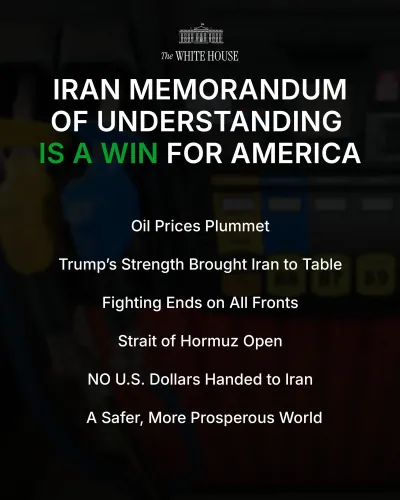
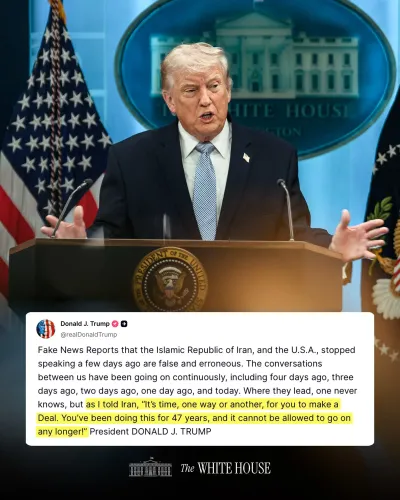
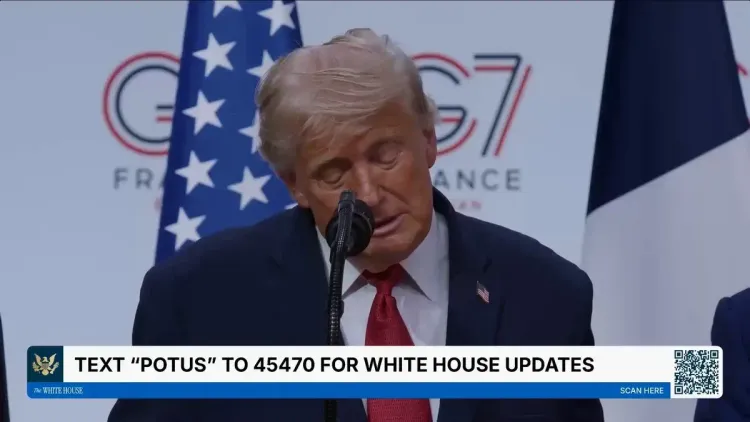
The White House, the official communications account of the Executive Office of the President of the United States, posted on X on Wednesday, 17 June 2026, asserting that President Donald Trump is 'the only President brave enough to do what should have been done for years' on Iran, a claim that frames decades of American foreign policy as insufficient.
Context
The post states plainly: 'For decades, American leaders ignored the Iran problem. President Trump is the only President brave enough to do what should have been done for years.' The language is pointed, positioning Trump's approach as a historic departure from the bipartisan consensus that governed US-Iran relations across multiple administrations.
The statement arrives against a long backdrop of shifting American strategy toward Tehran — from diplomatic overtures to maximum-pressure campaigns — making the White House's framing a direct rebuke of predecessors in both parties.
Policy Backdrop
The central fault line in US-Iran policy over the past decade has been the Joint Comprehensive Plan of Action (JCPOA), the 2015 nuclear agreement brokered under the Obama administration alongside five other world powers. The deal placed verifiable limits on Iran's uranium enrichment in exchange for sanctions relief.
In May 2018, during his first term, President Trump withdrew the United States from the JCPOA and re-imposed sweeping economic sanctions under a strategy his administration labelled 'maximum pressure.' That campaign combined financial isolation, diplomatic pressure, and targeted military action — most notably the January 2020 strike that killed Iranian General Qasem Soleimani — to curb both Tehran's nuclear advances and its regional proxy network.
Subsequent administrations attempted to revive the diplomatic track, but a return to the JCPOA was never concluded, leaving Iran's nuclear programme under continued international scrutiny and US sanctions largely intact.
Stakeholders and Impact
Middle East allies — particularly Israel and the Gulf states — have broadly welcomed the maximum-pressure posture, viewing Iranian nuclear capability and proxy militias as existential threats. European partners, by contrast, have consistently argued that sustained diplomacy offers the most durable path to limiting Tehran's nuclear ambitions.
For Iran, prolonged sanctions have compressed oil revenues, strained the national currency, and fuelled domestic economic hardship, though the regime has continued to expand its enrichment capacity. The International Atomic Energy Agency (IAEA) has repeatedly reported that Iran is enriching uranium well beyond the limits set by the JCPOA.
Indian interests are also engaged: India has historically maintained energy and trade ties with Iran while navigating US sanctions waivers, meaning any escalation in Washington's Iran policy carries direct economic implications for New Delhi.
What's Next
Observers will watch for new sanctions designations, fresh IAEA reports on Iranian enrichment levels, and any diplomatic signals ahead of potential multilateral talks. The White House post, carrying no specific policy announcement, reads as a political statement of posture rather than a declaration of new action — but the language suggests the administration intends to keep Iran policy at the centre of its foreign-policy identity.
Whether the framing translates into concrete diplomatic or military steps will determine how Middle East partners, European allies, and Asian economies with Iran exposure calibrate their own responses in the weeks ahead.
Point of View
The statement implicitly targets both Democratic and Republican administrations, broadening the contrast beyond partisan lines. For a second-term White House, this kind of declarative positioning often precedes or accompanies a concrete policy move — whether new sanctions, military signalling, or a diplomatic ultimatum. The absence of specifics, however, means the statement is as much about identity as it is about strategy.
NationPress
19 Sept 2026
Frequently Asked Questions
What did the White House say about Trump and Iran?
The White House posted on 17 June 2026 that 'American leaders ignored the Iran problem for decades' and called President Trump 'the only President brave enough to do what should have been done for years.'
What is the JCPOA and why did Trump withdraw from it?
The JCPOA is the 2015 nuclear deal between Iran and six world powers that limited Iranian uranium enrichment in exchange for sanctions relief. President Trump withdrew the United States from the agreement in May 2018, arguing it was too weak and did not address Iran's missile programme or regional activities, and re-imposed broad economic sanctions.
What is the US maximum-pressure policy on Iran?
Maximum pressure is the Trump-era strategy combining sweeping economic sanctions, diplomatic isolation, and targeted military action to force Iran to renegotiate its nuclear programme and curtail its regional proxy network.
How does US Iran policy affect India?
India has historically imported Iranian oil and maintained trade ties with Tehran. US sanctions have required India to seek waivers or reduce Iranian oil purchases, and any escalation in Washington's Iran policy directly affects Indian energy costs and bilateral trade.
What happens next with US-Iran relations?
Analysts are watching for new US sanctions designations, IAEA reports on Iranian enrichment levels, and diplomatic signals ahead of any multilateral talks. The White House post suggests the administration intends to keep Iran at the centre of its foreign-policy agenda.