Trump Issues Ultimatum on Iran's Enriched Uranium Stockpile
Synopsis
President Trump issued a stark public ultimatum via the White House, demanding Iran immediately hand over its enriched uranium to the United States for destruction or eliminate it in place in coordination with Tehran — ratcheting up pressure on Iran's nuclear programme.
Key Takeaways
The White House published a statement from President Donald J.
Trump on May 25, 2026 demanding Iran act on its enriched uranium stockpile.
Trump gave two options: transfer the material to the United States for destruction, or destroy it in place in coordination with Iran .
The statement's ellipsis suggests additional conditions or consequences were not fully published in the post.
The United States withdrew from the JCPOA in 2018 and has maintained a maximum pressure sanctions campaign on Iran since then.
Key stakeholders include the Iranian government , the Israeli government , European allies , and the IAEA .
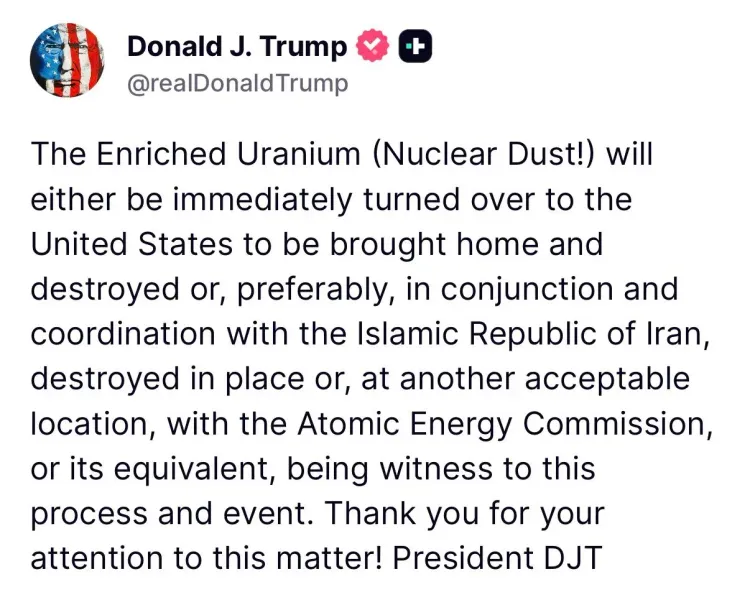
The White House on Monday, May 25, 2026, published a statement from President Donald J. Trump demanding that Iran's enriched uranium stockpile be either transferred to the United States for destruction or eliminated in place, in coordination with Tehran.
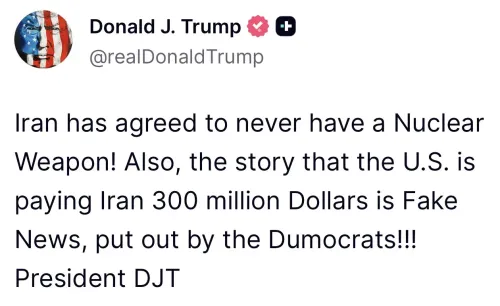
The statement, shared on the White House's official account, reads: 'The Enriched Uranium (Nuclear Dust!) will either be immediately turned over to the United States to be brought home and destroyed or, preferably, in conjunction and coordination with the Islamic Republic of Iran, destroyed in place or…' — the ellipsis suggesting further conditions were communicated separately.
Context
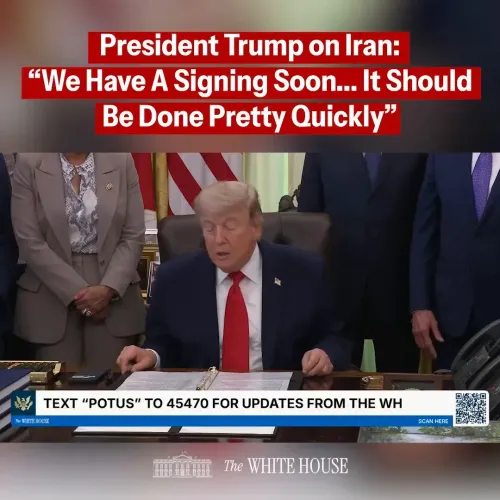
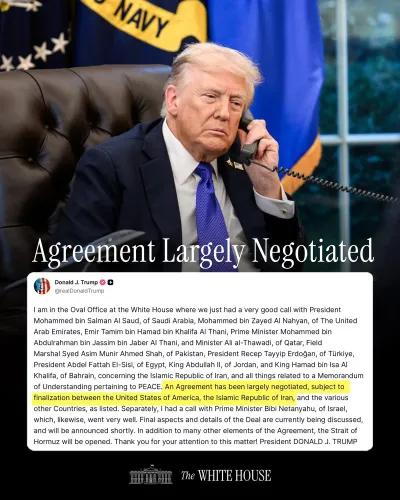
The statement marks one of the most direct public ultimatums issued by a sitting US president regarding Iran's uranium stockpile. The phrase 'Nuclear Dust' — used parenthetically — signals the administration's framing of the material as a proliferation threat rather than a civil energy asset. The post was accompanied by an image, the contents of which were not described in the official release.
Iran's enriched uranium holdings have long exceeded the limits set under the 2015 Joint Comprehensive Plan of Action (JCPOA), the multilateral nuclear accord that the Trump administration exited in May 2018, citing the deal's failure to permanently curtail Iran's nuclear ambitions.
Policy Backdrop
When the United States withdrew from the JCPOA in 2018, it simultaneously reimposed and later expanded sweeping sanctions on Iran under what the administration called a 'maximum pressure' campaign. That campaign sought to compel Tehran to renegotiate a broader agreement covering ballistic missiles and regional influence, not just enrichment caps.
Successive US administrations — before and after the 2018 withdrawal — have sought to prevent Iran from accumulating weapons-grade material through a combination of sanctions, international inspections under the International Atomic Energy Agency (IAEA), and direct diplomatic pressure. Rhetoric linking the transfer or destruction of stockpiles has appeared during periods of heightened US-Iran tension and when Israeli security concerns are elevated.
Stakeholders and Impact
The statement directly implicates the Islamic Republic of Iran, which has consistently maintained that its enrichment programme is for civilian energy purposes. Iranian leadership has historically rejected unilateral US demands as preconditions for any negotiation. The ultimatum's binary framing — transfer to the US or destroy in place — leaves little diplomatic room and is likely to draw a firm public response from Tehran.
The Israeli government, which views Iranian enrichment as an existential threat, is a key stakeholder watching developments closely. US Congress members across party lines and key European allies — original signatories of the JCPOA — will also parse the statement for signals about whether a new diplomatic framework is being offered or whether the administration is setting conditions for a harder posture.
What's Next
Analysts will watch for any follow-up communications from Iranian authorities, a formal IAEA report on stockpile disposition, or statements from European powers that could indicate whether multilateral diplomacy remains viable. The ellipsis at the end of the published quote suggests the full statement contains additional conditions or consequences not yet made public, and those details are expected to shape the international response significantly.
The trajectory of US-Iran nuclear diplomacy will depend on whether Tehran engages with the ultimatum's terms, ignores them, or escalates its enrichment activities — each of which carries distinct implications for regional security and global non-proliferation efforts.
Point of View
The administration has made the ultimatum part of the public record, raising the diplomatic cost for both sides of any quiet retreat. The ellipsis at the statement's end is itself a signal: there are further terms, and the choice of what to reveal and when is a deliberate pressure tool. For India, which maintains strategic ties with both Washington and Tehran and relies on regional stability for its energy security, the escalation is a development to watch carefully.
NationPress
10 Oct 2026
Frequently Asked Questions
What did Trump say about Iran's enriched uranium?
President Trump stated that Iran's enriched uranium must either be immediately transferred to the United States for destruction or destroyed in place in coordination with the Iranian government.
Why is Iran's enriched uranium a concern for the US?
Iran's uranium stockpile has exceeded limits set under the 2015 JCPOA nuclear accord. The US, which withdrew from the deal in 2018, views the stockpile as a potential pathway to weapons-grade material and a proliferation risk.
What is the JCPOA and why did the US leave it?
The JCPOA, signed in 2015, was a multilateral deal capping Iran's nuclear enrichment activities. The Trump administration withdrew in May 2018, arguing the deal did not permanently prevent Iran from developing nuclear weapons and did not address ballistic missiles or regional behaviour.
What are the options Trump gave Iran for its uranium?
Trump outlined two options: hand the enriched uranium over to the United States to be brought home and destroyed, or destroy it in place in coordination with the Islamic Republic of Iran.
How does this affect India?
India maintains diplomatic and economic ties with both the United States and Iran, and any escalation in US-Iran tensions affects Indian energy imports, regional trade routes, and New Delhi's balancing act between its partnerships with Washington and Tehran.