US Claims Iran Holds Enough Uranium for 11 Nuclear Bombs
Synopsis
Recent discussions have unveiled that Tehran may possess enough enriched uranium for 11 nuclear weapons, prompting significant concerns in Washington. As tensions escalate, the implications of Iran's nuclear capabilities and intentions continue to unfold.
Key Takeaways
Tehran's uranium stockpile is about 10,000 kilograms.
460 kilograms are enriched to 60 percent, nearing weapons-grade.
US officials warn of potential nuclear weapon development .
Iran has rejected proposals for civilian nuclear fuel .
Concerns over transparency in Iran's nuclear program persist.
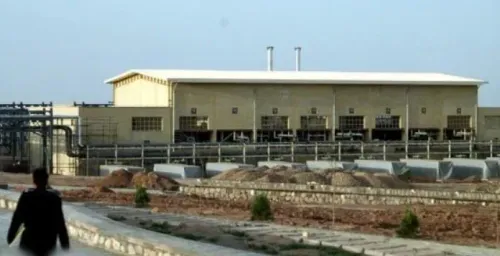
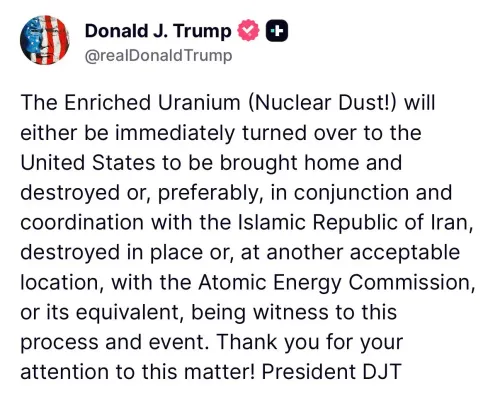
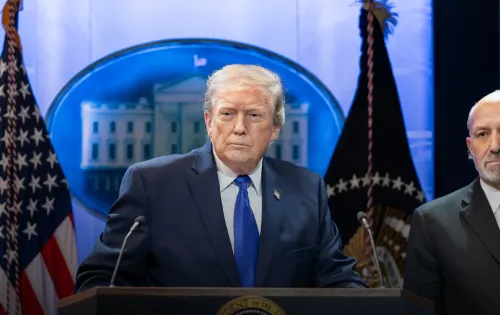
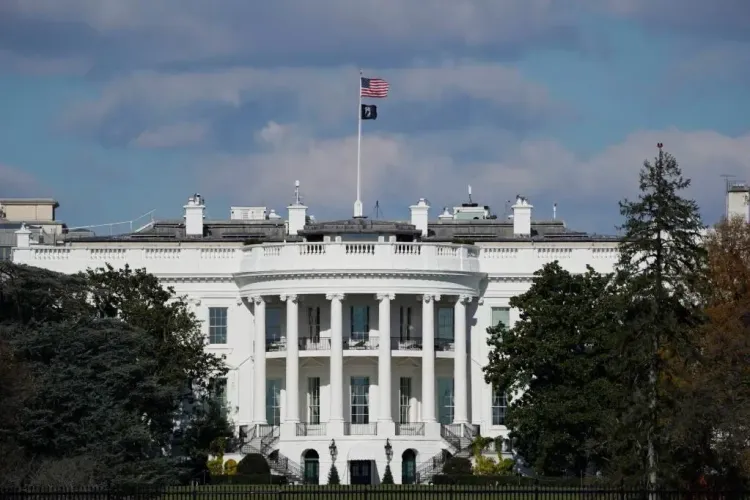
Washington, March 4 (NationPress) The White House asserted that Tehran possesses a quantity of highly enriched uranium equivalent to “11 bombs’ worth of nuclear material.” This statement underscores how recent negotiations influenced President Donald Trump’s decision to initiate military actions against Iran’s nuclear installations.
A senior official from the Trump Administration, who is knowledgeable about the latest discussions with Iran, revealed that Tehran currently holds approximately 10,000 kilograms of enriched uranium across various facilities. Among this stockpile, 460 kilograms is enriched to 60 percent purity, a level considered perilously close to weapons-grade material.
“The 460 kilograms of 60 percent enrichment is alarmingly close to the 90 percent threshold that categorizes it as weapons-grade,” the official, who requested anonymity, stated. “We are all aware that this amounts to nearly 11 bombs' worth of nuclear material.”
Two senior officials from the Trump Administration, familiar with the three rounds of negotiations with Iran that collapsed last week, expressed their belief that Tehran was stalling diplomatic efforts while maintaining crucial elements of its nuclear program.
The second official highlighted that the Iranian delegation consistently failed to present a comprehensive proposal during the talks, seemingly aiming to buy time.
“It was evident they were merely trying to delay proceedings to safeguard whatever they could… to advance towards a nuclear weapon,” the official remarked.
The senior official also noted that Iran's reserves included roughly 1,000 kilograms of uranium enriched to 20 percent and about 8,500 kilograms enriched to 3.67 percent, levels that could potentially be further enhanced to weapons-grade material.
“Transitioning from a 3.67 percent enrichment level to 90 percent weapons-grade could take around two and a half to three months,” the official mentioned, adding that material already enriched to 60 percent could reach weapons-grade in as little as “a week, or at most 10 days.”
US negotiators expressed concern over a significant finding regarding the Tehran Research Reactor (TRR). While Iranian officials claimed the facility was producing medical isotopes for civilian purposes, American negotiators indicated that the information did not align with the data available.
The official revealed that assessments during the talks suggested Iran had amassed a “seven to eight years supply of fuel” at the reactor, contradicting claims of isotope production.
“Our findings indicated… that they had not been generating any radioisotopes, and the seven to eight years’ worth of fuel they were retaining was stockpiled,” the official stated.
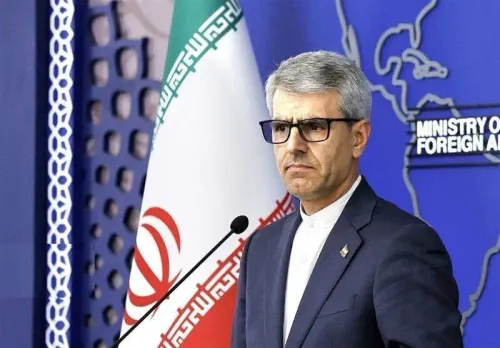
Iran insisted that uranium enrichment constituted its “inalienable right,” dismissing a US proposal to supply nuclear fuel for civilian reactors.
“We offered them free nuclear fuel for as long as they needed, at no cost,” recalled the second Administration Official during the discussions, noting that Iranian representatives rejected the offer, labeling it an “assault on our dignity.”
Officials claimed that these developments reinforced the US administration's belief that Iran’s program retained essential components necessary for swift nuclear weapons production.
“They provided us with numerous political advantages… yet they were unwilling to relinquish the foundational elements crucial to developing a bomb,” the second senior official stated.
Additionally, the officials noted that Iran resisted transparency measures, including allowing inspectors to take a proposed nuclear framework for technical evaluation.
This briefing coincided with ongoing US military operations targeting Iranian nuclear infrastructure, following intelligence that indicated Tehran’s program was nearing a perilous threshold.
While Iran has consistently asserted that its nuclear ambitions are peaceful, Western nations have accused it of aiming to develop nuclear weapons capabilities.
Point of View
The evidence presented suggests a more complex and potentially dangerous scenario that warrants careful scrutiny.
NationPress
29 Sept 2026
Frequently Asked Questions
What is the current uranium stockpile of Iran?
Iran reportedly holds approximately 10,000 kilograms of enriched uranium, including 460 kilograms enriched to 60 percent purity.
How close is Iran's uranium to weapons-grade material?
The uranium enriched to 60 percent is perilously close to the 90 percent threshold that classifies it as weapons-grade.
What did US officials discover during the negotiations with Iran?
US officials found that Iran was reportedly stockpiling fuel at the Tehran Research Reactor, contrary to claims of producing medical isotopes.
Did Iran accept the US offer for nuclear fuel?
Iran rejected the US offer for free nuclear fuel, describing it as an assault on their dignity.
What are the implications of Iran's nuclear capabilities?
The revelations raise significant concerns about Iran's potential to develop nuclear weapons rapidly, impacting regional and global security.