Trump Denies $300 Billion Iran Payment, Calls It Fake News
Synopsis
President Trump, via the White House, denied on June 18, 2026 that the US made a $300 billion payment to Iran, calling it 'Fake News' and partisan propaganda. He cited lower oil prices and stock market gains as markers of his administration's Iran policy success.
Key Takeaways
Trump denied, via the official White House X account on June 18, 2026 , that the US made any $300 billion payment to Iran .
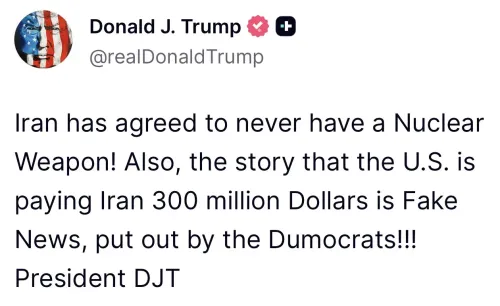
Trump labelled the claim 'Fake News' and attributed it to 'Dumocrat propaganda,' without identifying the specific source of the allegation.
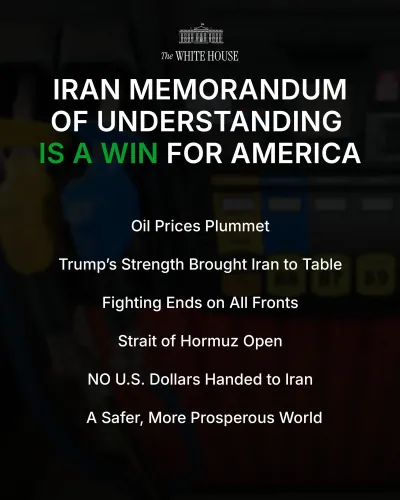
The White House pointed to lower oil prices and stock market performance as evidence of policy success on Iran .
The $300 billion figure has not been verified by any official US government documentation or independent source.
The dispute echoes long-standing partisan battles over frozen Iranian assets, rooted in the 2015 JCPOA and Trump 's 2018 withdrawal from the deal.
India and other major oil-importing nations remain sensitive to shifts in US-Iran sanctions policy due to their impact on global crude supply and pricing.
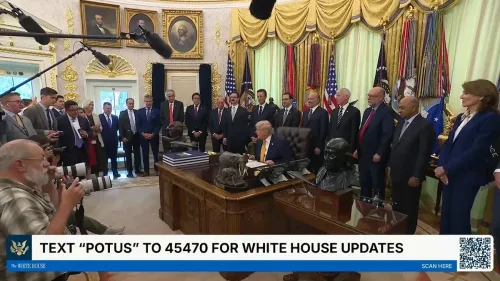
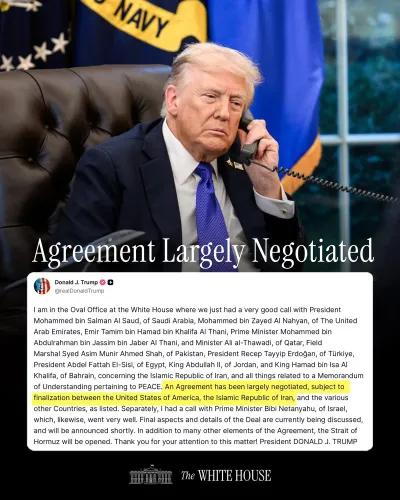
The White House, the official communications account of the Executive Office of the President, posted a statement on Thursday, June 18, 2026, in which President Donald J. Trump flatly denied claims that the United States had made a $300 billion payment to Iran, calling the allegation 'Fake News' and attributing it to 'Dumocrat propaganda.'
Context
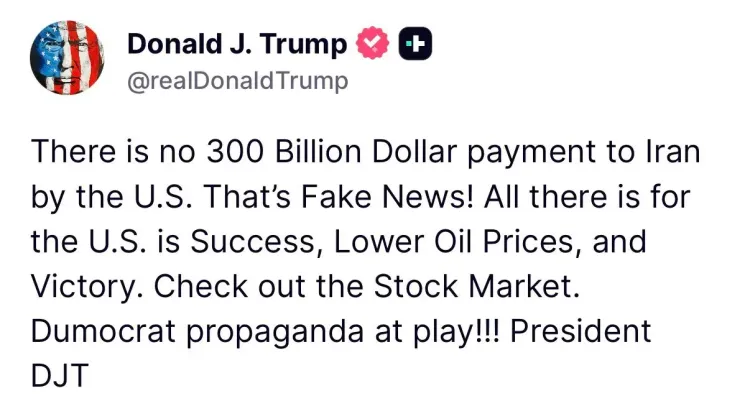
In the post, President Trump stated: 'There is no 300 Billion Dollar payment to Iran by the U.S. That's Fake News! All there is for the U.S. is Success, Lower Oil Prices, and Victory. Check out the Stock Market.' The statement is a direct rebuttal to circulating claims — which the White House characterises as partisan misinformation — that the current administration transferred a large sum to Tehran.
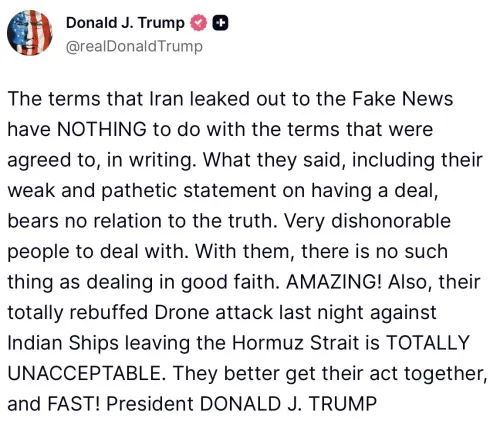
The White House did not specify the origin of the claim it was rebutting, nor did it provide Treasury or State Department documentation to support the denial. No official US government figure of $300 billion in payments to Iran has been independently verified.
Policy Backdrop
Disputes over financial transfers to Iran have long been a flashpoint in US domestic politics. The most prominent episode dates to 2015, when the Obama administration joined the Joint Comprehensive Plan of Action (JCPOA) — a multilateral nuclear agreement — which led to the release of tens of billions of dollars in previously frozen Iranian assets held in overseas accounts.
President Trump, during his first term, withdrew the United States from the JCPOA in 2018 and reimposed sweeping nuclear-related sanctions on Iran under a 'maximum pressure' policy. That withdrawal has remained a defining fault line between the two major US political parties on Iran policy. Public claims about large dollar transfers to Tehran frequently resurface during periods of heightened partisan debate over sanctions enforcement and any potential diplomatic engagement.
Stakeholders and Impact
US taxpayers and global energy markets are among the most directly affected audiences for any policy shift involving Iran. Trump's reference to 'Lower Oil Prices' signals that the administration is framing its Iran posture — centred on continued sanctions pressure — as a driver of energy cost relief for American consumers.
For India, which has historically been one of the largest buyers of Iranian crude oil before US sanctions curtailed those imports, the trajectory of US-Iran relations carries significant energy-security implications. Any easing or tightening of sanctions directly affects oil supply availability and pricing in the Indian market.
What's Next
Analysts and lawmakers are likely to watch for follow-up statements from the US Treasury Department or the State Department clarifying the status of frozen Iranian assets and the legal framework governing any potential access to those funds. Congressional hearings on Iran sanctions enforcement and oil-market strategy are expected to be a continuing forum for this debate.
The administration's emphasis on stock market performance and oil prices as metrics of success suggests that economic indicators will remain central to how the White House publicly defends its Iran policy heading into the next legislative cycle. Whether opposition lawmakers produce documentation to substantiate the $300 billion claim will determine how far this particular dispute escalates.
Point of View
A tactic that tends to dominate the news cycle regardless of whether the underlying claim gains factual traction. The invocation of oil prices and the stock market is strategically calibrated — it shifts the Iran debate from the morally charged terrain of sanctions relief to the politically safer ground of consumer economics. For observers tracking US foreign policy, the post signals that the administration intends to hold a hard line on Iran financially while using domestic economic indicators as its primary public justification. The partisan framing ('Dumocrat propaganda') also suggests the White House anticipates this claim becoming a recurring attack line and is moving early to inoculate its base.
NationPress
19 Sept 2026
Frequently Asked Questions
Did the US pay $300 billion to Iran?
President Trump and the White House have categorically denied any such payment, calling the claim 'Fake News.' No official US government documentation or independent verification of a $300 billion payment to Iran exists.
What is the history of US payments or asset releases to Iran?
The most significant episode involved the 2015 JCPOA nuclear deal under the Obama administration, which led to the release of tens of billions in previously frozen Iranian assets held in overseas accounts — not a direct US payment. Trump withdrew from that deal in 2018.
What is Trump's current policy on Iran?
Trump has pursued a 'maximum pressure' sanctions strategy against Iran since his first term. His June 2026 statement reaffirms that posture, citing lower oil prices and stock market gains as indicators of its success.
How does US Iran policy affect India?
India was historically one of the largest importers of Iranian crude oil before US sanctions curtailed those purchases. Any tightening or easing of US sanctions on Iran directly influences global oil supply and prices, with downstream effects on India's energy import bill.
What is the JCPOA and why does it matter to this debate?
The JCPOA, or Joint Comprehensive Plan of Action, was a 2015 multilateral nuclear agreement that provided Iran with sanctions relief in exchange for limits on its nuclear programme. Trump exited the deal in 2018. Disputes over how much money Iran accessed under the deal remain a central point of partisan contention in the US.