White House Claims Iran Nuclear Block, Oil Flow as US Win
Synopsis
The White House on 18 June 2026 declared Iran will never obtain a nuclear weapon, simultaneously citing flowing oil, falling gas prices, and surging markets as a combined American and global victory — linking non-proliferation enforcement directly to economic outcomes.
Key Takeaways
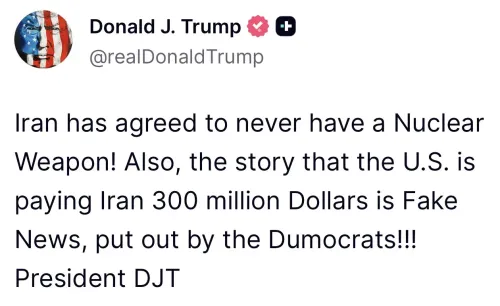
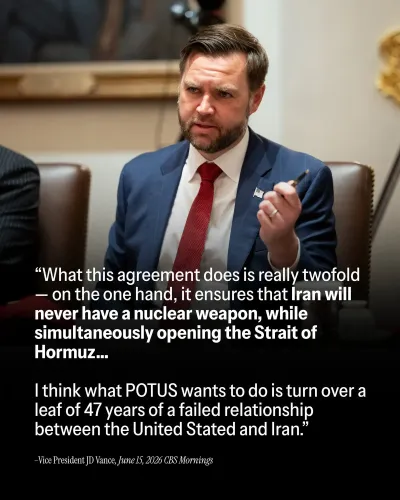
The White House posted on 18 June 2026 asserting Iran will never acquire a nuclear weapon.
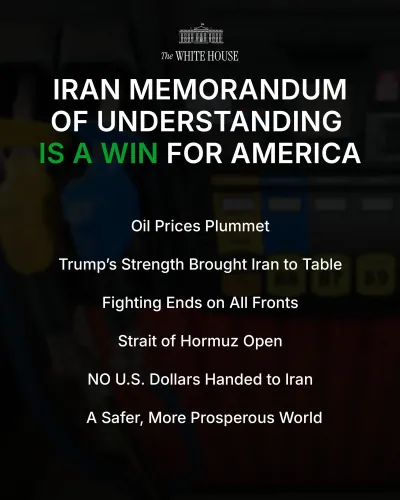
The post linked non-proliferation enforcement to falling gas prices, flowing oil, and rising markets — framed as a 'WIN for America and the world.' The JCPOA , signed in 2015 , was the last major multilateral framework limiting Iran's nuclear activities; the US withdrew in 2018 .
The Maximum Pressure campaign reimposed broad sanctions on Iranian oil exports after the US exit from the JCPOA.
India and other major Asian oil importers are directly affected by shifts in Iranian oil supply and US sanctions policy.
No specific market data or diplomatic details were provided in the post; follow-up official statements are expected.
The White House, the official communications account of the Executive Office of the President of the United States, posted on X on 18 June 2026 asserting that Iran will never acquire a nuclear weapon, while simultaneously claiming that oil is flowing, gas prices are falling, and markets are rising — all framed as a 'WIN for America and the world.'
Context
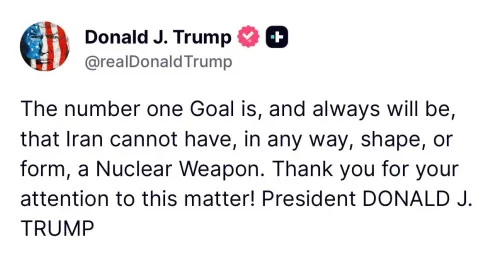
The post declares: 'Iran can never have a nuclear weapon. Oil is flowing. Gas prices are falling. Markets are roaring.' The White House linked non-proliferation enforcement directly to positive economic conditions, presenting the combination as a singular American and global victory. The statement carries the implicit authority of the Executive Office and signals an active posture on both Iran's nuclear programme and global energy supply.
Washington has maintained that a nuclear-armed Iran represents an unacceptable threat to regional and global stability. The framing of this post connects diplomatic and sanctions pressure on Tehran with downstream benefits for American consumers at the fuel pump and in financial markets.
Policy Backdrop
The United States and Iran have been locked in a decades-long standoff over Tehran's nuclear ambitions. The 2015 Joint Comprehensive Plan of Action (JCPOA), concluded between Iran and the P5+1 nations, placed limits on Iranian uranium enrichment levels and stockpiles in exchange for sanctions relief. Washington withdrew from the JCPOA in 2018 and reimposed sweeping economic sanctions targeting Iranian oil exports — a policy known as the Maximum Pressure campaign.
Successive US administrations have used a combination of sanctions, diplomatic isolation, and covert pressure to prevent Iran from crossing the nuclear threshold. The White House's current messaging continues this pattern, explicitly tying non-proliferation enforcement to energy market outcomes — a rhetorical approach that has appeared in official US communications periodically since the 2010s.
Iran has consistently denied seeking a nuclear weapon, though international inspectors have documented enrichment activity that exceeds the limits set under the JCPOA. The programme has remained a flashpoint in negotiations involving Europe, Russia, China, and the United States.
Stakeholders and Impact
The White House's assertion that gas prices are falling and markets are roaring directly addresses American consumers and investors, for whom fuel costs and equity performance are immediate economic concerns. Lower energy prices, if sustained, tend to reduce inflationary pressure across the broader US economy and carry indirect benefits for energy-importing nations globally.
For India, which imports a significant share of its crude oil and has historically maintained trade ties with Iran, shifts in global oil supply and pricing carry direct consequences for the import bill, inflation, and the rupee. Any tightening or easing of US sanctions on Iranian oil exports ripples through Asian energy markets almost immediately.
Global energy markets and Gulf producers also watch US-Iran dynamics closely, as Iranian oil supply levels affect the broader calculus of OPEC+ production decisions. The claim that 'oil is flowing' suggests the White House views current supply conditions as adequate or improving, though the specific market data underlying this claim has not been independently verified at the time of publication.
What's Next
Observers will watch for follow-up US government statements elaborating on the specific diplomatic or sanctions mechanisms the administration credits for the current situation. Any formal announcement regarding new talks with Tehran, modifications to the sanctions regime, or multilateral coordination with European and Asian partners would provide the policy substance behind the White House's broad claims.
The post's confident, declarative tone suggests the administration believes current conditions — on both the nuclear and energy fronts — represent a political asset heading into the domestic news cycle. Whether these conditions hold, and how Iran responds, will determine whether this framing becomes a durable foreign policy narrative or a moment-specific message.
Point of View
A rhetorical move designed to maximise domestic political resonance. By tying the Iran nuclear stance to consumer-facing metrics like gas prices and market performance, the administration frames a long-running geopolitical standoff as a tangible everyday win for American households. This approach echoes the 'peace through strength' and 'maximum pressure' messaging that has defined Republican foreign policy positioning since 2018, and signals the administration intends to campaign on its Iran record. The absence of specific policy details in the post leaves open the question of whether a new diplomatic or sanctions development is imminent, or whether this is consolidation of existing posture ahead of a domestic news cycle.
NationPress
19 Sept 2026
Frequently Asked Questions
What did the White House say about Iran's nuclear programme in June 2026?
The White House posted on 18 June 2026 that 'Iran can never have a nuclear weapon,' linking this stance to falling gas prices, flowing oil, and rising markets, and calling it a win for America and the world.
What is the JCPOA and why did the US leave it?
The JCPOA, or Joint Comprehensive Plan of Action, was a 2015 multilateral agreement that limited Iran's uranium enrichment in exchange for sanctions relief. The United States withdrew from the deal in 2018 and reimposed broad economic sanctions on Iran, including on its oil exports.
How does US Iran policy affect oil prices in India?
India is a major crude oil importer and has historically sourced oil from Iran. US sanctions on Iranian oil exports reduce global supply from Tehran, which can influence international crude benchmarks and, in turn, India's import costs, fuel prices, and inflation.
What is the US Maximum Pressure campaign on Iran?
The Maximum Pressure campaign is a US sanctions policy reimposed after 2018 aimed at curbing Iranian oil revenues and pressuring Tehran to renegotiate its nuclear programme. It targets Iranian oil sales and financial transactions with the goal of limiting the country's economic resources.
Are Iran's gas prices falling because of US policy?
The White House's post claimed gas prices are falling alongside its Iran nuclear stance, but the specific market conditions and causal links referenced in the June 2026 post have not been independently verified. Global oil prices are influenced by many factors including OPEC+ decisions, demand trends, and geopolitical developments.