White House: Iran Must Never Obtain a Nuclear Weapon
Synopsis
The White House issued an unequivocal declaration on August 17, 2026, stating that preventing Iran from acquiring a nuclear weapon — 'in any way, shape, or form' — is its permanent, non-negotiable top priority, signalling an absolutist posture with no diplomatic loopholes.
Key Takeaways
The White House declared on August 17, 2026 , that preventing Iran from obtaining a nuclear weapon is its absolute top priority.
The statement used the phrase 'in any way, shape, or form,' leaving no interpretive loopholes for diplomacy or civilian nuclear carve-outs.
The words 'always will be' frame the goal as permanent, an attempt to bind future US administrations to the same posture.
India faces direct consequences from any US-Iran escalation, given its energy ties, the Chabahar Port project, and its large diaspora in West Asia .
The statement's absolutism — with no diplomatic off-ramp — is itself a strategic signal to regional allies including Israel and Gulf states .
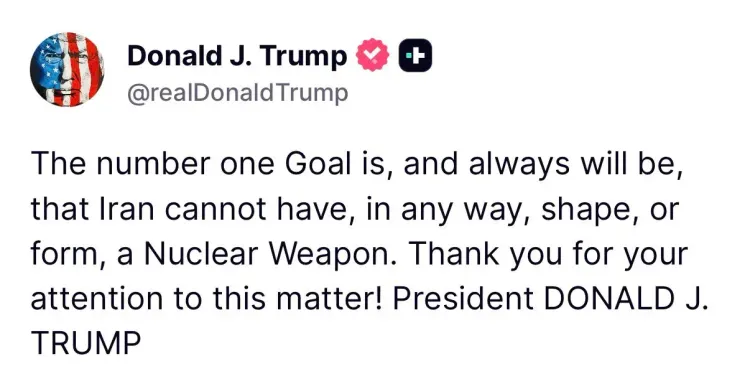
One line. No ambiguity. The White House on Monday, August 17, 2026, reduced American policy on Iran's nuclear ambitions to its sharpest possible statement — a flat, unconditional prohibition with no exceptions carved out for diplomacy, technology, or time.
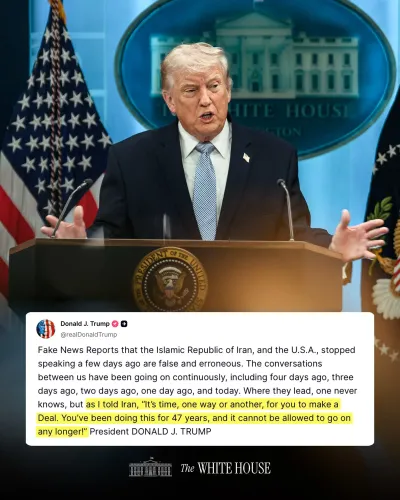
The post read: 'The number one Goal is, and always will be, that Iran cannot have, in any way, shape, or form, a Nuclear Weapon.' The phrasing — 'in any way, shape, or form' — is deliberate absolutism, closing off every interpretive loophole that has historically allowed negotiating room in nuclear diplomacy.
Why 'Always Will Be' Is the Operative Phrase
Most policy statements hedge with conditions: 'as long as,' 'unless,' 'subject to.' This one does not. The declaration frames the goal as permanent and non-negotiable — language that signals not just a current administration posture but an attempt to bind future policy. For a region already on edge over Iran's nuclear programme, that permanence is the headline.
Iran has long maintained that its nuclear activities are for civilian energy purposes. Western governments and international watchdogs have repeatedly raised concerns about uranium enrichment levels that exceed civilian need. The gap between those two positions is where decades of diplomacy, sanctions, and covert action have played out — and it is precisely that gap this statement refuses to acknowledge as negotiable.
What This Means for the Broader Region
For India, which maintains strategic and energy ties with both Iran and the United States, statements of this kind carry real weight. Any escalation in US-Iran tensions directly affects Indian energy import calculations, the fate of the Chabahar Port project, and the broader stability of West Asia — a region that is home to millions of Indian workers and a critical artery for Indian trade.
The White House's choice to reduce a complex geopolitical file to a single, unequivocal sentence is itself a signal — one that regional capitals, from Riyadh to Tel Aviv to New Delhi, will be parsing closely.
When a superpower says 'always will be,' the world listens — and starts calculating what comes next if that line is crossed.
Point of View
A rhetorical move that constrains future US negotiators before talks even begin. It fits a broader pattern of maximalist declaratory policy designed to signal resolve to both adversaries and regional allies, particularly Israel and Gulf states. For India, the stakes are concrete: any hardening of the US-Iran standoff puts Chabahar, Indian energy imports, and diaspora safety in West Asia directly in the frame. The absence of any diplomatic off-ramp in the language is as significant as the statement itself.
NationPress
1 Oct 2026
Frequently Asked Questions
What did the White House say about Iran's nuclear programme?
The White House stated on August 17, 2026, that its 'number one Goal' — permanent and unconditional — is that Iran cannot have a nuclear weapon 'in any way, shape, or form.'
Does the US allow Iran any civilian nuclear activity?
The White House statement did not make any distinction between civilian and military nuclear activity — the language was absolute, ruling out a nuclear weapon under any circumstance without addressing civilian energy use separately.
How does the US-Iran nuclear standoff affect India?
India has strategic energy and trade ties with Iran, including the Chabahar Port project. Any escalation in US-Iran tensions risks disrupting Indian energy imports, Indian investments in Iran, and the safety of millions of Indian workers in West Asia.
What is Iran's position on its nuclear programme?
Iran has consistently maintained that its nuclear activities are intended for civilian energy purposes, a position disputed by Western governments and international nuclear watchdogs who have flagged enrichment levels beyond civilian need.
Why is the phrase 'always will be' significant in the White House statement?
The phrase signals an attempt to make the anti-Iran-nuclear-weapon stance permanent US policy, not just a current administration position — a rhetorical move that limits diplomatic flexibility for future governments.