White House: US Armed Forces Will Prevent Iran Nuclear Weapon

Synopsis
The White House declared on October 9, 2026, that US Armed Forces are actively ensuring Iran never acquires a nuclear weapon — framing the mission in military, not diplomatic, terms, signalling a hardened Washington posture on one of the world's most consequential security fault lines.
Key Takeaways
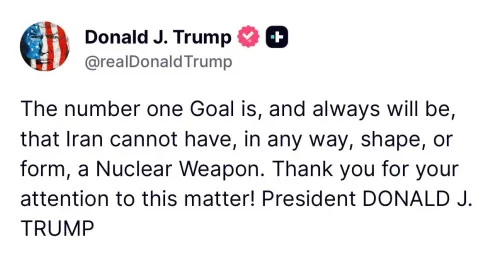
The White House posted on October 9, 2026 , declaring that America's Armed Forces are ensuring Iran will 'NEVER' have a nuclear weapon.
The present-tense, military framing — not diplomatic or sanctions-based — marks a notably hardened tone from Washington .
Iran has reportedly enriched uranium to near-weapons-grade levels following the US withdrawal from the JCPOA in 2018 .
The statement signals resolve simultaneously to Tehran , regional allies, and the international community.
For India , which has significant trade and energy ties with Iran , any military escalation in the Persian Gulf carries direct strategic and economic implications.
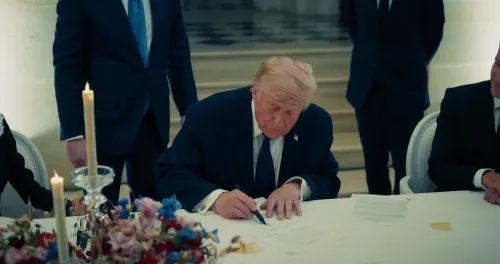
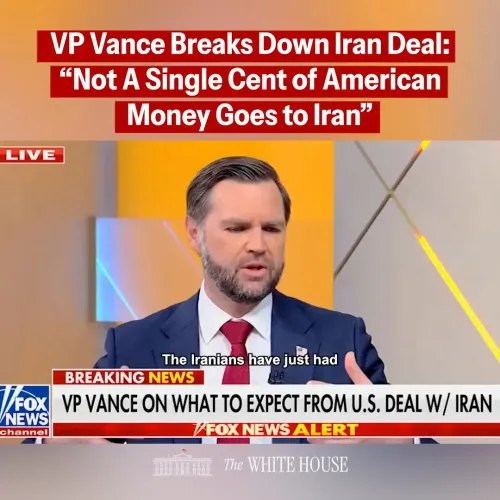
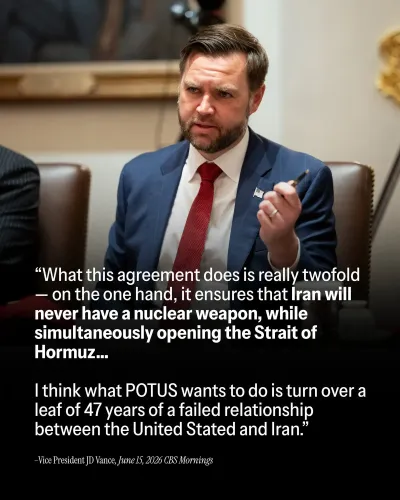
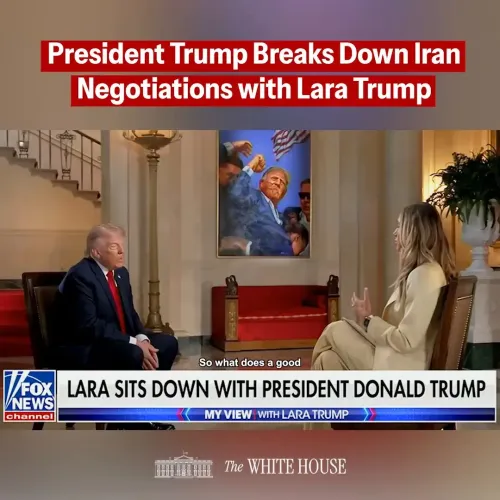
A stark, unambiguous declaration from the highest office in the United States: The White House posted on X on Friday, October 9, 2026, asserting that America's Armed Forces are actively ensuring that Iran will 'NEVER' acquire a nuclear weapon — capitalised for unmistakable emphasis.
The declaration and what it signals
The post, brief but loaded, read: 'America's Armed Forces are ensuring that Iran will NEVER have a nuclear weapon.' The use of the present continuous tense — 'are ensuring' — is deliberate. It frames this not as a future policy aspiration or a diplomatic red line, but as an ongoing military mission already underway. That distinction matters enormously in the language of geopolitics.
Paired with the American flag emoji and a linked image, the message is crafted for maximum resonance: this is a show-of-force statement, not a negotiating position. Washington is signalling resolve to Tehran, to regional allies, and to the watching world simultaneously.
Iran's nuclear programme and the long shadow of containment
The Iranian nuclear programme has been one of the defining fault lines of Middle East geopolitics for over two decades. A series of multilateral agreements — most notably the Joint Comprehensive Plan of Action (JCPOA) of 2015 — sought to cap Iran's uranium enrichment capacity in exchange for sanctions relief. The United States withdrew from the JCPOA under the Trump administration in 2018, triggering a cascade of Iranian escalations in enrichment levels.
Since then, Iran has reportedly enriched uranium to levels approaching weapons-grade, drawing repeated warnings from the International Atomic Energy Agency (IAEA) and intensified pressure from Washington, Tel Aviv, and Western capitals. The spectre of a nuclear-armed Iran has long been treated as a red line by Israel and successive US administrations alike.
Why this post lands differently in October 2026
A White House social-media post of this nature — framing military forces as the operative instrument, not diplomats or sanctions — is a significant calibration of tone. It does not mention negotiations, treaties, or multilateral frameworks. It names one actor: the US Armed Forces. That framing, at this moment, is the story.
For India — which shares deep energy and trade ties with Iran, navigates US sanctions carefully, and maintains its own complex calculus on regional stability — any escalation in the Persian Gulf corridor carries direct economic and strategic consequences. New Delhi watches this space with acute attention.
The message from Washington is clear, military, and absolute — the next move belongs to history.
Point of View
Diplomacy, or multilateral mechanisms — as the operative instrument against an Iranian nuclear weapon represents a deliberate escalation in rhetorical posture. It effectively closes off the diplomatic framing that characterised earlier administrations, placing the statement firmly in the domain of military deterrence. For India, which has long attempted to balance its Iran ties against US pressure, this sharpened American stance compresses the space for strategic ambiguity. The post is short, but its implications stretch across the Persian Gulf, South Asia, and global energy markets.
NationPress
9 Oct 2026
Frequently Asked Questions
What did the White House say about Iran's nuclear programme on October 9, 2026?
The White House posted that America's Armed Forces are actively ensuring that Iran will 'NEVER' have a nuclear weapon, framing it as an ongoing military mission rather than a diplomatic position.
Does Iran currently have a nuclear weapon?
Iran does not currently possess a nuclear weapon, but it has enriched uranium to levels approaching weapons-grade, prompting repeated warnings from the IAEA and escalating pressure from the United States and its allies.
What is the JCPOA and why did the US leave it?
The Joint Comprehensive Plan of Action (JCPOA) , signed in 2015 , limited Iran's uranium enrichment in exchange for sanctions relief. The United States withdrew from the agreement in 2018 , after which Iran progressively expanded its enrichment activities.
How does the US-Iran nuclear standoff affect India?
India has significant trade and energy ties with Iran and must carefully navigate US sanctions. Any military escalation in the Persian Gulf could affect oil supply routes, energy prices, and India's broader strategic calculus in the region.
Is the US planning military action against Iran over nuclear weapons?
The White House post states that US Armed Forces 'are ensuring' Iran will not obtain a nuclear weapon, but the post does not specify any particular military operation or timeline. It signals strong deterrence intent without confirming a specific action.