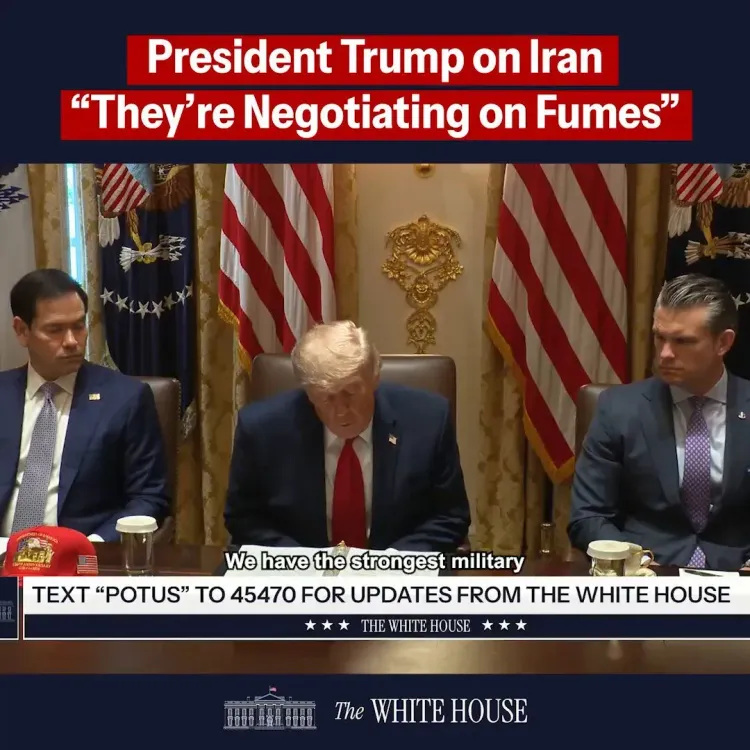
White House Says Iran Negotiating 'On Fumes' After Military Losses
Synopsis
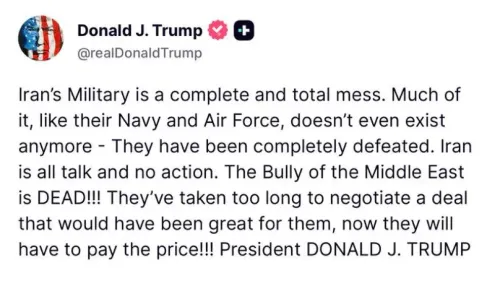
The White House declared on 27 May 2026 that Iran's navy and air force are 'gone' and that Tehran is 'negotiating on fumes,' marking a sharp escalation in US public messaging designed to frame Iran as militarily and diplomatically weakened ahead of any renewed nuclear talks.
Key Takeaways
The White House posted on 27 May 2026 that Iran's navy and air force have been eliminated.
The statement characterises Iran as 'negotiating on fumes,' signalling perceived maximum US leverage.
The post is part of a pattern of US public messaging on Iranian military vulnerability dating to the 2018 withdrawal from the JCPOA .
Iran's conventional forces have long been assessed as degraded by sanctions restricting spare parts and military procurement.
Any follow-on statements from the IAEA or indirect nuclear talks in Vienna will be closely watched.
The rhetoric adds uncertainty for India and other nations with significant economic interests in the West Asia region.
The White House, the official communications account of the Executive Office of the President of the United States, posted a sharp statement on Wednesday, 27 May 2026, declaring that Iran's navy and air force have been eliminated and that Tehran is now negotiating from a position of extreme weakness.
Context
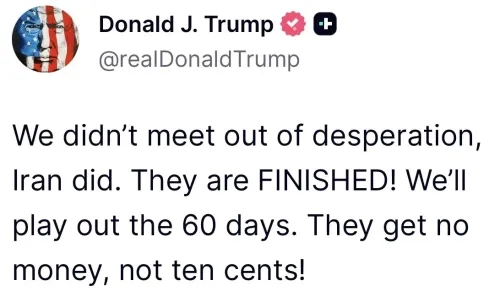
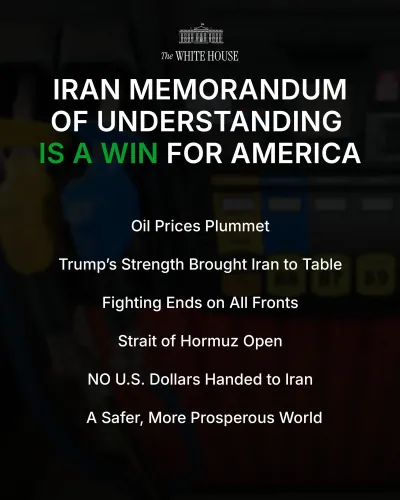
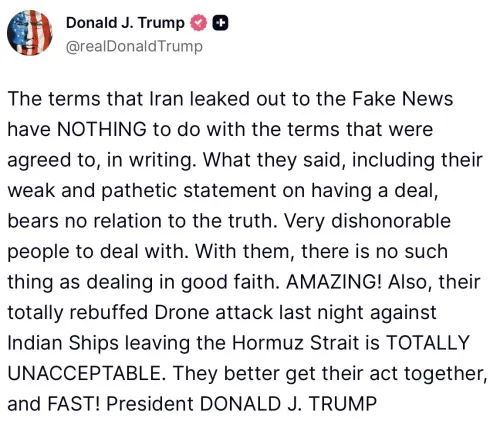
The post states bluntly: 'Their Navy is gone, their Air Force is gone. Iran is negotiating on fumes.' The language signals a deliberate effort by the United States government to publicly frame Iran as militarily and diplomatically diminished ahead of or during any ongoing negotiations. The statement carries significant weight as an official White House communication rather than a campaign or personal account.
The claim regarding Iran's conventional military forces aligns with long-standing assessments that Iran's air force and navy have suffered severe degradation over decades of US sanctions, which have restricted access to spare parts, modern aircraft, and naval equipment. However, the assertion that both branches are entirely 'gone' represents a more absolute characterisation than previously confirmed in open-source assessments.
Policy Backdrop
The United States withdrew from the Joint Comprehensive Plan of Action (JCPOA) — the landmark 2015 nuclear agreement — in 2018, and subsequently launched a maximum-pressure sanctions campaign targeting Iranian oil revenues, banking access, and military procurement channels. That campaign was explicitly designed to force Tehran back to the negotiating table on terms more favourable to Washington and its regional partners.
Since the 2018 sanctions reset, successive US administrations have used public messaging about Iranian vulnerabilities as a lever in diplomatic signalling. Statements emphasising the weakness of Iran's conventional forces have been a recurring feature of this approach, particularly during periods of heightened tensions involving Israel and Iran and during indirect nuclear talks held in venues such as Vienna.
Stakeholders and Impact
Iranian leadership faces the dual pressure of economic strain from sanctions and what the White House now describes as the near-total collapse of two of its three conventional military branches. For regional security partners of the United States — including Israel, Saudi Arabia, and the Gulf states — the statement will be read as a strong signal of American confidence in its negotiating position.
For India, which maintains significant trade and energy interests in the region and has historically sought to balance relations with both Washington and Tehran, the escalating rhetoric adds uncertainty to West Asian stability. India imports oil from the Gulf corridor and hosts a large diaspora across the region, making any military or diplomatic escalation a matter of direct economic concern.
What's Next
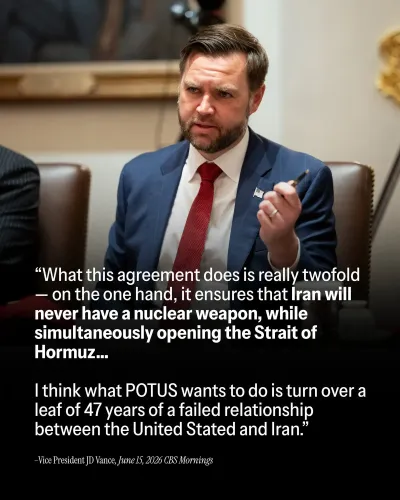
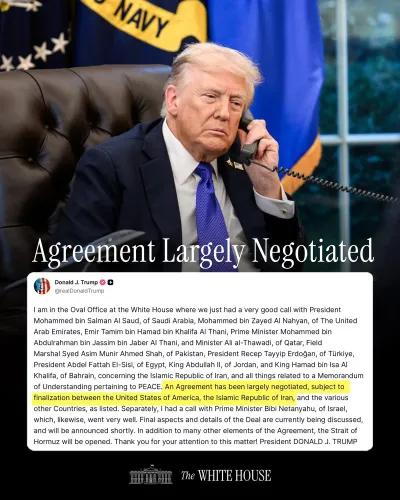
Observers will watch closely for any follow-on statements from Iran's foreign ministry or supreme leadership in response to the White House post. Statements from the International Atomic Energy Agency (IAEA) on Iran's current nuclear enrichment levels and the status of indirect talks — whether in Vienna or through third-party intermediaries — will be the next significant data points. The tone of the White House post suggests the US believes it holds decisive leverage, which could either accelerate a deal or harden Iranian resistance.
Point of View
When maximum-pressure messaging was used in tandem with sanctions to shape Tehran's calculus. The absolutist language — 'gone,' not 'degraded' — suggests Washington wants to project finality, not just leverage. For regional and global observers, the key question is whether such messaging accelerates a deal by demoralising Iranian negotiators, or entrenches hardliners who cannot be seen to capitulate under public humiliation.
NationPress
19 Sept 2026
Frequently Asked Questions
What did the White House say about Iran's military?
The White House posted on 27 May 2026 that Iran's navy and air force are 'gone' and that Iran is 'negotiating on fumes,' suggesting Tehran has lost significant military capability and is negotiating from a position of weakness.
Is Iran's air force really destroyed?
Iran's air force has long been assessed as severely degraded by decades of US sanctions that blocked access to spare parts and modern aircraft. The White House's claim that it is entirely 'gone' is a strong public assertion; independent verification of the full extent of any recent losses is not yet available.
What are the current US-Iran nuclear negotiations about?
The US and Iran have been engaged in periodic indirect talks aimed at reviving or replacing the 2015 JCPOA nuclear agreement, which the US exited in 2018. The negotiations centre on Iran's uranium enrichment levels and the lifting of sanctions in return for verifiable nuclear limits.
What is the JCPOA and why did the US leave it?
The Joint Comprehensive Plan of Action (JCPOA) was a 2015 multilateral agreement that curbed Iran's nuclear activities in exchange for sanctions relief. The United States withdrew in 2018 and reimposed sweeping sanctions as part of a maximum-pressure strategy to force a broader deal.
How does the US-Iran standoff affect India?
India has significant trade, energy, and diaspora interests in the West Asia region. Escalating US-Iran tensions raise uncertainty over oil supply routes and regional stability, both of which have direct economic implications for India.