White House Claims Iran Military Destroyed, Gas Prices Falling
Synopsis
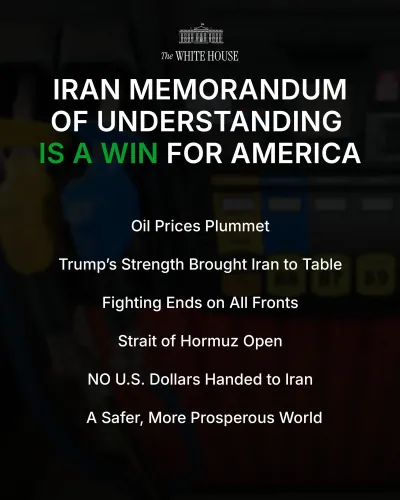
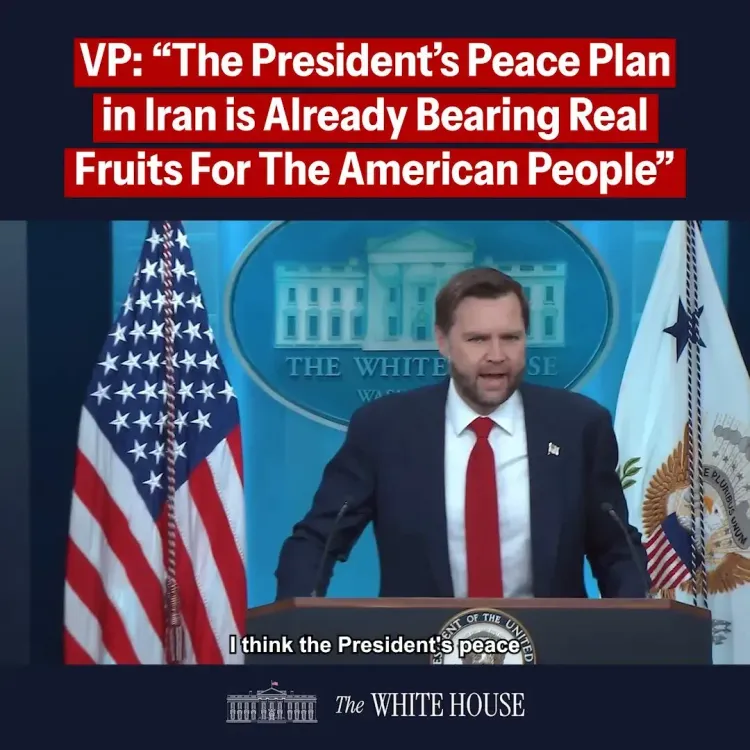
The White House declared on June 18, 2026, that a peace plan is bearing fruit: Iran's nuclear programme and conventional military are described as destroyed, its threat to neighbours largely gone, and US gas prices are said to be falling as a result.
Key Takeaways
The White House posted on June 18, 2026 , claiming a peace plan is already delivering results for the United States .
The post asserts Iran 's nuclear programme and conventional military have been 'destroyed.' Iran's capacity to threaten neighbouring countries is described as 'still largely gone.' Falling gas prices in the US are cited as a domestic economic benefit of the plan.
The post tags the Vice President (@VP) , indicating joint executive ownership of the message.
No specific name for the peace plan or independent verification of the military claims was provided in the post.
The White House on Thursday, June 18, 2026, posted an official statement asserting that a 'peace plan' is already delivering results for the United States, citing falling domestic gas prices and claiming that Iran's nuclear programme, conventional military, and capacity to threaten neighbouring countries have been largely eliminated.
Context
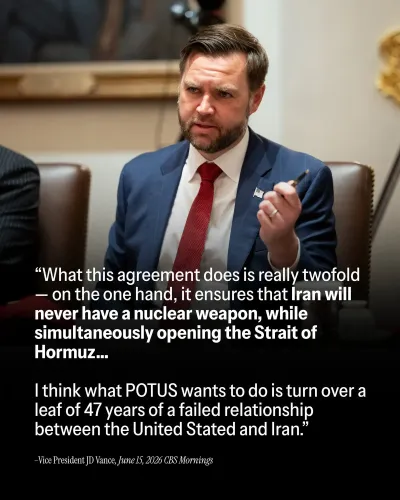
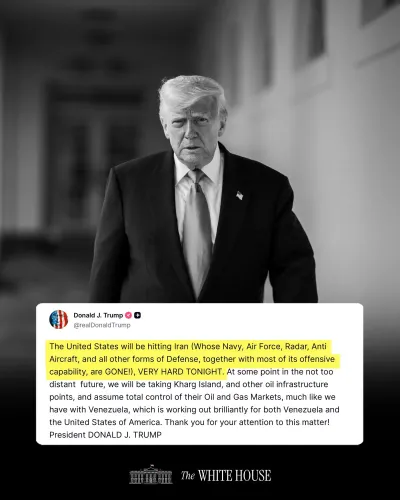
The post, shared on the official White House account and tagging Vice President via @VP, states: 'The peace plan is ALREADY bearing fruit for America, as gas prices fall. Iran's nuclear program is destroyed, their conventional military is destroyed, and their capacity to threaten their neighbors is still largely gone.' No specific name for the referenced peace plan was provided in the post.
The statement links two distinct developments — a claimed degradation of Iran's military and nuclear capabilities, and a domestic economic benefit in the form of lower fuel costs — framing them as connected outcomes of a single policy initiative.
Policy Backdrop
US-Iran tensions have shaped American foreign and energy policy for over two decades. The 2015 Joint Comprehensive Plan of Action (JCPOA) placed multilateral constraints on Iran's nuclear activities, before the United States withdrew from the agreement in 2018 under the Trump administration and reimposed sweeping sanctions on Tehran.
In 2020, a US strike killed senior Iranian military commander Qasem Soleimani, significantly escalating direct military tensions between Washington and Tehran. Successive administrations have periodically linked perceived reductions in Iranian capabilities to downstream benefits in global oil supply and domestic energy prices — a framing the current statement continues.
The US Energy Information Administration (EIA) periodically publishes data on domestic fuel prices; any corroboration of the gas price claim would likely be tracked through such official metrics.
Stakeholders and Impact
American consumers stand to benefit most directly if gas prices are indeed falling, as fuel costs are a key driver of household spending and a politically salient economic indicator. Global oil markets, which are sensitive to Gulf security conditions, tend to ease when perceived threats to regional stability diminish.
For Iran's neighbours — including Israel, Saudi Arabia, Iraq, and Gulf Cooperation Council states — any genuine and sustained reduction in Iranian conventional and proxy military capacity would represent a significant shift in the regional security balance. Independent verification of the claims made in the post has not been established at the time of publication.
What's Next
The White House has not released further details on the specific peace plan referenced, its signatories, or the mechanisms by which Iranian military and nuclear assets were said to have been destroyed. Observers will watch for follow-up briefings from the National Security Council or State Department providing implementation metrics.
Energy market analysts and the EIA are expected to publish data in the coming weeks that could substantiate or complicate the gas price narrative. Reactions from Tehran, regional allies, and international non-proliferation bodies are also anticipated as the post circulates globally.
Point of View
Where Gulf security is framed as directly tied to American energy costs. The tagging of the Vice President signals that this is a coordinated executive-branch message, not a spontaneous post, suggesting a deliberate rollout tied to a specific policy milestone. Until independent verification of the military and nuclear claims emerges, the statement will be scrutinised as much for its political framing as for its strategic substance.
NationPress
20 Sept 2026
Frequently Asked Questions
What did the White House say about Iran in June 2026?
The White House posted on June 18, 2026, claiming that Iran's nuclear programme and conventional military have been destroyed and that its ability to threaten neighbouring countries is largely gone, linking these developments to a peace plan.
Which peace plan is the White House referring to?
The White House post did not name a specific peace plan. No further details on its signatories or terms were provided in the statement.
How does Iran's military situation affect US gas prices?
The White House statement claims that the degradation of Iran's capabilities is contributing to falling US gas prices, a framing rooted in the link between Gulf security conditions and global oil supply stability.
Has Iran's nuclear programme actually been destroyed?
The White House post asserts this, but independent verification of the claim had not been established at the time of publication. The research basis for this claim postdates available training knowledge and remains unverified.
Why was the US Vice President tagged in the White House Iran post?
Tagging @VP in an official White House national-security post typically signals that the Vice President is a co-owner of the policy being announced, indicating a coordinated executive-branch communication.