Kasturirangan report: Karnataka CM Shivakumar backs physical survey, cites Sept 27 deadline
Synopsis
With a Centre deadline of 27 September bearing down, Karnataka CM Shivakumar travelled to Udupi to hear residents out on the Kasturirangan report — and left with a promise to adopt the Kerala model of physical survey, potentially excluding up to 5,000 sq km from ESA coverage. The Assembly debate and what Karnataka sends to Delhi next week will set the tone for five other states watching from the sidelines.
Key Takeaways
Shivakumar assured residents at Hebri, Udupi on 18 September 2026 of a physical survey discussion on the Kasturirangan report .
The state must send its decision to the Centre by 27 September 2026 .
A three-day special Karnataka Assembly session will take up the report on its first day .
Local representatives say a physical survey — on the Kerala model — could reduce Karnataka's covered area by around 5,000 sq km , from roughly 20,000 sq km .
Shivakumar also indicated the government may prescribe a uniform 25-year limit under the Forest Rights Act .
The Kasturirangan Committee , set up in 2012 , recommends Ecologically Sensitive Area restrictions across six states including Karnataka.
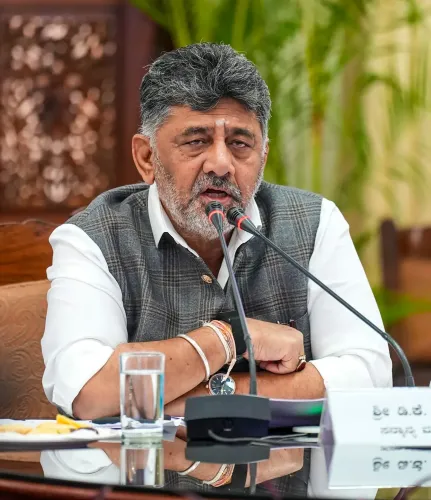
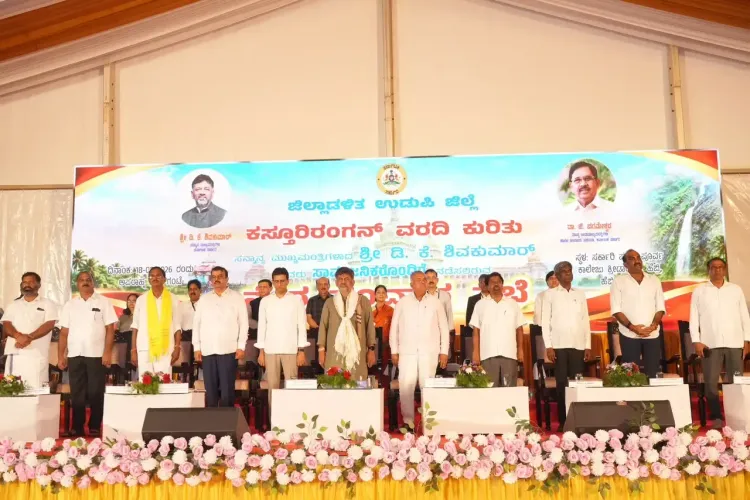
Karnataka Chief Minister D.K. Shivakumar on Friday, 18 September 2026, assured residents of the Malnad and coastal regions that the state government would consult officials and take a formal decision on conducting a physical survey of areas covered under the Kasturirangan report. The assurance came during a public interaction at Hebri in Udupi district, where local organisations and elected representatives pressed the government to adopt the Kerala model before finalising its response to the Union government.
Key Assurances from the Chief Minister
Addressing residents who outlined the problems arising from the report's proposed ecologically sensitive area (ESA) designations, Shivakumar acknowledged the urgency of the timeline. 'We have to send our decision to the Centre by September 27. We have come here so that your opinion becomes our opinion,' he said. He accepted suggestions for an expert committee and confirmed the report would be taken up in the Karnataka Assembly during a three-day special session convened to discuss farmers' issues, drought, and the Kasturirangan report — with the report scheduled for debate on the first day of the session.
Shivakumar also announced plans to travel to Shivamogga and Chikkamagaluru to hear public sentiment from those regions directly. 'I do not want to make announcements before you and then forget about them,' he said, pledging continued engagement with elected representatives from Udupi.
The Kerala Model and Demand for Physical Survey
Representatives of local organisations and legislators urged the government not to rely solely on the committee's satellite and GPS-based methodology, arguing that a ground-level physical survey could substantially reduce the area of concern. According to the representatives, the Kasturirangan report covers approximately 13,000 sq km in Kerala and around 20,000 sq km in Karnataka. They pointed out that Kerala conducted a physical survey through a high-level officials' committee, which separated inhabited areas from forested ones and brought the state's covered area down to around 9,000 sq km. A comparable exercise in Karnataka, they claimed, could exclude around 5,000 sq km from the report's coverage.
Residents also raised concerns about the inclusion of areas with more than 100 residents and regions with less than 20 per cent protected forest cover. They said the report had generated widespread fear of eventual displacement and called on the government to build awareness about its actual provisions before any implementation steps.
Forest Rights Act and Other Demands
On the Forest Rights Act, Shivakumar said the government was considering prescribing a uniform 25-year limit — harmonising provisions that currently range from 25 to 75 years — and sending the decision to the Centre. He also instructed Forest Department officials not to harass residents living in forested areas. Separately, representatives sought a zonal management plan and a taluk hospital in Hebri, which the government said it would examine in consultation with officials.
Broader Regional Commitments
Shivakumar highlighted that a special Cabinet meeting held in Mangaluru had resulted in 60 decisions, of which 40 were specific to coastal districts. He also referred to the Cabinet's recognition of Tulu as the second additional administrative language in Dakshina Kannada and Udupi districts, and noted that the government had approved several measures to promote tourism and investment in the Malnad and coastal belt to prevent out-migration.
Background: What the Kasturirangan Report Proposes
The Kasturirangan Committee was constituted by the Union government in 2012 under the chairmanship of K. Kasturirangan to review the recommendations of the earlier Gadgil Committee on protecting the Western Ghats. The committee recommended declaring certain parts of the Ghats as Ecologically Sensitive Areas (ESA), with restrictions on mining, quarrying, large-scale construction, and select industrial activities within those zones. Its recommendations span six states: Karnataka, Kerala, Tamil Nadu, Goa, Maharashtra, and Gujarat. In Karnataka, the proposals have faced sustained opposition from farmers, residents, and local bodies who fear curbs on agriculture, property rights, and development.
With the Centre's 27 September deadline approaching, Karnataka's position — and how it navigates competing pressures from environmental mandates and local livelihoods — will be closely watched by the five other states in a similar bind.
Point of View
And Karnataka residents are banking on a similar outcome. The real question is whether the Assembly debate produces a concrete counter-proposal to send to Delhi, or merely buys time. With five other states watching and the Supreme Court and National Green Tribunal both invested in Western Ghats protection, Karnataka cannot indefinitely defer a position. The 27 September deadline is the first real test of whether this government's community-listening exercise converts into policy action.
NationPress
19 Sept 2026
Frequently Asked Questions
What is the Kasturirangan report and why does it matter to Karnataka?
The Kasturirangan report, submitted in 2013 after a committee set up in 2012 under K. Kasturirangan reviewed the Western Ghats, recommends designating approximately 20,000 sq km of Karnataka as Ecologically Sensitive Areas (ESA) with restrictions on mining, quarrying, construction, and certain industries. It matters because residents, farmers, and local bodies fear the ESA designation could curtail agriculture, property rights, and development in Malnad and coastal Karnataka.
What did CM Shivakumar promise residents in Udupi on 18 September?
Chief Minister D.K. Shivakumar assured residents at Hebri, Udupi, that the state government would consult officials on conducting a physical survey of areas covered by the report and discuss the issue in a special Karnataka Assembly session. He also accepted the suggestion of constituting an expert committee and said he would visit Shivamogga and Chikkamagaluru to hear further public opinion.
What is the 27 September 2026 deadline about?
Karnataka is required to send its formal position on the Kasturirangan report's recommendations to the Union government by 27 September 2026. Shivakumar cited this deadline as the reason for his consultations with residents and the convening of a special Assembly session to debate the issue before a decision is finalised.
What is the Kerala model that Karnataka residents are recommending?
Kerala conducted a physical survey of areas covered by the Kasturirangan report through a high-level officials' committee, which separated inhabited areas from forested zones. This exercise reduced Kerala's covered area from roughly 13,000 sq km to around 9,000 sq km. Karnataka representatives argue a similar physical survey could potentially exclude around 5,000 sq km from the report's coverage in the state.
Which other states are affected by the Kasturirangan report?
The report's recommendations cover parts of six states: Karnataka, Kerala, Tamil Nadu, Goa, Maharashtra, and Gujarat. All six have faced varying degrees of opposition from local communities concerned about restrictions on livelihoods, agriculture, and development in the proposed Ecologically Sensitive Areas.