Karnataka Dy CM Parameshwara urges Council: take objective stand on Kasturirangan report
Synopsis
Karnataka Deputy CM Parameshwara told the Legislative Council that after correcting technical errors, only 3,108 sq km of the 20,668 sq km flagged in the Kasturirangan report actually remains outside existing protected areas — a figure that reframes the decade-long standoff between Karnataka and the Centre over Western Ghats ESA notification.
Key Takeaways
Parameshwara , Karnataka's Deputy CM, urged the Legislative Council on 21 September 2026 to take an objective stand on the Kasturirangan report .
The report recommended 20,668 sq km in Karnataka as Ecologically Sensitive Area across 1,576 villages , 10 districts , and 33 taluks .
After correcting technical errors, the effective area reduces to 19,252.16 sq km ; of that, only 3,108.08 sq km falls outside existing protected zones.
Karnataka has formally opposed the report since 2014 ; the Centre has continued issuing successive draft notifications regardless.
A Sanjay Kumar -led committee constituted on 18 April 2022 is conducting satellite-based and physical surveys to verify ground conditions.
Parameshwara called for village-wise and survey-number-wise mapping before any final findings are submitted to the Centre.
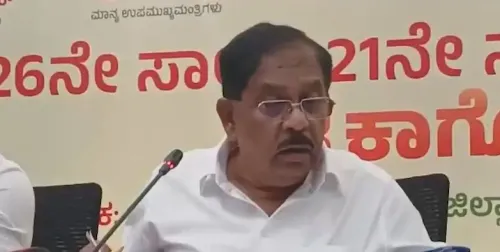
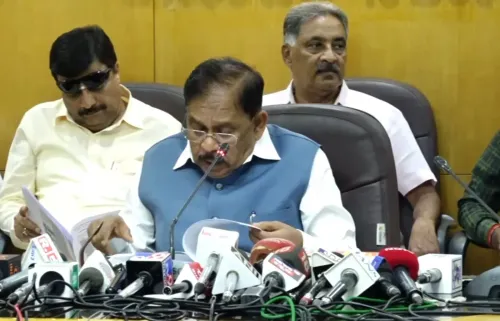
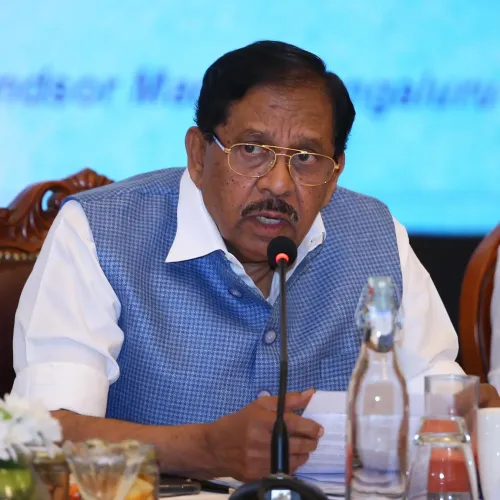
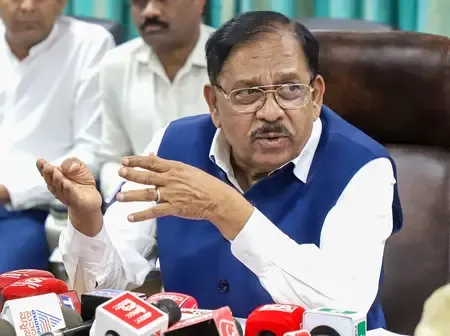
Karnataka Deputy Chief Minister and Revenue Minister G. Parameshwara on Monday, 21 September 2026, urged the Karnataka Legislative Council to adopt an objective position on the Kasturirangan report on the Western Ghats, stressing the need to simultaneously protect the region's ecology and the livelihoods of communities that have lived there for generations.
What Parameshwara Said in the Council
Participating in a discussion in the upper house, Parameshwara acknowledged that Karnataka had repeatedly opposed the report, even as the Centre continued issuing successive draft notifications. He called for a balanced debate that weighed both the advantages and the disadvantages of the panel's recommendations.
'We have to protect the environment while also protecting the interests of people living in the Western Ghats and future generations. The survival of mountain ranges such as the Western Ghats, Eastern Ghats, Aravallis, Vindhyas and the Himalayas is linked to our own survival. At the same time, we must protect the lives and livelihoods of people who have been living there for generations,' he said.
Background: From the Gadgil Panel to Kasturirangan
The Western Ghats Ecology Expert Panel, headed by ecologist Madhav Gadgil, was constituted by the Union Ministry of Environment and Forests in 2010 under the Environment Protection Act, 1986. The panel submitted its report on 30 August 2011, identifying 1,29,037 sq km of the Western Ghats and classifying it into three ecological sensitivity zones.
Facing strong opposition from state governments, local communities, and elected representatives, the Centre set up an 11-member High Level Working Group under K. Kasturirangan in August 2012 to review the Gadgil committee's findings. The group submitted its report on 15 April 2013, recommending approximately 59,940 sq km across six states be designated as Ecologically Sensitive Areas (ESAs).
Karnataka's Specific Stakes
In Karnataka, the Kasturirangan report identified 20,668 sq km as an ESA, covering 1,576 villages across 10 districts and 33 taluks — including Belagavi, Uttara Kannada, Shivamogga, Udupi, Chikkamagaluru, Dakshina Kannada, Hassan, Kodagu, Mysuru, and Chamarajanagar.
The report's recommendations include a ban on new mining, quarrying, and sand mining activities, with existing mining leases to be phased out within five years. New thermal power projects and expansion of certain 'red' industries would face restrictions. Large new construction projects and townships would also be curtailed, though new hydropower projects could be permitted under conditions including a minimum distance of three kilometres between projects.
Parameshwara pointed out that after correcting technical errors, the area under consideration in Karnataka would reduce from 20,668 sq km to 19,252.16 sq km. Of that, 16,114.08 sq km is already covered under national parks, wildlife sanctuaries, reserve forests, and other protected categories — leaving only 3,108.08 sq km for further deliberation.
Karnataka's Long Opposition and the State's Stand
Karnataka has been formally opposing the Kasturirangan recommendations since 2014. A Cabinet sub-committee constituted that year visited Western Ghats districts during January and February 2015, held public meetings, collected community views, and submitted a report that the state government accepted and communicated to the Centre. The state has subsequently written to the Centre on multiple occasions opposing successive draft notifications.
The Centre constituted another review committee headed by Sanjay Kumar on 18 April 2022. That committee visited Karnataka in May 2022 and was informed of the state's objections. It is currently conducting satellite-based surveys alongside physical verification of residential areas, plantations, and agricultural land located within or near forests.
The Path Forward
Parameshwara urged that village-wise verification and survey-number-wise mapping be undertaken to establish the actual ground situation before any findings are submitted to the Centre. He called on the Council to deliberate and offer suggestions to help the state government take an informed decision. 'If the environment is protected, the lives of the people living there can also be protected,' he said, framing ecology and livelihood as complementary rather than competing priorities.
The debate in the Council signals that Karnataka's political establishment remains deeply divided on how to navigate the Centre's persistent pressure to notify ESAs — a standoff that has now stretched across more than a decade and multiple state and central governments.
Point of View
108 sq km remains genuinely unprotected is a significant technical concession that quietly narrows the political battlefield, but the Centre's repeated draft notifications suggest it does not fully accept the state's framing. The real accountability gap is the absence of a mutually agreed ground-truth survey: until that exists, both sides can claim legitimacy while communities in the affected villages remain in a prolonged state of uncertainty about their land rights and livelihoods.
NationPress
21 Sept 2026
Frequently Asked Questions
What is the Kasturirangan report on the Western Ghats?
The Kasturirangan report, submitted on 15 April 2013, was prepared by an 11-member High Level Working Group headed by K. Kasturirangan to review the earlier Gadgil panel's findings. It recommended approximately 59,940 sq km across six states — including 20,668 sq km in Karnataka — be designated as Ecologically Sensitive Areas, with restrictions on mining, thermal power, and large construction projects.
Why has Karnataka been opposing the Kasturirangan report?
Karnataka has opposed the report since 2014, citing concerns over its impact on the lives and development of the estimated 1,576 villages across 10 districts that fall within the proposed Ecologically Sensitive Area. A state Cabinet sub-committee conducted public meetings in 2015 and formally communicated the state's objections to the Centre on multiple occasions.
How much of Karnataka's Western Ghats area is actually at stake?
According to Deputy CM Parameshwara, after correcting technical errors the Karnataka ESA area comes down from 20,668 sq km to 19,252.16 sq km. Of that, 16,114.08 sq km is already covered under national parks, wildlife sanctuaries, and reserve forests, leaving 3,108.08 sq km for further consideration.
What is the Sanjay Kumar committee doing in Karnataka?
The Sanjay Kumar-led committee, constituted by the Centre on 18 April 2022, is conducting satellite-based surveys and physical verification of residential areas, plantations, and agricultural land within or near the forest zones. It visited Karnataka in May 2022 and was informed of the state's objections to the Kasturirangan recommendations.
What did Parameshwara ask the Karnataka Legislative Council to do?
Parameshwara urged the Council to discuss the Kasturirangan report objectively — weighing its advantages and disadvantages — and offer suggestions that would help the state government take an informed decision before responding to the Centre. He also called for village-wise verification and survey-number-wise mapping to establish the actual ground situation.