Kasturirangan report: Karnataka BJP's Ashoka says Centre acted on NGT order, not by choice

Synopsis
Karnataka BJP's Leader of the Opposition R. Ashoka told the Legislative Assembly that the Centre's Kasturirangan report notification was driven by NGT orders — not political will — and called out Congress ministers for misrepresenting the move. With 1,576 villages and 20,668 sq km at stake, Karnataka carries the heaviest ecologically sensitive area burden of any state, and Ashoka's prescription is blunt: do a ground survey, follow Kerala's playbook, or lose the argument in court.
Key Takeaways
Ashoka , Karnataka BJP Leader of the Opposition, said the Centre's Kasturirangan report notification was issued in compliance with an NGT directive , not voluntarily.
Karnataka has 1,576 villages across 10 districts covering 20,668 sq km under the ecologically sensitive area — the largest among all affected states.
Satellite imagery has allegedly misclassified coffee plantations and farmland as forest, threatening lakhs of farmers.
Ashoka urged the state to follow Kerala's model — conduct a ground-level survey and submit it to the NGT and Centre to reduce the ESA boundary.
The Kasturirangan Committee proposed declaring 37% ( 59,940 sq km ) of the Western Ghats as ecologically sensitive.
A Centre-appointed committee headed by Sanjay Kumar is active with a term running until 2027 .
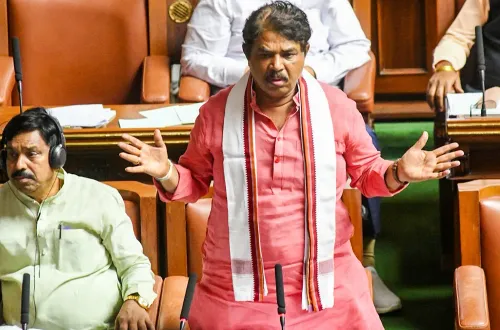
Senior Bharatiya Janata Party (BJP) leader and Karnataka Leader of the Opposition R. Ashoka on Monday, 21 September 2026, clarified that the Central government issued the notification to implement the Kasturirangan report strictly in compliance with a National Green Tribunal (NGT) directive — and not as a voluntary policy decision. His remarks came during a special session of the Karnataka Legislative Assembly convened to discuss the Kasturirangan report and the ongoing drought situation.
Ashoka's Core Argument
Ashoka directly challenged Congress ministers who, he said, were attributing the notification to the Prime Minister's initiative. 'There should be no politics in this,' he stated, underscoring that the NDA government was bound by court directions, not acting of its own accord. He urged the state government to appoint lawyers with environmental expertise and mount a credible challenge before the Supreme Court.
He also warned that implementation of the report, if unchecked, would inflict serious hardship on farmers across the region.
Karnataka's Unique Exposure
Ashoka highlighted the scale of Karnataka's challenge: the state has 1,576 villages covering 20,668 sq km designated as ecologically sensitive under the Kasturirangan report — the largest coverage among all affected states. Spread across ten districts, lakhs of farmers are at risk, he said, because satellite imagery has reportedly misclassified coffee plantations and agricultural fields as forest land.
He also flagged a lack of coordination between the Forest and Revenue departments that has stalled road construction in villages. 'Even if a bridge collapses in the monsoon, it cannot be repaired; electricity connections cannot be given. If the Forest Department creates a buffer zone, difficulties will increase further,' he said.
The Kerala Model as a Blueprint
Ashoka suggested Karnataka take a cue from Kerala, which conducted a systematic ground-level survey, identified plantations and residential structures, and submitted a detailed report to both the NGT and the Centre. That process, he noted, succeeded in reducing the state's ecologically sensitive area designation — an outcome Karnataka could potentially replicate.
He urged the Karnataka government to prepare and submit a comparable survey to the Centre and NGT without delay, cautioning that inaction would prompt the NGT to direct the Centre to enforce the report unilaterally.
Background: From Gadgil to Kasturirangan
The Western Ghats, spanning 1,64,280 sq km across six states, absorbs an estimated 40 lakh tonnes of carbon annually and harbours eight biodiversity hotspots and more than 325 species. The Madhav Gadgil Committee, formed in 2010, recommended sweeping restrictions on development in the region. Widespread protests against those recommendations led to the formation of the Kasturirangan Committee, which took a more moderate position — proposing that 37 per cent, or 59,940 sq km, be declared ecologically sensitive area.
The Goa Foundation has since pressed for full implementation of the Gadgil report and has approached the Supreme Court. The NGT has directed that the 2017 notification must not be altered, and the Centre has accordingly issued multiple notifications in compliance with tribunal orders. A new committee headed by Sanjay Kumar has been formed by the Centre, with a mandate running until 2027.
What Happens Next
The Karnataka government faces a narrow window to commission a ground-level survey and build a legal case before the NGT escalates enforcement. With the Goa Foundation's Supreme Court petition still pending and the Centre's Sanjay Kumar committee active through 2027, the legal and administrative battle over the Western Ghats' ecologically sensitive boundary is far from settled.
Point of View
However, is the satellite-classification problem: if farmland and coffee estates are genuinely being counted as forest, the ecologically sensitive area boundaries are built on flawed data, and any enforcement on that basis would be both unjust and judicially vulnerable. Karnataka's inaction on a ground survey is the real accountability gap here — not which government issued the notification. The Kerala model is worth taking seriously; it shows that states that engage proactively with ground data can reshape their ESA exposure. Karnataka's failure to do so, despite having the highest village count of any affected state, is a policy failure that belongs to successive state governments, not just the current one.
NationPress
21 Sept 2026
Frequently Asked Questions
Why did the Centre issue the Kasturirangan report notification?
The Central government issued the notification to implement the Kasturirangan report in compliance with a National Green Tribunal (NGT) directive, not as a voluntary policy decision, according to Karnataka BJP Leader of the Opposition R. Ashoka. He stressed that the NDA government was bound by the tribunal's orders.
How many villages in Karnataka are affected by the Kasturirangan report?
Karnataka has 1,576 villages covering 20,668 sq km designated as ecologically sensitive area under the Kasturirangan report — the largest coverage among all states affected. These villages are spread across ten districts, and lakhs of farmers face potential hardship from implementation.
What is the Kerala model that Ashoka recommends for Karnataka?
Kerala conducted a systematic ground-level survey, identified plantations and residential structures within the ecologically sensitive area, and submitted a detailed report to both the NGT and the Centre. This process resulted in a reduction of Kerala's ecologically sensitive area boundary, a precedent Ashoka believes Karnataka should follow.
What is the Kasturirangan Committee's recommendation on the Western Ghats?
The Kasturirangan Committee recommended that 37 per cent of the Western Ghats — amounting to 59,940 sq km — be declared ecologically sensitive area. This was a more moderate position than the earlier Madhav Gadgil Committee (2010), which had proposed far stricter restrictions and triggered widespread protests.
What happens if Karnataka does not act on a ground-level survey?
Ashoka warned that if the state government fails to conduct a ground survey and submit it to the Centre and NGT, the tribunal could direct the Centre to implement the Kasturirangan report directly, leaving Karnataka with no say in the process. He urged the government to also appoint lawyers with environmental expertise for the Supreme Court proceedings.