Karnataka legislature rejects 7th ESA draft, seeks Kasturirangan report changes
Synopsis
Karnataka's legislature unanimously rejected the Centre's 7th Western Ghats ESA draft — which would designate 20,668 sq km across 1,449 villages as eco-sensitive — and voted to form a retired-judge-led panel for a ground-level survey. It's the state's seventh consecutive pushback since 2004, and this time it's going all the way to the Prime Minister's office.
Key Takeaways
Karnataka Legislature unanimously resolved on 22 September 2026 to form a high-level committee headed by a retired judge to review the Kasturirangan report .
The 7th draft ESA notification issued by the Centre on 27 July 2026 designates 20,668 sq km across 1,449 villages in 10 districts as eco-sensitive.
Shivakumar said the state will seek one year to conduct a village-wise and survey-number-wise physical survey before suggesting changes.
Karnataka has objected to ESA drafts since 2004 and has now rejected six previous draft notifications .
An all-party delegation will meet the Prime Minister and Union ministers; a senior Supreme Court lawyer may be appointed to represent the state's position.
People living along forest boundaries with firearms have been asked to surrender them at police stations by 1 November .
The Karnataka Legislature on Tuesday, 22 September 2026, unanimously resolved to form a high-level committee headed by a retired judge to scrutinise the Kasturirangan report and recommend modifications to the proposed Eco-Sensitive Area (ESA) notification. The state also decided to dispatch an all-party delegation to the Centre to press for changes before any final notification is issued.
What the Legislature Resolved
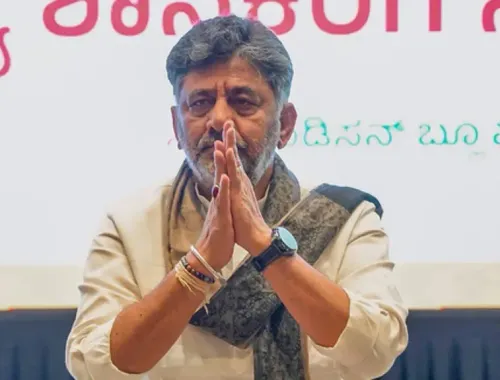
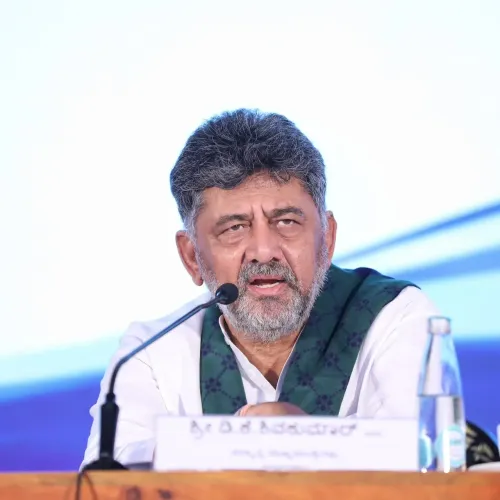
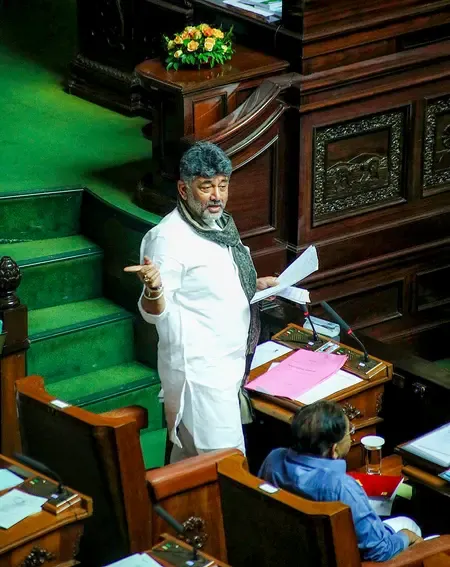
Replying to debates in both the Legislative Assembly and the Legislative Council, Chief Minister D.K. Shivakumar tabled resolutions that both Houses approved. The state will seek one year from the Centre to conduct a detailed, village-wise and survey-number-wise physical survey before proposing modifications.
The high-level committee will include officials from the Revenue and Forest departments, representatives from farming, industry, and business sectors, forest and environmental experts, and specialists from academic institutions. Parallel committees will be formed at the gram panchayat level. The committee is mandated to recommend scientific demarcation of eco-sensitive areas, forests, agricultural and horticultural land, and residential zones.
Why Karnataka Rejected the Draft Notification
Shivakumar said the seventh draft ESA notification issued by the Centre on 27 July 2026 — which identifies 20,668 sq km spanning 1,449 villages across 10 districts of Karnataka as eco-sensitive — 'cannot be accepted in its present form.' He alleged the notification relied on satellite imagery rather than a joint physical or survey-number-based assessment.
Forests and agricultural or horticultural areas can appear similarly green in satellite images, leading to misclassification, he argued. Declaring an entire village as eco-sensitive merely because 20 per cent of it falls under forest cover would not be scientifically appropriate, Shivakumar contended. Such classification could obstruct house construction, property inheritance, agriculture, plantations, roads, schools, hospitals, drinking water pipelines, and other basic infrastructure.
Karnataka has been raising objections to ESA drafts since 2004 and communicated its Cabinet's position to the Centre in 2021, 2022, and 2024. The state has now rejected six earlier draft notifications in addition to the seventh.
Impact on Farmers, Tribal Communities and Local Residents
Shivakumar said he had personally met tribal communities and families affected by the seventh draft, and referred to large-scale protests in Balehonnur, Shivamogga, and Sakleshpur. The government committed to ensuring that farmers who have cultivated land near forests for generations are not adversely affected.
The Chief Minister said sanctioned areas should not be included in ESA designations and that people should not be evicted without rehabilitation. Cases relating to Bagair Hukum land, the Forest Rights Act, deemed forests, land grants, and matters pending before courts must be examined before any action is taken. Buffer zones, he added, could be created within forest areas, with specific guidelines to facilitate housing for low-income families.
What the Government Said on Conservation
Despite the push for modifications, Shivakumar reaffirmed that protecting the Western Ghats, biodiversity, river sources, and wildlife — including black panthers and elephants — remains the government's commitment. 'The forest must be protected, and the farmers must also survive,' he said.
He added that fresh encroachments in forest areas would be stopped. People living along forest boundaries who possess firearms have been asked to surrender them at police stations by 1 November. Modern technology, cameras, and systems to monitor elephant movement are being deployed to prevent human-wildlife conflict.
Political and Legal Steps Ahead
There was consensus on sending an all-party delegation to meet the Prime Minister and Union ministers. Shivakumar also suggested appointing a senior Supreme Court lawyer to represent Karnataka's position before the Centre. He appealed to Members of Parliament to set aside political differences and raise the state's concerns jointly. 'Voters are our masters. Let us do politics when it is time for politics. Now, farmers and ordinary people must survive,' he said.
The Centre has been urged not to finalise the draft notification until it holds detailed discussions with the state. With surveys, legal representation, and cross-party consultations all in motion, the Western Ghats ESA dispute is entering a decisive phase.
Point of View
And basing a restriction of this scale on that alone is a credible scientific objection. Yet Karnataka has rejected six draft notifications since 2004 without offering an alternative demarcation that satisfies conservation benchmarks, which raises the question of whether the delays protect farmers or also serve interests opposed to any ESA designation. The all-party consensus is politically convenient ahead of local elections, but Shivakumar's framing — 'the forest must be protected, and the farmers must also survive' — is the right one. The real test is whether the proposed physical survey produces a scientifically defensible counter-map, or whether Karnataka's seventh rejection simply resets the clock to a future eighth draft.
NationPress
22 Sept 2026
Frequently Asked Questions
What is the Kasturirangan report and why is Karnataka opposing it?
The Kasturirangan report is a 2013 committee report that recommended declaring parts of the Western Ghats as Eco-Sensitive Areas (ESA), restricting certain development activities. Karnataka opposes the Centre's 7th draft ESA notification based on the report, arguing it relies on satellite imagery rather than physical surveys and would adversely affect farmers, tribal communities, and local residents across 1,449 villages in 10 districts.
What did the Karnataka Legislature decide on 22 September 2026?
The Karnataka Legislature unanimously resolved to form a high-level committee headed by a retired judge to review the Kasturirangan report and suggest modifications, and to send an all-party delegation to the Centre to oppose the 7th draft ESA notification. Both the Legislative Assembly and Council approved Chief Minister D.K. Shivakumar's proposed resolutions.
How much land does the 7th draft ESA notification cover in Karnataka?
The 7th draft ESA notification, issued by the Centre on 27 July 2026, identifies 20,668 sq km spanning 1,449 villages across 10 districts of Karnataka as eco-sensitive. Karnataka's government says this classification is based on satellite imagery and not a ground-level physical assessment.
Who will be on the high-level committee formed by Karnataka?
The committee will be headed by a retired judge and will include officials from the Revenue and Forest departments, representatives from farming, industry, and business sectors, forest and environmental experts, and academic specialists. Committees will also be formed at the gram panchayat level to assist in physical surveys.
What are the next steps for Karnataka in challenging the ESA notification?
Karnataka will seek one year from the Centre to complete a village-wise and survey-number-wise physical survey and will urge the Centre not to finalise the draft notification until detailed discussions are held. An all-party delegation will meet the Prime Minister and Union ministers, and the state is considering appointing a senior Supreme Court lawyer to represent its position.