CM Dhami Hails Ayodhya's Deepotsav: 30 Lakh Lamps
Synopsis
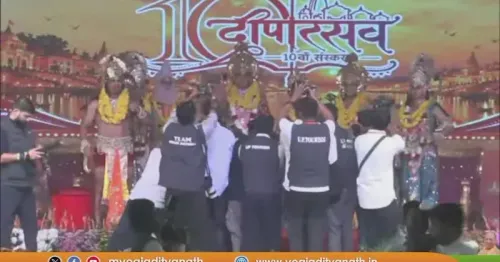
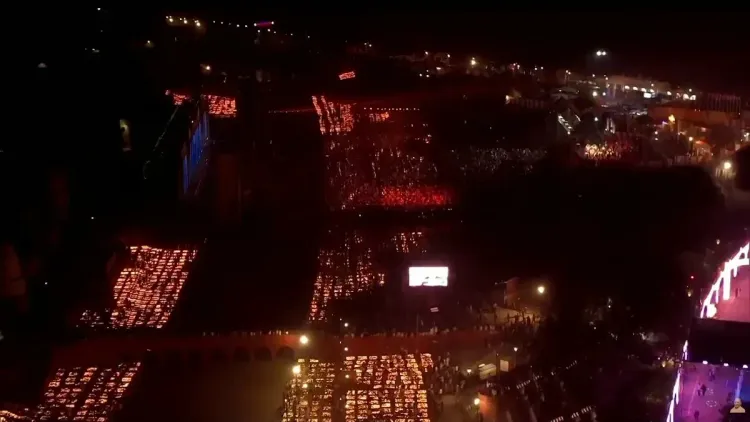
Uttarakhand CM Pushkar Singh Dhami marked Ayodhya's Deepotsav by sharing a video of the sacred city glowing with 30 lakh lamps, posting a devotional message on 7 November 2026 as the Ram Mandir city staged another landmark celebration.
Key Takeaways
CM Pushkar Singh Dhami posted a video on 7 November 2026 celebrating Ayodhya's Deepotsav illumination.
The post cited 30 lakh lamps lighting up the sacred city of Ayodhya in Uttar Pradesh.
Ayodhya's Deepotsav has grown in national prominence following the Ram Mandir consecration on 22 January 2024 .
The city has seen sustained investment in religious tourism infrastructure since the temple's inauguration.
Dhami's post reflects a broader BJP pattern of engaging with Hindu cultural and festival milestones on social media.
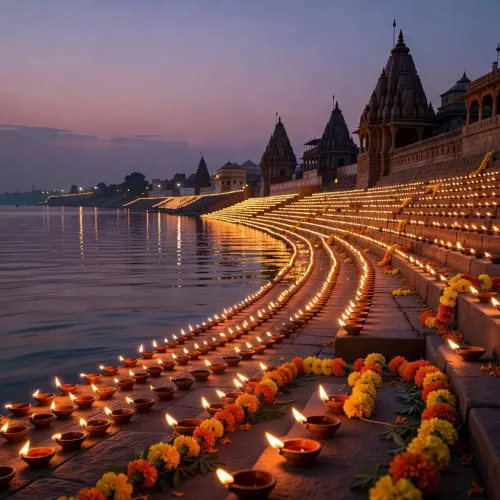
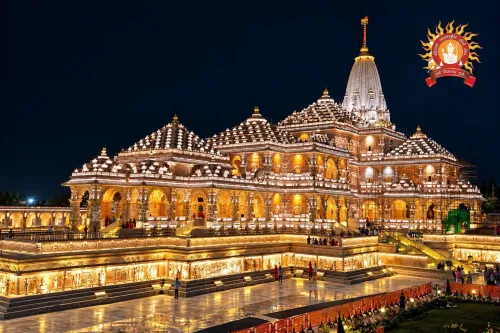
Thirty lakh lamps turning Ayodhya into a river of light — that is the image Uttarakhand Chief Minister Pushkar Singh Dhami shared with the world on the evening of Saturday, 7 November 2026, as the sacred city marked another luminous Deepotsav celebration.
Dhami posted in Hindi: '30 lakh deepon se jagmagati Prabhu Shri Ram ki pawan nagari Ayodhya... har deep mein Ram aur kan-kan mein Ram' — 'The holy city of Ayodhya, radiant with 30 lakh lamps... Ram in every flame, Ram in every particle.' The post, accompanied by a video, carried the devotional salutation Jay Shri Ram and a saffron-flag emoji, capturing the fervour that descends on the city each year during the festival of lights.
Ayodhya's Deepotsav: From Historic Consecration to Annual Spectacle
The scale of Ayodhya's Deepotsav has grown dramatically in the years following the consecration of the Ram Mandir on 22 January 2024 — a moment that redefined the city's place in India's cultural calendar. What was once a state-government celebration along the Saryu ghats has evolved into a nationally watched event, drawing pilgrims, tourists, and political attention in equal measure.
Ayodhya has since seen sustained investment in religious tourism infrastructure — widened ghats, improved road access, hotel development, and international airport connectivity — positioning the city as one of North India's foremost pilgrimage destinations. Each Deepotsav now serves as both a spiritual observance and a showcase of that transformation.
BJP's Cultural Calendar and Dhami's Place in It
CM Dhami, who governs the neighbouring hill state of Uttarakhand — itself home to the Char Dham pilgrimage circuit — has consistently engaged with Hindu festival and heritage milestones on social media. His post on Ayodhya's Deepotsav fits a well-established pattern among BJP leaders of amplifying cultural and religious events that resonate with the party's core voter base, while also reflecting genuine devotional sentiment shared by millions of Hindus across the country.
The imagery of lamps, the Ramayana's hero Lord Ram, and the city built in his memory form a triad that cuts across political lines for a large section of India's population. When a chief minister posts a video of Ayodhya ablaze in firelight, it travels — not just as politics, but as a moment of collective cultural pride.
As Ayodhya's transformation continues and its Deepotsav footprint grows, the question is no longer whether the city can stage a spectacle — it clearly can. The next measure will be whether the infrastructure around it can match the ambition of the illumination itself.
Point of View
Giving leaders across the saffron ecosystem a platform to reinforce Hindu heritage credentials. For Dhami specifically, whose Uttarakhand base includes the Char Dham circuit, aligning publicly with Ayodhya deepens his standing as a guardian of Hindu pilgrimage culture. The broader arc here is a post-2024 Ayodhya that functions as a permanent cultural landmark — and Deepotsav as its most photogenic annual assertion.
NationPress
7 Nov 2026
Frequently Asked Questions
What is Deepotsav in Ayodhya?
Deepotsav is an annual festival of lamps celebrated in Ayodhya, Uttar Pradesh, typically around Diwali, where the ghats of the Saryu river and the city are illuminated with hundreds of thousands of earthen lamps to honour Lord Ram.
Why did CM Dhami post about Ayodhya's Deepotsav?
Uttarakhand CM Pushkar Singh Dhami shared a video of Ayodhya's Deepotsav on 7 November 2026 as a devotional tribute, celebrating the city's illumination with 30 lakh lamps and posting the message 'Ram in every flame, Ram in every particle.'
When was the Ram Mandir in Ayodhya consecrated?
The Ram Mandir in Ayodhya was consecrated on 22 January 2024 in a ceremony that attracted national and international attention, after which Ayodhya's Deepotsav celebrations gained even greater prominence.
What has changed in Ayodhya after the Ram Mandir inauguration?
Since the Ram Mandir's consecration in January 2024, Ayodhya has seen major investment in religious tourism infrastructure including widened ghats, improved roads, new hotels, and an upgraded international airport connection.
Is Pushkar Singh Dhami from Uttar Pradesh?
No, Pushkar Singh Dhami is the Chief Minister of Uttarakhand, not Uttar Pradesh. Ayodhya is located in Uttar Pradesh, but as a prominent BJP leader he regularly marks significant Hindu cultural and religious events across India.