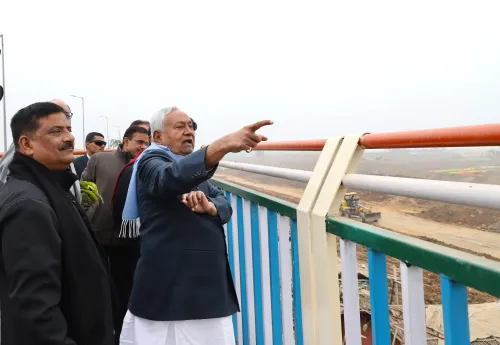
Bihar CM announces 83-km Marine Drive on Ganga between Munger and Bhagalpur
Synopsis
Bihar's Chief Minister has announced the construction of an approximately 83-kilometre Marine Drive along the Ganga between Munger and Bhagalpur, while also committing to improved Ganga water management to deliver irrigation to farmers in the region.
Key Takeaways
Bihar CM announced an ~83-km Marine Drive along the Ganga linking Munger and Bhagalpur .
Construction work on the river-road corridor is set to be launched as per the Chief Minister's announcement on 7 November 2026 .
The project pairs road infrastructure with Ganga water management to channel irrigation to farmers' fields in eastern Bihar.
Both Munger and Bhagalpur are historic Ganga-bank districts that serve as key agricultural and economic centres in eastern Bihar.
The announcement fits within a broader Bihar pattern of combining river-road corridors with irrigation schemes, aligned with the national Namami Gange programme framework.
Key next steps include tendering, land acquisition, and integration with existing irrigation infrastructure along the stretch.
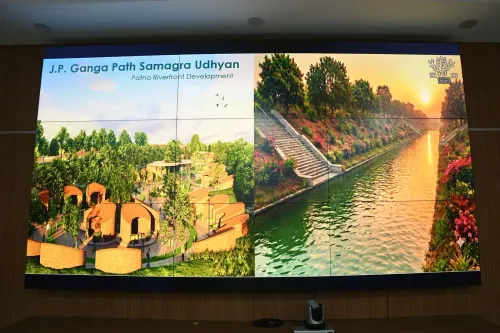
A 83-kilometre Marine Drive hugging the banks of the Ganga between Munger and Bhagalpur — Bihar's Chief Minister has set a sweeping infrastructure ambition in motion, pairing a landmark river-road corridor with a push to channel Ganga water directly to farmers' fields in the region's most agriculturally critical districts.
The 83-km corridor: what has been announced
The Chief Minister's Office of Bihar confirmed on 7 November 2026 that the Chief Minister announced the launch of construction work on an approximately 83-kilometre-long Marine Drive along the Ganga between Munger and Bhagalpur. The announcement, shared officially, described the project as a major connectivity undertaking for eastern Bihar's riverfront belt.
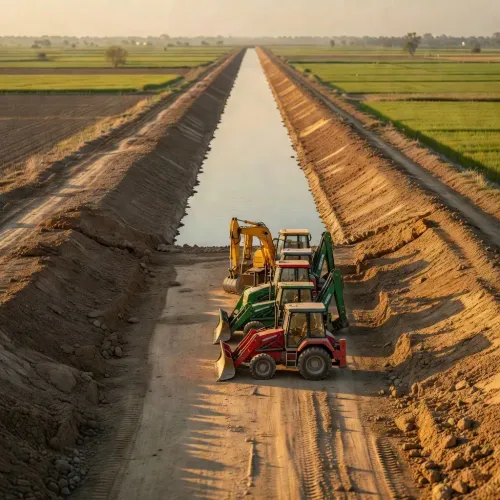
Alongside the road corridor, the Chief Minister stressed better management of Ganga nadi ke jal (Ganga river water) to ensure irrigation reaches farmers' fields — a pointed acknowledgement that connectivity and agricultural water security must move together in this flood-prone stretch of the river valley.
Why Munger–Bhagalpur, and why now
Munger and Bhagalpur are both historic Ganga-bank districts in eastern Bihar. Bhagalpur is the region's dominant economic hub, known for its agricultural output and silk trade, while Munger has long served as an administrative and riverside trade centre. The roughly 83-kilometre gap between them currently lacks a continuous, modern riverfront road — a gap that hampers both commerce and emergency flood-response logistics.
Bihar governments have historically paired road infrastructure with Ganga water-management projects to address twin pressures: connectivity deficits and irrigation shortfalls in districts where seasonal flooding regularly disrupts farming cycles. The Namami Gange programme, launched in 2014, included Bihar-specific components for riverfront development and irrigation linkages, providing an existing national policy framework into which a project of this scale could slot.
Farmers at the centre of the water-management push
The irrigation dimension of the announcement is as significant as the road itself. The Chief Minister's emphasis on routing Ganga water to farmers' fields signals that this is not purely a tourism or urban-beautification project — it is framed as a lifeline for agriculture in the Munger–Bhagalpur belt. Similar river-adjacent road initiatives in other Ganga basin states over the past decade have demonstrated that multi-purpose river infrastructure can unlock both rural incomes and local governance dividends when irrigation integration is built in from the design stage.
The tendering process, land acquisition timeline, and integration with existing irrigation schemes along the stretch will be the immediate milestones to watch as the announcement moves from declaration to ground-breaking.
Eighty-three kilometres of riverfront road, water for the fields, and a Ganga corridor finally stitching two of eastern Bihar's oldest cities together — the Chief Minister has drawn a bold line on the map; now comes the harder work of building it.
Point of View
Roads and water are not separate issues but a single electoral promise. By anchoring the Marine Drive in an agricultural context rather than framing it as an urban beautification project, the Chief Minister is signalling that this corridor is designed to resonate in the fields, not just on the promenade. The Munger–Bhagalpur belt has historically been underserved on connectivity despite its river-access advantage, so a project of this scale could redraw regional economic geography if it reaches completion. The real test will be whether land acquisition and tendering move at a pace that keeps the announcement politically credible before the next electoral cycle.
NationPress
7 Nov 2026
Frequently Asked Questions
What is the Bihar Marine Drive project announced by the Chief Minister?
Bihar's Chief Minister has announced the construction of an approximately 83-kilometre Marine Drive along the Ganga riverbank between Munger and Bhagalpur, intended to improve connectivity in eastern Bihar.
Where exactly will the Bihar Marine Drive be built?
The Marine Drive will run along the Ganga between Munger and Bhagalpur — two historic districts in eastern Bihar — covering roughly 83 kilometres of riverfront.
How will the Ganga water management plan help Bihar farmers?
The Chief Minister announced that better management of Ganga river water will be undertaken to ensure irrigation reaches farmers' fields in the Munger–Bhagalpur region, addressing long-standing agricultural water shortfalls.
Is the Bihar Marine Drive connected to the Namami Gange programme?
While the Chief Minister's announcement has not explicitly named Namami Gange, the national programme launched in 2014 includes Bihar-specific riverfront development and irrigation components that provide a policy framework aligned with this project.
What are the next steps for the Munger–Bhagalpur Marine Drive?
Key milestones to watch include the tendering process, land acquisition along the 83-km stretch, and integration with existing irrigation infrastructure in the Munger–Bhagalpur belt.