CM Yogi Leads Sarayu Aarti at Ayodhya's Deepotsav 2026
Synopsis
Uttar Pradesh Chief Minister Yogi Adityanath shared visuals of the holy Sarayu River aarti at Ayodhya's Deepotsav 2026 on November 7, marking the annual festival of lights that the UP government has staged since 2017 to celebrate Hindu heritage and drive spiritual tourism.
Key Takeaways
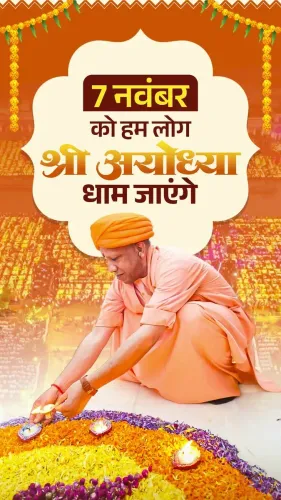
CM Yogi Adityanath shared the Sarayu River aarti from Deepotsav 2026 in Ayodhya on November 7, 2026 .
Deepotsav has been organised annually by the Uttar Pradesh government since 2017 , featuring mass diya lighting on the Sarayu's banks.
The event is central to UP's push to develop Ayodhya as a major spiritual-tourism destination following the 2019 Supreme Court verdict and 2024 Ram Temple inauguration.
The Sarayu River holds deep significance in Hindu tradition and the Ramayana, making its aarti a focal point of the festival.
CM Yogi, as head of the Gorakhnath Math , brings both religious and political authority to his participation in such ceremonies.
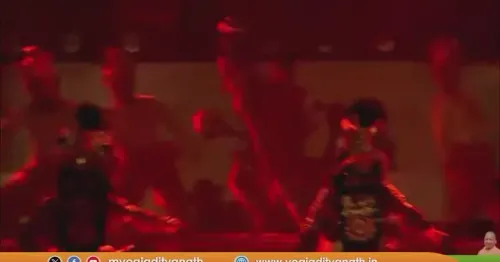
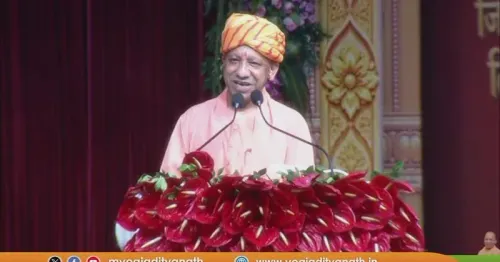
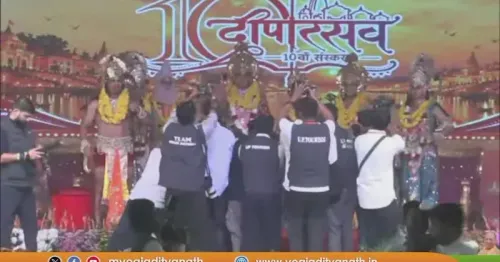
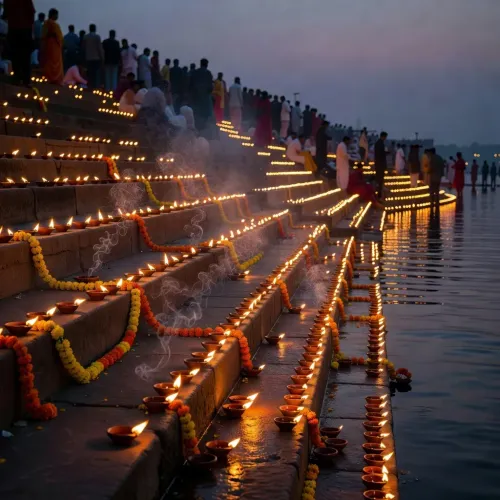
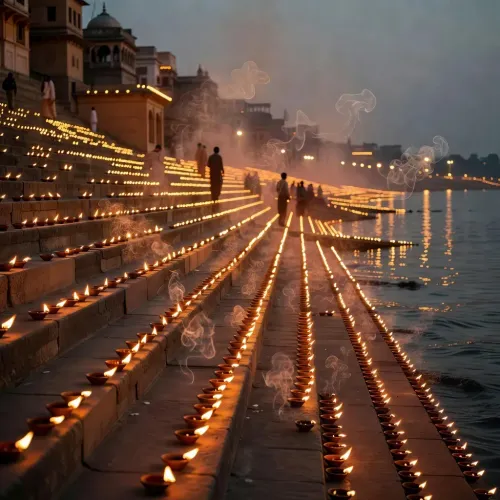
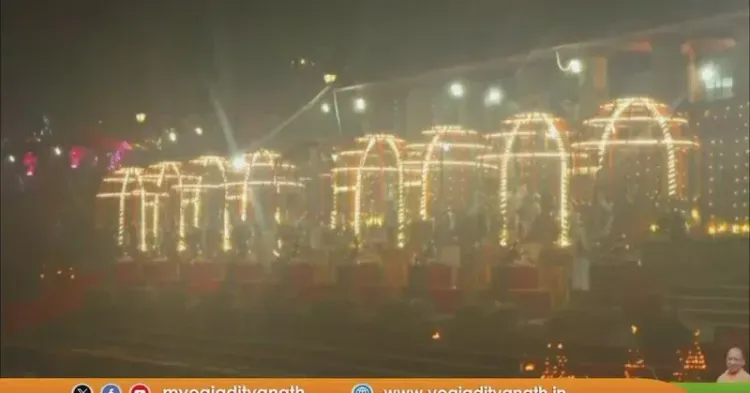
As dusk settled over the banks of the Sarayu River in Ayodhya Dham, thousands of diyas cast a golden glow across the water — and Uttar Pradesh Chief Minister Yogi Adityanath was present to witness and share the sacred aarti that anchored Deepotsav 2026 on Saturday, November 7, 2026.
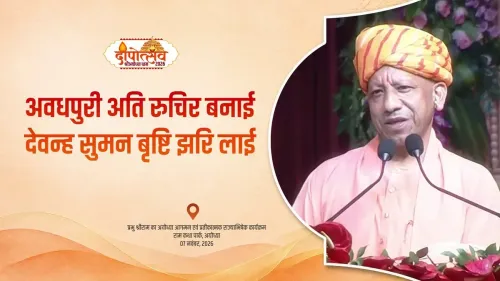
Sharing the moment on X, CM Yogi described the occasion as the 'diya-prajwalan ki pavitra aarti' — the holy aarti of the lamp-lighting — on the 'eternal land of Sanatan faith,' calling the Sarayu a 'punya pradayini' (bestower of merit). The post, accompanied by an image from the riverside ceremony, captured the scale and sanctity of an event that has become one of Uttar Pradesh's most prominent annual cultural landmarks.
Deepotsav's Journey from Experiment to Institution
The Uttar Pradesh government first organised Deepotsav in Ayodhya in 2017, positioning it as a large-scale celebration of Diwali on the ghats of the Sarayu. What began as a cultural initiative quickly grew into a record-setting spectacle — with hundreds of thousands of earthen lamps lit simultaneously along the riverbanks each year, drawing pilgrims, tourists, and global attention to a city already freighted with deep religious significance.
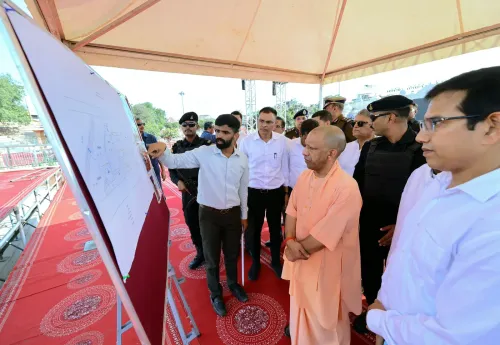
The event sits at the intersection of faith and policy. Since the Supreme Court's 2019 verdict on the Ram Janmabhoomi title dispute and the landmark Ram Temple inauguration in January 2024, Ayodhya has been at the centre of a sweeping infrastructure and spiritual-tourism push by the state government — new airport connectivity, riverfront development, and upgraded pilgrimage facilities among them. Deepotsav is both a religious observance and a showcase for that transformation.
The Sarayu Aarti as Living Ritual
The aarti of the Sarayu River is not a modern invention. The river flows through the Ramayana's most pivotal scenes and has been a site of daily ritual worship for centuries. Deepotsav elevates that daily practice into a mass public ceremony — priests, lamps, chants, and the river's current all converging in a moment that resonates far beyond Ayodhya's boundaries for millions of Hindu devotees across India and the diaspora.
For CM Yogi, who also heads the Gorakhnath Math, one of north India's most influential Hindu monastic institutions, participation in such ceremonies carries both spiritual and political weight — a seamless alignment of his identity as a religious leader and an elected head of government.
With each successive Deepotsav, Ayodhya cements its place not just as a pilgrimage town but as a living stage for India's largest state to project its cultural ambitions. The lamps keep burning — and the audience keeps growing.
Point of View
A combination that gives the event an authority few state-organised festivals can match. The post also signals that Ayodhya's post-temple-inauguration momentum is being sustained well into 2026, with cultural programming serving as a soft-power instrument to maintain national and diaspora attention on the city.
NationPress
7 Nov 2026
Frequently Asked Questions
What is Deepotsav in Ayodhya?
Deepotsav is an annual festival of lights organised by the Uttar Pradesh government in Ayodhya, featuring the lighting of hundreds of thousands of earthen diyas along the Sarayu River to celebrate Diwali and Hindu heritage. It has been held every year since 2017.
Why is the Sarayu River important in Ayodhya?
The Sarayu River flows through Ayodhya and is central to Hindu tradition and the Ramayana. It has been a site of daily ritual worship for centuries and serves as the main venue for Deepotsav's aarti and diya-lighting ceremonies.
When did CM Yogi Adityanath attend Deepotsav 2026?
CM Yogi Adityanath shared the Sarayu River aarti from Deepotsav 2026 on Saturday, November 7, 2026, posting about it on X the same evening.
How long has the UP government been organising Deepotsav?
The Uttar Pradesh government has organised Deepotsav annually since approximately 2017, making it one of the state's most prominent cultural and religious events.
What is Yogi Adityanath's connection to the Gorakhnath Math?
Yogi Adityanath is the head of the Gorakhnath Math, one of north India's most influential Hindu monastic institutions based in Gorakhpur, Uttar Pradesh, a role he holds alongside his position as Chief Minister.