CM Yogi Marks Ayodhya's 10th Deepotsav with Call to Light Lamps

Synopsis
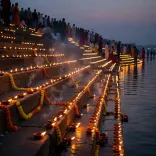
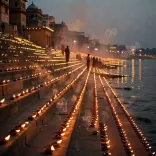
Uttar Pradesh Chief Minister Yogi Adityanath marked the 10th Deepotsav in Ayodhya on 7 November 2026, invoking the river Saryu as witness and urging citizens to light lamps at home as the Ram Janmabhoomi city celebrates a decade of the annual festival of lights.
Key Takeaways
CM Yogi Adityanath announced the 10th Deepotsav in Ayodhya on 7 November 2026 .
The Deepotsav festival was first organised by the Yogi Adityanath government in 2017 .
The Ram Mandir at the Shri Ram Janmabhoomi was consecrated in January 2024 , giving this edition an elevated backdrop.
CM Yogi called the festival a 'renaissance of Sanatan consciousness' and urged citizens to light lamps at home in unison with Ayodhya.
The post invoked the river Saryu as a divine witness to the celebration.
Ayodhya is described as 'foremost among the seven sacred cities' of Hindu tradition in the post.
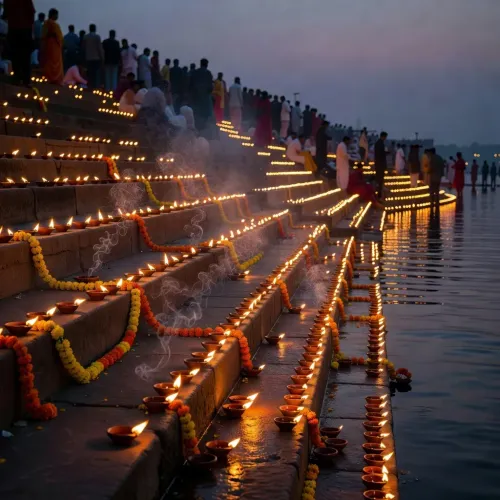
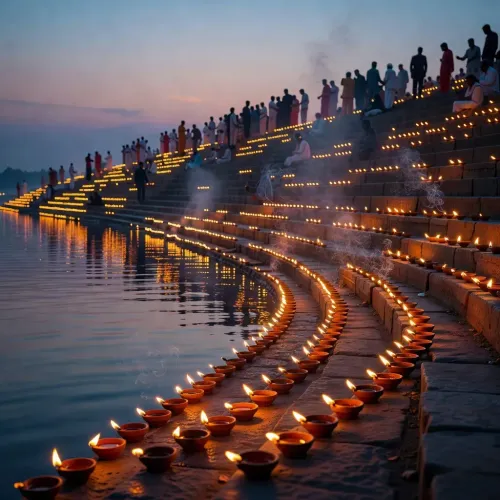
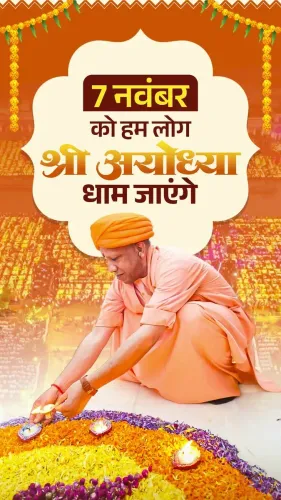
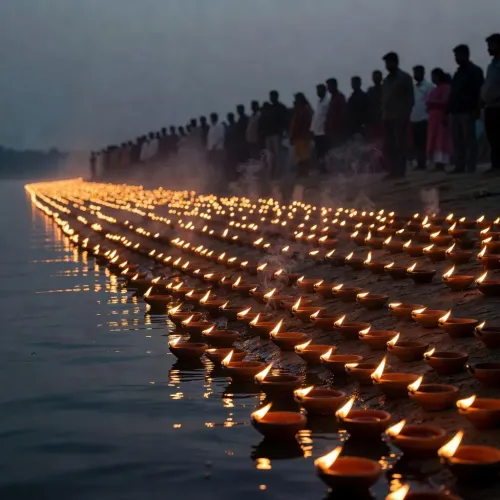
A lamp, wrote Uttar Pradesh Chief Minister Yogi Adityanath on Saturday, 7 November 2026, is not merely a vessel of clay — it is the awakening of consciousness itself. With that meditation, he announced the 10th Deepotsav in Ayodhya, calling on citizens across the country to light lamps in their own homes as the sacred city prepares for its grandest festival of lights.
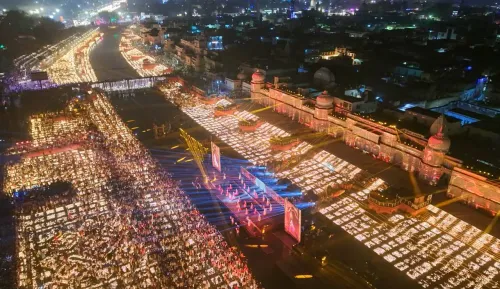
Posting in Hindi, the Chief Minister invoked the metaphysical weight of the festival: 'अंधकार से लड़ना नहीं होता, केवल एक ज्योति जलानी होती है' — 'One need not fight the darkness; one only has to light a flame, and the darkness departs.' The imagery is ancient, but the occasion is pointedly modern: a government-organised celebration that has grown into one of the largest lamp-lighting events in the world since it was first held in 2017.
Nine years from a first lamp to a tenth milestone
When the Yogi Adityanath government launched Deepotsav in Ayodhya in 2017 — the same year he took office as Chief Minister — the event was a statement of intent as much as a celebration. The Ram Janmabhoomi temple had not yet been built; the legal and political battles over the site were still unresolved. Each successive Deepotsav added rows of earthen lamps and layers of symbolism, culminating in the January 2024 consecration of the Ram Mandir, which transformed the festival's backdrop entirely.
The tenth edition now takes place in an Ayodhya that has a completed temple complex, upgraded pilgrimage infrastructure, and a dramatically higher national and international profile. CM Yogi framed the moment in explicitly civilisational terms: 'अयोध्या का दीपोत्सव हमारी आस्था, आत्मगौरव और सनातन चेतना के पुनर्जागरण का महापर्व है' — 'Ayodhya's Deepotsav is the grand festival of renaissance of our faith, self-pride, and Sanatan consciousness.'
Saryu as witness, homes as shrines
The post draws the river Saryu — which flows through Ayodhya and holds deep significance in the Ramayana — into the moment as a divine witness. The Chief Minister writes that 'all of us, taking Maa Saryu as witness, are going to celebrate the 10th Deepotsav in the city dearest to Lord Shri Ram.' The framing is devotional, but the ask is civic: when lamps are lit at the Shri Ram Janmabhoomi, light yours at home too. It is an instruction to scale a public ritual into millions of private spaces.
Ayodhya is described as 'सप्तपुरियों में श्रेष्ठ' — 'foremost among the seven sacred cities' of Hindu tradition — a designation that situates this celebration within a much older geography of faith. The post closes with the declaration 'जय जय श्री राम!' — 'Victory to Lord Shri Ram!' — a salutation as much as a benediction.
A decade after its first lamp was lit, Ayodhya's Deepotsav has moved from political aspiration to established national spectacle — and the tenth edition, with the Ram Mandir now consecrated, may be the most charged one yet.
Point of View
The festival now carries the weight of fulfilment rather than aspiration, sharpening its use as a marker of civilisational renewal. The call for citizens to light lamps at home is a familiar mobilisation technique — turning a state-organised event into a nationwide participatory ritual that collapses the distance between Lucknow's governance agenda and individual households. Monitoring the scale and media footprint of successive Deepotsavs will be essential to tracking how the BJP translates religious culture into political capital ahead of future electoral cycles.
NationPress
7 Nov 2026
Frequently Asked Questions
What is Deepotsav in Ayodhya?
Deepotsav is an annual festival of lights held in Ayodhya to celebrate the return of Lord Ram from exile, as described in the Ramayana. It was first organised by the Uttar Pradesh government under Chief Minister Yogi Adityanath in 2017 and has since grown into one of the largest lamp-lighting events in the country.
When did the 10th Deepotsav in Ayodhya take place?
CM Yogi Adityanath announced the 10th Deepotsav on 7 November 2026, with celebrations centred on the Shri Ram Janmabhoomi in Ayodhya.
When was the first Deepotsav held in Ayodhya?
The first Deepotsav was organised in Ayodhya in 2017, the same year Yogi Adityanath became Chief Minister of Uttar Pradesh.
What is the significance of Ayodhya among Hindu sacred cities?
Ayodhya is counted among the Saptapuris — the seven most sacred cities in Hindu tradition — and is revered as the birthplace of Lord Ram. CM Yogi's post describes it as 'foremost among the seven sacred cities.'
What did CM Yogi ask citizens to do during Deepotsav 2026?
CM Yogi urged citizens across the country to light lamps in their homes and courtyards at the same time as lamps are lit at the Shri Ram Janmabhoomi in Ayodhya, turning the state event into a nationwide participatory ritual.