CM Yogi marks Deepotsav's 10th edition with call for Ram Rajya
Synopsis
On the 10th Deepotsav at Shri Ayodhya Dham, CM Yogi Adityanath called the decade since 2017 a golden chapter in India's cultural renaissance, linking the annual festival of lights on the Sarayu to faith, local livelihoods, and his vision of Ram Rajya.
Key Takeaways
Deepotsav 2026 marks the 10th consecutive edition of the annual festival of lights in Ayodhya , first launched in 2017 .
CM Yogi Adityanath attributed the event's origin to a 'pledge' made on the banks of the Sarayu river when his government took office.
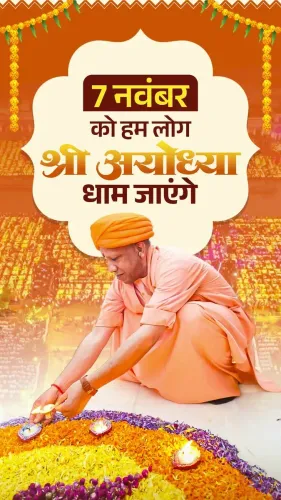
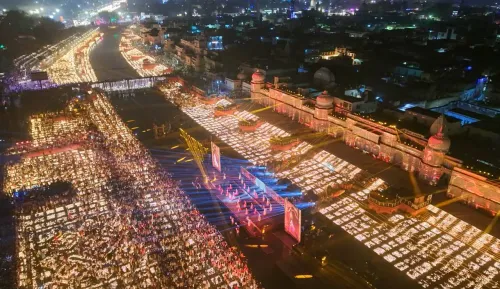
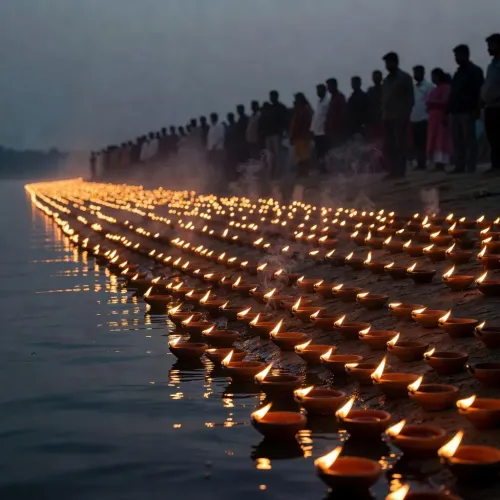
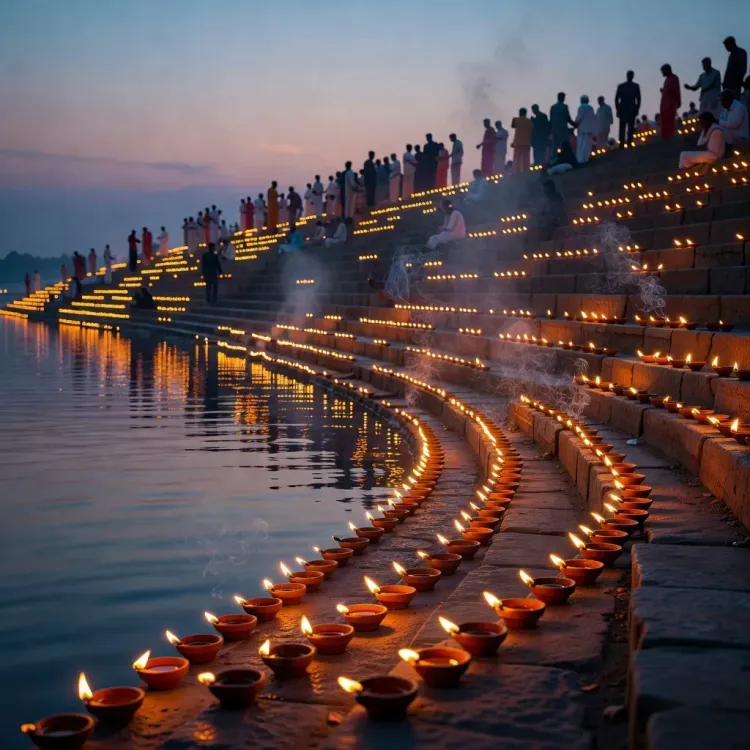
Lamps are lit at Ram Ki Paidi , the ghats on the Sarayu, with the ceremony framed around faith, antyodaya , and local economic self-reliance.
The CM invoked Ram Rajya — a just social order where development reaches the most marginalised — as the guiding ideal for the festival's next phase.
Deepotsav forms part of a broader UP government strategy linking Hindu pilgrimage centres with cultural tourism and artisan livelihoods.
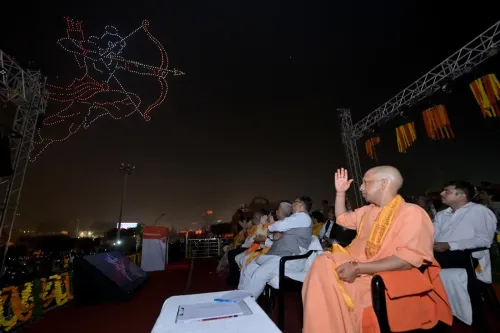
A single lamp lit on the banks of the Sarayu river in 2017 has grown, over ten years, into one of India's most watched cultural spectacles — and on Saturday, 7 November 2026, Uttar Pradesh Chief Minister Yogi Adityanath marked the 10th edition of Deepotsav at Shri Ayodhya Dham by calling the decade-long journey a 'golden chapter' in the renaissance of Sanatan culture.
From a riverside resolve to a decade of light
In his post on X, CM Yogi described the moment in 2017 — when his government had just taken office — as a 'pledge lit on the sacred banks of Punyasalila Saryu' (the holy Sarayu). That pledge, he wrote, has today given India's cultural pride a new identity and stature on the global stage. The annual festival of lights at Ram Ki Paidi, the storied ghats where the Sarayu meets the city's spiritual life, began as a state-organised Diwali celebration and has expanded every year since.
The Deepotsav was launched in Ayodhya in 2017 shortly after the Yogi Adityanath government assumed power in Uttar Pradesh — the first major cultural initiative that would come to define the administration's brand of heritage-linked governance. What started as a large-scale lamp-lighting ceremony has evolved into a centrepiece of the state's religious-tourism calendar, drawing pilgrims, tourists, and local artisans into a shared economic orbit.
Lamps at Ram Ki Paidi and what they carry
CM Yogi's post underlined that the lakhs of lamps lit at Ram Ki Paidi carry more than ceremonial light. He tied the imagery directly to three ideas: aastha (faith), antyodaya (uplift of the last person in the social order), and sthaniya swavalamban (local self-reliance). The framing is deliberate — Deepotsav has consistently been positioned not just as a religious event but as a driver of local artisan livelihoods, with potters, diyas-makers, and hospitality workers among its direct beneficiaries.
The Sarayu ghats and the broader Ayodhya precinct have undergone significant infrastructure upgrades since 2017, part of a wider state effort to develop Hindu pilgrimage centres including Varanasi into sustainable cultural-tourism destinations. That physical transformation forms the backdrop against which tonight's lamps glow.
The 'Ram Rajya' vision CM Yogi invokes
Closing his post with a call to action, CM Yogi urged citizens to internalise the ideals of Lord Ram and work toward a 'Ram Rajya' — defined explicitly as a society where 'the light of development reaches the last person on the bottom rung.' The phrase carries both religious and policy resonance, echoing Mahatma Gandhi's own use of the term to describe a just social order. That the CM frames the concept around antyodaya — a welfare philosophy associated with reaching the most marginalised — signals an attempt to stitch cultural pride to governance accountability.
The post ends with 'Jai Shri Ram', the customary salutation that has become both a religious affirmation and a political signifier across north India.
Ten editions in, Deepotsav has moved from experiment to institution — the question now is whether the light it casts on Ayodhya's economy and cultural standing holds bright enough for the decade ahead.
Point of View
Stimulate local economies, and generate political capital ahead of electoral cycles. CM Yogi's explicit linkage of the lamp-lighting ritual to antyodaya and swavalamban is a studied move: it blunts the critique that such events are purely symbolic by embedding a welfare narrative inside a cultural one. The decade-long continuity also demonstrates institutional durability — a signal that cultural policy, not just electoral promises, can accrue compounding returns. As Ayodhya's physical transformation deepens after the Ram Mandir consecration in 2024, Deepotsav's role as a soft-power showcase for India's civilisational identity is likely to intensify.
NationPress
7 Nov 2026
Frequently Asked Questions
What is Deepotsav in Ayodhya?
Deepotsav is an annual festival of lights organised on the banks of the Sarayu river in Ayodhya, first launched in 2017 by the Uttar Pradesh government under CM Yogi Adityanath. It involves the mass lighting of lamps at Ram Ki Paidi on Diwali.
When did Deepotsav start in Ayodhya?
Deepotsav began in 2017 shortly after the Yogi Adityanath government came to power in Uttar Pradesh. The 2026 edition marks its 10th consecutive year.
What is Ram Ki Paidi?
Ram Ki Paidi is a series of ghats on the Sarayu river in Ayodhya. It is the central site for Deepotsav lamp-lighting and holds deep religious significance as the spot where pilgrims traditionally bathe.
What did CM Yogi say about Deepotsav 2026?
CM Yogi Adityanath described the 10th Deepotsav as a golden chapter in India's cultural revival, linking the event to faith, the uplift of the marginalised, and his vision of a Ram Rajya where development reaches every citizen.
How does Deepotsav benefit local communities in Ayodhya?
The Uttar Pradesh government has consistently framed Deepotsav as a driver of local livelihoods, benefiting potters, diya-makers, and the broader hospitality sector through increased pilgrimage and tourism activity during the festival season.