CM Himanta lauds Assam Police for leading India's new criminal code rollout

Synopsis
Assam CM Himanta Biswa Sarma praised Assam Police on 7 November 2026 for leading India in adopting the new BNS and BNSS criminal codes, using Diwali messaging as a pointed warning to criminal syndicates operating in the state.
Key Takeaways
Assam CM Himanta Biswa Sarma publicly commended Assam Police on 7 November 2026 for benchmark-setting adoption of India's new criminal codes.
The Bharatiya Nyaya Sanhita (BNS) and Bharatiya Nagarik Suraksha Sanhita (BNSS) replaced India's colonial-era penal and procedural laws, taking effect on 1 July 2024 .
Sarma framed Diwali season as a heightened-enforcement window rather than a law-enforcement lull, directly warning criminal syndicates.
Assam's policing narrative fits a broader pattern of BJP-governed states competing to demonstrate early and strict compliance with the new criminal justice framework.
Central government reviews of new-code implementation are expected in late 2026 and into 2027 , making Assam's early positioning strategically significant.
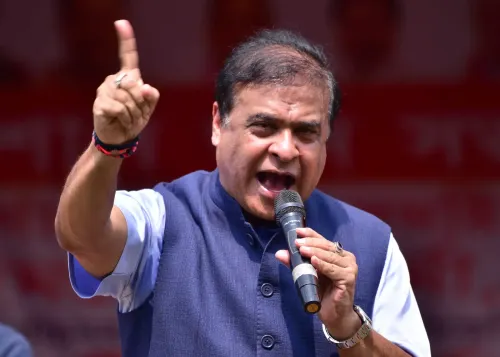
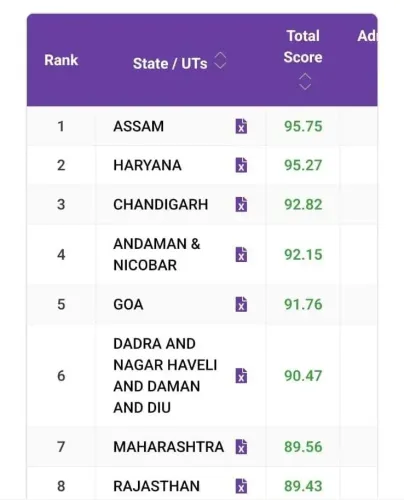
A pointed Diwali message — not for celebrants, but for criminal networks. Assam Chief Minister Himanta Biswa Sarma on Saturday, 7 November 2026, saluted the Assam Police for what he called consistent national benchmark-setting in adopting India's new criminal codes, issuing a sharp warning to the state's criminal syndicates dressed up in festive-season language.
The new codes Assam is enforcing
The post is rooted in a sweeping legislative shift. Parliament passed three new criminal laws in December 2023, and they came into force nationwide on 1 July 2024. The Bharatiya Nyaya Sanhita (BNS) replaced the colonial-era Indian Penal Code, while the Bharatiya Nagarik Suraksha Sanhita (BNSS) replaced the Code of Criminal Procedure — together representing the most significant overhaul of India's criminal justice architecture in over 150 years.
Implementation, however, has been uneven across states. It demands retraining of police personnel, overhauling case-filing systems, and re-orientating prosecutors. That operational grind is exactly what Sarma is applauding his force for navigating.
Assam Police's modernisation push under the new codes
Since July 2024, Assam Police has repeatedly featured in state government communications as a showcase for proactive law-enforcement. The Sarma administration has consistently framed policing as a governance priority, particularly in a state that borders Bangladesh, Bhutan, and Myanmar — an environment that makes organised crime and insurgent-linked syndicates an ongoing challenge.
Sarma's Diwali-season framing — 'here's the Diwali forecast for criminal syndicates' — is deliberate provocation: a signal that the festive period, when enforcement attention can slacken, will be treated as a heightened-alert window rather than a lull. It is governance as deterrence messaging.
BJP states and the new-code race
Sarma's praise lands within a wider competitive dynamic. Across BJP-governed states, early and strict adoption of the BNS and BNSS has become a point of political pride, with chief ministers publicly differentiating their administration's pace of reform from states still navigating the transition. For Assam — often in the spotlight for its border-security and illegal-immigration debates — a credible policing narrative carries extra political weight.
What makes Sarma's post notable is its specificity: it does not credit 'the government' generically but names the police force directly, a public acknowledgement rare enough to serve as both tribute and institutional pressure to maintain the standard.
With central-government reviews of new-code implementation expected in late 2026 and into 2027, Assam has planted its flag early — and loudly.
Point of View
Public praise for the police force reinforces an accountability culture while simultaneously raising the institutional stakes for the force itself. The 'criminal syndicates' framing is deliberate: in a border-state context, it speaks to organised crime, trafficking networks, and cross-border threats in a single phrase. Ahead of expected central reviews in 2026-27, Assam has signalled it intends to be the benchmark, not a laggard.
NationPress
7 Nov 2026
Frequently Asked Questions
What are the new criminal codes Assam Police is being praised for adopting?
The Bharatiya Nyaya Sanhita (BNS) and Bharatiya Nagarik Suraksha Sanhita (BNSS) — which replaced the Indian Penal Code and the Code of Criminal Procedure respectively — came into force across India on 1 July 2024 after Parliament passed them in December 2023 .
Why did Himanta Biswa Sarma mention Diwali in the context of criminal syndicates?
CM Sarma used the Diwali season as a pointed enforcement message, signalling that festive periods — when vigilance can drop — will instead see heightened policing activity against criminal networks in Assam.
How has Assam Police performed in adopting India's new criminal laws?
CM Sarma described Assam Police as 'consistently setting the national benchmark' in adopting the new criminal codes, though specific performance metrics and rankings have not been independently verified.
Which laws did the BNS and BNSS replace in India?
The Bharatiya Nyaya Sanhita replaced the Indian Penal Code (IPC) of 1860, and the Bharatiya Nagarik Suraksha Sanhita replaced the Code of Criminal Procedure (CrPC) of 1973, both enacted during British rule or in the early post-colonial period.
Is there a central government review of new criminal code implementation planned?
A central government review of state-level implementation of the BNS and BNSS is expected in late 2026 or 2027 , making early-mover states like Assam strategically positioned ahead of that assessment.