CM Bhupendra Patel pays tribute to Bipin Chandra Pal on birth anniversary
Synopsis
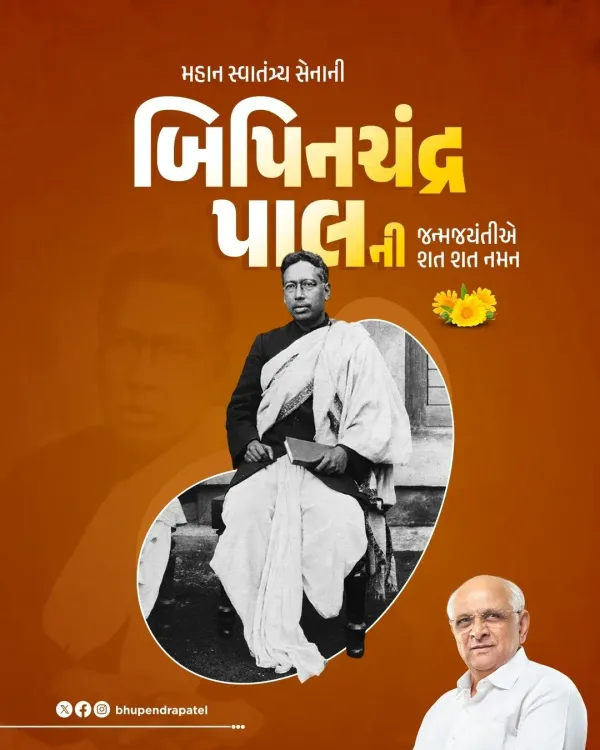
Gujarat Chief Minister Bhupendra Patel paid homage to freedom fighter Bipin Chandra Pal on his birth anniversary, honouring the Lal-Bal-Pal leader's contributions to Swadeshi, Swaraj, and social reform as an enduring inspiration for all generations committed to national service.
Key Takeaways
Gujarat CM Bhupendra Patel posted a tribute to Bipin Chandra Pal on his birth anniversary on November 7, 2026 .
Pal was part of the Lal-Bal-Pal trio alongside Bal Gangadhar Tilak and Lala Lajpat Rai , among the most influential voices of early Indian nationalism.
Patel described Pal as an 'eminent freedom fighter, eloquent orator, and fervent nationalist' who spread the spirit of Swadeshi and Swaraj .
Pal played a central role in the Swadeshi Movement sparked by the 1905 Partition of Bengal .
The tribute reflects a broader BJP practice of publicly commemorating pre-independence nationalist figures on key anniversaries.
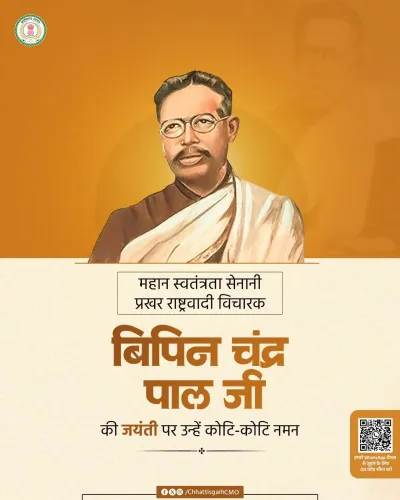
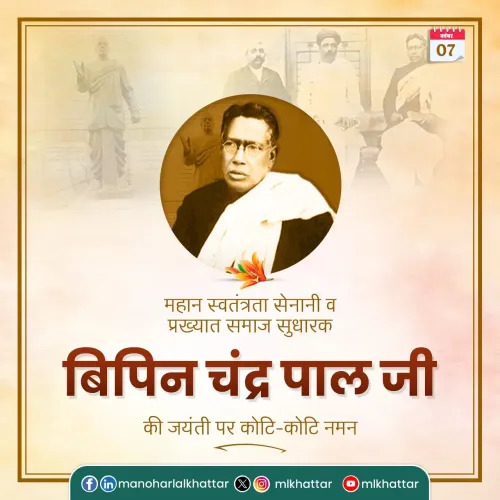
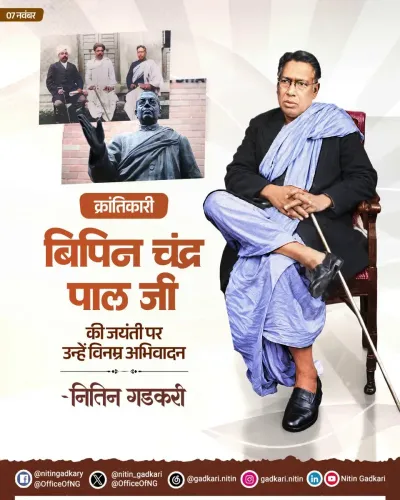
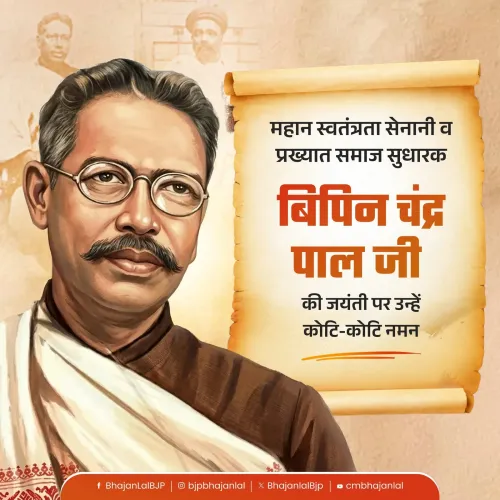
A freedom fighter who helped ignite an entire nation's imagination — Gujarat Chief Minister Bhupendra Patel on Saturday, November 7, 2026, offered tribute to Bipin Chandra Pal, the towering nationalist leader, on his birth anniversary, calling him a pillar of the legendary Lal-Bal-Pal trio and a voice that carried the spirit of Swadeshi and Swaraj to every corner of India.
In his post, written in Gujarati, CM Patel offered 'koti-koti vandan' — crores of salutations — to Pal, describing him as an 'eminent freedom fighter, an eloquent orator, and a fervent nationalist.' He added that 'his writings, ideas, and efforts toward social reform will forever inspire every generation that walks the path of national service.'
Who was Bipin Chandra Pal — and why the Lal-Bal-Pal trio still matters
Bipin Chandra Pal was one of the most consequential voices of India's early independence movement. Alongside Bal Gangadhar Tilak and Lala Lajpat Rai, he formed the Lal-Bal-Pal triumvirate — a radical nationalist bloc that pushed Indian political discourse beyond moderate petitioning toward assertive demands for self-rule. The trio's influence shaped the direction of the freedom struggle in the first decade of the twentieth century.
Pal was particularly associated with the Swadeshi Movement, which surged following the Partition of Bengal in 1905. He used his formidable oratory and his pen to spread the philosophy of economic self-reliance and political independence — Swadeshi and Swaraj — across a generation of Indians who had grown up under colonial rule. His social reform efforts added another dimension to his legacy, making him more than a political agitator.
BJP's pattern of honouring nationalist icons
CM Patel's tribute follows a pattern well established among BJP-led state governments: marking the birth anniversaries of pre-independence nationalist figures with public commemorations that underscore themes of Swadeshi, sacrifice, and national service. These gestures carry ideological resonance — the Swadeshi ethos, in particular, echoes through contemporary policy emphases on self-reliance and domestic enterprise.
For Gujarat, a state that traces its own political and cultural heritage through figures of the freedom movement, such tributes carry weight beyond ceremonial courtesy. They form part of a continuous public conversation about the values that underpinned India's independence struggle.
Pal's legacy — the idea that intellectual conviction and moral courage are as powerful as political organisation — remains a steady reference point for those who argue that the freedom movement was as much about civilisational awakening as it was about ending colonial rule. That message, CM Patel's tribute suggests, is still being passed forward.
Point of View
Intellectual, and rooted in cultural awakening rather than purely political agitation. Gujarat, with its own deep connections to the freedom movement, is a natural stage for such commemorations. These are not merely ceremonial posts; they are quiet ideological signalling that frames contemporary governance within a longer arc of nationalist thought.
NationPress
7 Nov 2026
Frequently Asked Questions
Who was Bipin Chandra Pal?
Bipin Chandra Pal was a prominent Indian freedom fighter, orator, and nationalist leader who formed part of the famous Lal-Bal-Pal trio alongside Bal Gangadhar Tilak and Lala Lajpat Rai. He was a leading voice of the Swadeshi Movement and advocated strongly for Swaraj — Indian self-rule.
What is the Lal-Bal-Pal trio?
The Lal-Bal-Pal trio refers to three radical nationalist leaders — Lala Lajpat Rai, Bal Gangadhar Tilak, and Bipin Chandra Pal — who dominated early-twentieth-century Indian politics and pushed the independence movement toward assertive demands for Swaraj and economic self-reliance through Swadeshi.
Why did CM Bhupendra Patel post about Bipin Chandra Pal?
Gujarat Chief Minister Bhupendra Patel posted a tribute to mark Bipin Chandra Pal's birth anniversary on November 7, 2026, honouring his legacy as a freedom fighter, orator, and social reformer who championed Swadeshi and Swaraj.
What was Bipin Chandra Pal's contribution to the Swadeshi Movement?
Bipin Chandra Pal was one of the principal propagators of the Swadeshi Movement, which gained momentum after the 1905 Partition of Bengal. He used his oratory and writings to spread the philosophy of economic self-reliance and political independence across India.
What does Swadeshi mean in the context of India's freedom struggle?
Swadeshi literally means 'of one's own country.' In the freedom struggle, it referred to the movement to boycott British goods and promote Indian-made products as a form of economic resistance and nationalist assertion, closely associated with leaders like Bipin Chandra Pal and Bal Gangadhar Tilak.