Ayodhya Deepotsav 2026: Yogi says every diya lights a potter's livelihood
Synopsis
UP CM Yogi Adityanath is framing Ayodhya's grand Deepotsav not just as a religious spectacle but as an economic engine for potters, farmers and small traders — positioning a cultural event as proof of inclusive governance ahead of the 10th edition on 7 November 2026.
Key Takeaways
UP CM Yogi Adityanath linked the Ayodhya Deepotsav to livelihood gains for potters, farmers, and small traders on 2 November 2026 .
The 10th edition of Deepotsav is scheduled in Ayodhya Dham with CM Yogi set to visit on 7 November .
Yogi credited the 'double-engine government' of the BJP at the Centre and in UP for connecting Ayodhya's cultural potential to local economic opportunity.
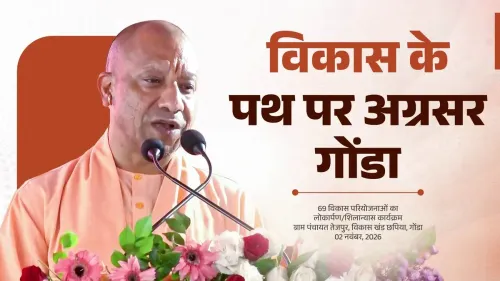
Addressing Gonda, Yogi contrasted the district's current development with its condition a decade ago, citing poor roads, insecurity, and unemployment.
He claimed Gonda , Balrampur , and Shravasti were once among India's most backward districts and attributed their transformation to state-led development.
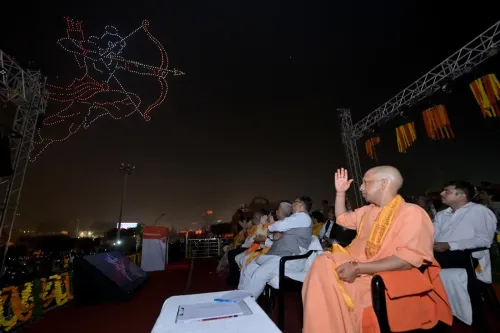
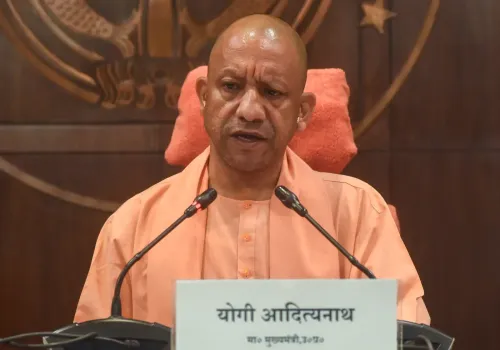
Uttar Pradesh Chief Minister Yogi Adityanath on Monday, 2 November 2026, underscored the economic impact of the grand Deepotsav celebrations in Ayodhya, asserting that every earthen lamp lit during the festival reflects the toil of potters, the harvest of farmers, and the daily sustenance of local families. The remarks came ahead of his scheduled visit to Ayodhya, with the 10th edition of Deepotsav set to be organised this year.
What Yogi Said on X
Ahead of his arrival in Ayodhya, Chief Minister Yogi Adityanath shared his thoughts on social media platform X, drawing a direct link between the festival's cultural grandeur and ground-level economic activity. 'The grand Deepotsav of Shri Ayodhya Dham is giving fresh momentum to the economy along with faith. Every diya lit here is bringing new light to the hard work of a potter, the produce of a farmer and the livelihood of a family,' he wrote.
He further argued that such an approach to leveraging Ayodhya's cultural potential had been absent in the past, saying that there had been 'a complete lack of vision to transform the strength of faith into new livelihood opportunities.' He credited what he called the 'double-engine government' — a reference to the Bharatiya Janata Party (BJP) being in power both at the Centre and in Uttar Pradesh — for addressing this gap.
Economy and Faith: The Central Claim
Under the guidance of Prime Minister Narendra Modi, Yogi said, the festival — illuminated by lakhs of diyas — was now generating employment and business opportunities for potters, daily-wage labourers, and small traders across the region. The framing is notable: it positions a religious celebration as an instrument of inclusive economic policy, a narrative the state government has actively built since the inauguration of the Ram Mandir in Ayodhya earlier.
Notably, Ayodhya's religious tourism economy has expanded sharply in recent years, with the UP government reporting significant growth in footfalls, hospitality infrastructure, and artisan income linked to the temple town's rising profile.
Remarks at Gonda: Development Linked to Deepotsav
Addressing a public gathering in Gonda district, Yogi Adityanath said he would formally visit Ayodhya on 7 November for the Deepotsav event. He used the occasion to contrast the region's current state with its condition roughly a decade ago, recalling that travelling from Gonda railway station to the Maa Pateshwari Shaktipeeth in Devi Patan once took him two-and-a-half to three hours due to poor road conditions.
'The roads here were full of potholes. There was an atmosphere of insecurity, development had come to a standstill, young people were unemployed and farmers were distressed. The safety of women and traders was at risk,' he said.
The Chief Minister also claimed that Gonda, Balrampur, and Shravasti were once counted among the most backward and least hygienic districts in the country, and attributed their transformation to the state government's development agenda.
Context: Deepotsav's Growing Scale
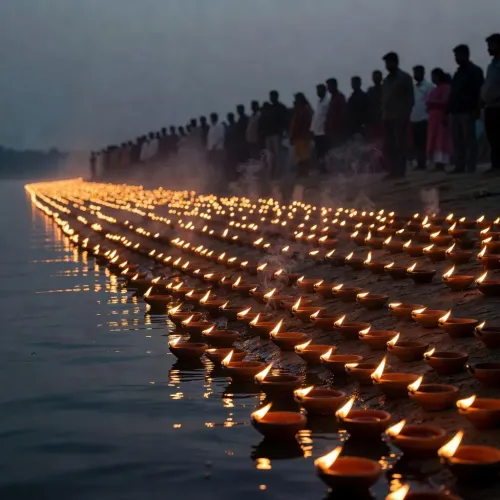
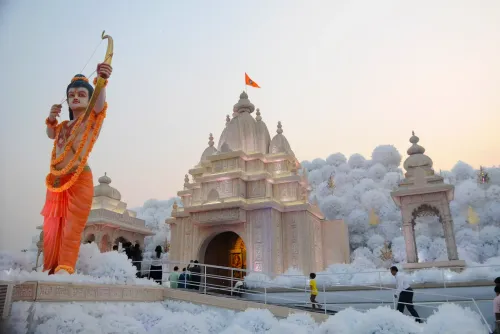
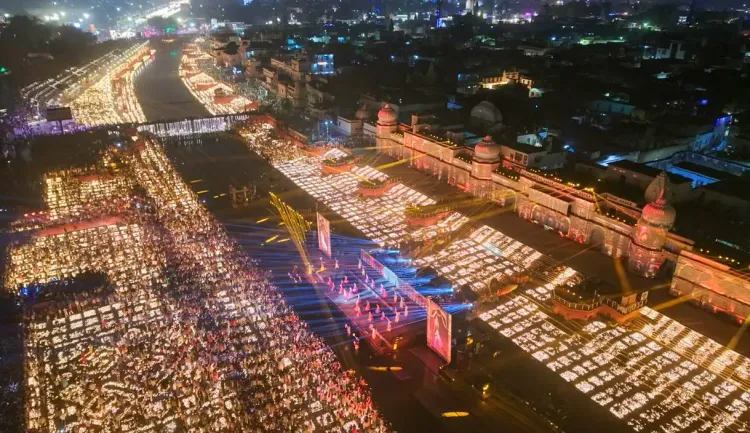
The Deepotsav in Ayodhya has grown into one of the largest diya-lighting events in the world, with each edition setting or attempting to break records for the number of earthen lamps lit simultaneously on the banks of the Saryu river. The 10th edition carries symbolic weight as it coincides with the post-consecration era of the Ram Mandir, amplifying both its religious significance and its commercial draw for local artisans and the broader tourism economy.
How the declared economic benefits are distributed among the most marginal producers — potters and small farmers — rather than larger intermediaries, remains a question analysts and civil society groups continue to raise.
Point of View
Or whether they remain assertion. Ayodhya's tourism boom is real, but value chains in handmade goods tend to concentrate gains at the aggregator level, not the kiln. The '10th edition' milestone gives the government a clean round-number story — but the 10th year is also a reasonable moment to demand a decade's worth of data on artisan income, not just diya counts.
NationPress
2 Nov 2026
Frequently Asked Questions
What is the Ayodhya Deepotsav and when is the 2026 edition?
The Deepotsav is an annual mass diya-lighting event held in Ayodhya on the occasion of Diwali, known for setting records in the number of earthen lamps lit on the banks of the Saryu river. The 10th edition is scheduled for 7 November 2026, with UP CM Yogi Adityanath set to attend.
What economic claims did Yogi Adityanath make about Deepotsav?
CM Yogi claimed that every diya lit at the Deepotsav generates livelihood opportunities for potters, farmers, and local families, and that the festival is giving fresh momentum to the regional economy. He attributed this outcome to the BJP's 'double-engine government' at both the Centre and in Uttar Pradesh.
What did Yogi Adityanath say about Gonda district's development?
Addressing a gathering in Gonda, Yogi said the district — along with Balrampur and Shravasti — was once among India's most backward, with poor roads, unemployment, and insecurity. He claimed the state government's development initiatives had transformed the region over the past decade.
Why is the 10th edition of Deepotsav significant?
The 10th edition marks a decade of the Deepotsav tradition and falls in the post-consecration period of the Ram Mandir, giving it added religious and symbolic significance. The UP government has used successive editions to highlight both Ayodhya's cultural revival and its growing economic footprint.
Who organises the Deepotsav in Ayodhya?
The Deepotsav is organised by the Uttar Pradesh state government, with CM Yogi Adityanath playing a central role in its planning and public messaging. The event is held annually around Diwali in Ayodhya Dham.