Giriraj Singh: Ayodhya women power solar mills via SHGs
Synopsis
Union Textiles Minister Giriraj Singh spotlighted rural women in Ayodhya running solar flour mills and oil machines through self-help groups under NRLM, framing clean energy as the engine of grassroots economic empowerment in the village economy.
Key Takeaways
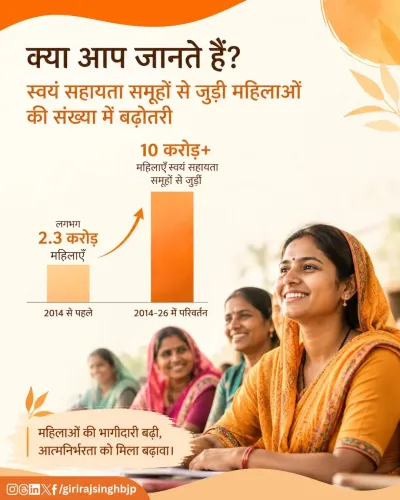
Union Textiles Minister Giriraj Singh posted on 2 November 2026 highlighting solar-powered enterprises run by rural women in Ayodhya .
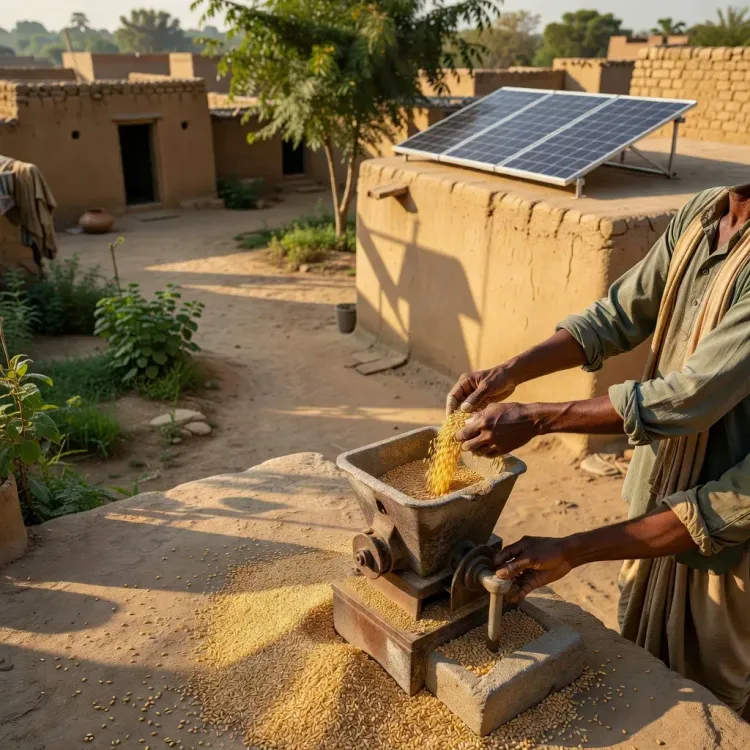
Women linked to self-help groups are operating solar atta chakki (flour mills) and oil extraction machines, generating rising incomes.
The model draws on two converging national programmes: the National Rural Livelihoods Mission (2011) and the National Solar Mission (2010) .
Solar-powered micro-enterprises reduce dependence on the grid and diesel, lowering operating costs for women-run collectives.
Policy attention is now on whether state governments can replicate and scale this Ayodhya model across rural India.
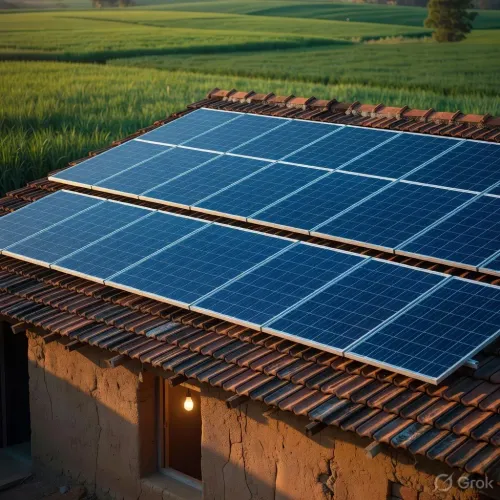
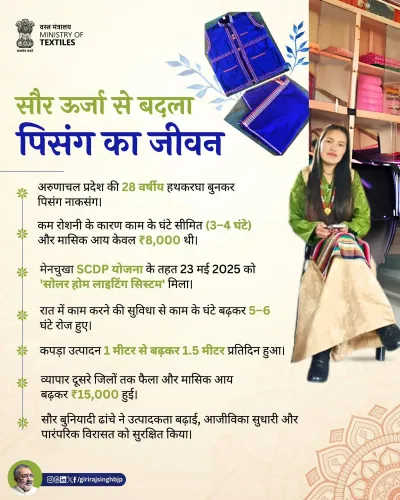
In the villages around Ayodhya, Uttar Pradesh, rural women are not waiting for opportunity — they are grinding it out, literally. Union Textiles Minister Giriraj Singh highlighted on Monday, 2 November 2026, how women linked to self-help groups are running solar-powered flour mills and oil extraction machines, turning clean energy into personal income.
In his post, Minister Singh wrote: 'अयोध्या में सौर ऊर्जा के माध्यम से ग्रामीण महिलाएं आत्मनिर्भरता की नई मिसाल पेश कर रही हैं' — 'In Ayodhya, rural women are setting a new example of self-reliance through solar energy.' He described women operating solar atta chakki (flour mills) and oil machines through self-help group networks, with rising incomes as the direct result. 'This clean energy,' he wrote, 'is laying the foundation of an empowered rural India.'
Where SHGs meet the sun: the model at work
The architecture behind this moment is two decades in the making. The National Rural Livelihoods Mission (NRLM), launched in 2011, built a sprawling network of women's self-help groups across India's villages — community collectives designed to pool savings, access credit, and launch micro-enterprises. Pair that scaffolding with the National Solar Mission (launched 2010), which pushed decentralised solar deployment into rural areas, and the result is a model where women's groups can own and operate solar-driven productive assets without dependence on the grid.
Solar flour mills and oil presses are among the most practical applications: they cut operating costs compared to diesel or grid-dependent machines, generate reliable service income from fellow villagers, and keep the enterprise running even where electricity supply is erratic. The machine pays for itself; the women keep the margin.
Ayodhya as a showcase — and what it signals
Ayodhya has attracted intense infrastructure investment since 2023, and its villages are increasingly in the spotlight as the city's profile rises. The minister's post frames the solar-SHG convergence there as a replicable blueprint — clean energy access and women's economic agency as a single, integrated outcome rather than two separate government objectives.
The broader pattern is consistent: multiple central ministries, from New and Renewable Energy to Rural Development to Women and Child Development, have pushed for exactly this kind of convergence. The policy question going forward is whether state governments scale these micro-enterprise clusters beyond showcase districts, and whether inter-ministerial coordination between the Ministry of New and Renewable Energy and rural development bodies translates ambition into measurable income data at scale.
Rural women running solar machines is not a symbol. It is a supply chain — and in Ayodhya, it appears to be open for business.
Point of View
Women-first lens ahead of what are likely active state-level political cycles in Uttar Pradesh. By anchoring the story in Ayodhya specifically, the minister also draws on the city's heightened symbolic and infrastructural status post-2023. The deeper policy tension is whether these solar-SHG convergence models remain visible-but-limited pilot clusters, or whether inter-ministerial coordination produces a verifiable, scaled income-uplift programme with data to match the narrative. Textiles Minister Singh's stake in the story also signals ambitions to associate his portfolio's 'women in weaving' constituency with a broader rural-empowerment identity — a useful platform bridge as the BJP works to consolidate women voters in the Hindi belt.
NationPress
2 Nov 2026
Frequently Asked Questions
What are rural women in Ayodhya doing with solar energy?
Women linked to self-help groups in Ayodhya are operating solar-powered flour mills and oil extraction machines, earning income by providing milling services to fellow villagers using clean energy instead of diesel or grid power.
What is the National Rural Livelihoods Mission (NRLM)?
The NRLM , launched in 2011 , is a central government programme that organises rural women into self-help groups, enabling them to pool savings, access credit, and run income-generating micro-enterprises.
How does the National Solar Mission support rural women?
The National Solar Mission , launched in 2010 , promotes decentralised solar applications in rural areas, including productive-use equipment like flour mills and oil presses that self-help groups can own and operate independently of the electricity grid.
Why did Giriraj Singh, the Textiles Minister, post about solar energy?
While Singh's primary portfolio is Textiles, rural women's empowerment and 'Atma Nirbhar Bharat' are cross-cutting BJP policy themes. His post frames solar-powered self-help group enterprises as an example of grassroots self-reliance aligned with those national narratives.
Can the solar atta chakki model in Ayodhya be replicated elsewhere in India?
Policy observers note the model — combining NRLM self-help group networks with decentralised solar equipment — is replicable wherever both programme infrastructure exists. The key challenge is scaling through inter-ministerial coordination between rural development and renewable energy bodies at the state level.