Giriraj Singh highlights Arunachal weaver's solar-powered rise
Synopsis
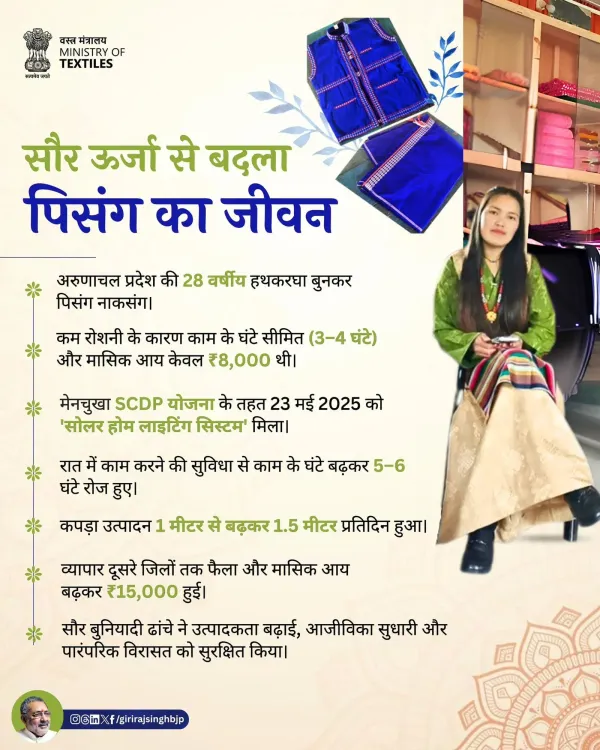
Union Textiles Minister Giriraj Singh on 9 July 2026 highlighted 28-year-old Arunachal Pradesh weaver Pisang Naksang, crediting solar energy access with boosting her working hours, production, and income — framing her as a symbol of Atmanirbhar Bharat and India's handloom heritage.
Key Takeaways
Union Textiles Minister Giriraj Singh posted on 9 July 2026 spotlighting Pisang Naksang , a 28-year-old handloom weaver from Arunachal Pradesh .
Solar energy access is credited with extending her working hours and increasing both production and income.
The minister framed her story within the Atmanirbhar Bharat and Vocal for Local policy frameworks.
Arunachal Pradesh has significant tribal handloom traditions, with women forming the majority of the weaving workforce.
The post signals continued Textiles Ministry focus on renewable energy integration in northeastern handloom clusters.
Further rollout of solar equipment and exhibition participation for Arunachal weavers is anticipated as a follow-through step.
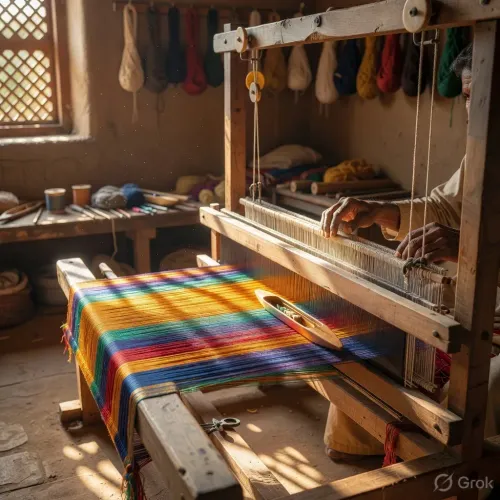
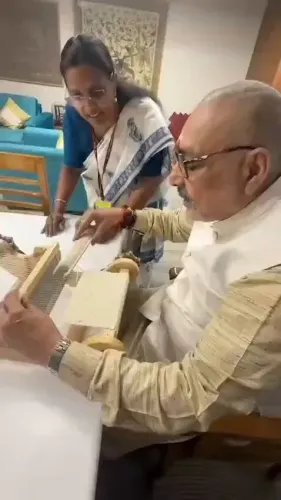
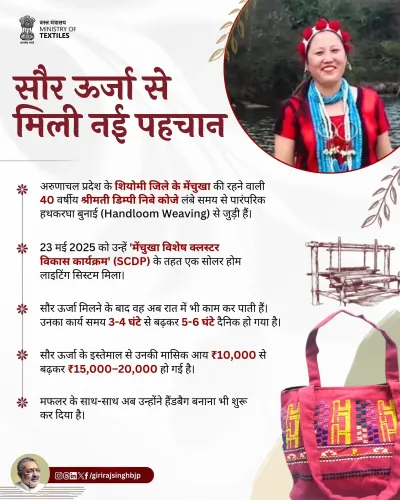
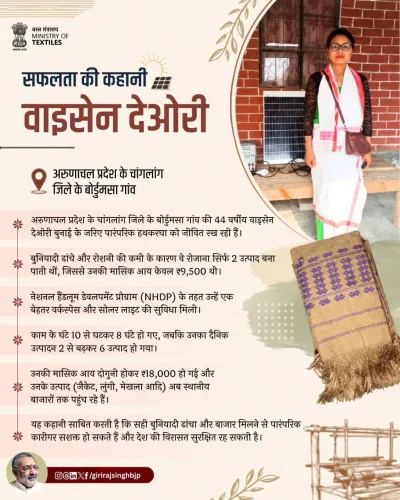
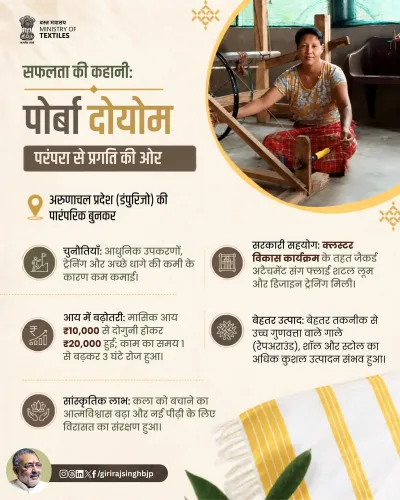
Union Textiles Minister Giriraj Singh on Thursday, 9 July 2026 spotlighted the story of Pisang Naksang, a 28-year-old handloom weaver from Arunachal Pradesh, citing her as an example of how targeted support can transform traditional artisanal skills into sustainable livelihoods.
In a post on X, the minister wrote — translated from Hindi — that Pisang Naksang's story 'shows how skill takes new flight when the right support is given.' He noted that access to solar energy had extended her working hours, increased her production and income, and helped connect her traditional weaving to new markets. The original Hindi reads: 'सशक्त बुनकर, समृद्ध भारत' — 'Empowered weavers, prosperous India.'
Context
Arunachal Pradesh is home to dozens of tribal communities, many of which maintain centuries-old handloom traditions using indigenous patterns and fibres. Weavers in the state, particularly women, have historically been constrained by limited electricity access in remote areas, restricting productive hours to daylight and slowing output.
The introduction of solar-powered lighting and equipment in such clusters has been part of a broader government push to remove infrastructure bottlenecks for rural and tribal artisans without requiring grid connectivity.
Policy Backdrop
The minister's post is anchored in two overlapping policy frameworks. The Atmanirbhar Bharat Abhiyan, launched in May 2020, explicitly positioned handloom artisans and local craft clusters as pillars of economic self-reliance. The Vocal for Local campaign, which Giriraj Singh invoked directly with the hashtag #VocalForLocal, has been a recurring communication theme aimed at channelling consumer demand toward domestically produced goods and artisanal textiles.
Successive central governments have integrated renewable energy interventions — solar lanterns, solar looms, and off-grid power supply — into handloom clusters across northeastern and central India to extend productive hours and lift incomes in areas where grid power remains unreliable.
Stakeholders and Impact
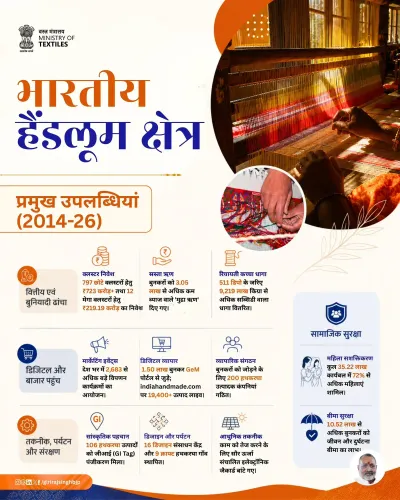
Handloom weaving is one of India's largest unorganised-sector employers, with a significant share of the workforce concentrated in northeastern states including Arunachal Pradesh, Assam, and Manipur. Women constitute the majority of weavers in these regions, making interventions in this sector directly relevant to female economic empowerment.
By foregrounding an individual beneficiary story, the minister's communication follows a pattern common to the current government's outreach — using named, relatable figures to personalise the reach of policy programmes and reinforce the #IndiaCrafts and #Handloom branding that the Textiles Ministry has promoted in domestic and export markets.
What's Next
The spotlight on Pisang Naksang and Arunachal Pradesh's weaving community is likely to precede or accompany further state-level rollout of solar equipment in handloom pockets across the northeast. Participation of Arunachal weavers in national handloom exhibitions or export facilitation events would be a natural follow-through, consistent with the ministry's stated goal of linking indigenous artisans to wider domestic and international markets.
As the Textiles Ministry continues to align its messaging with Atmanirbhar Bharat goals, the emphasis on individual success stories signals an intent to build public and market confidence in Indian handloom as both a heritage product and a commercially viable export category.
Point of View
And spotlighting a young tribal woman aligns with the dual messaging of women's empowerment and indigenous heritage preservation. The Vocal for Local framing keeps the post tethered to a consumer-facing campaign that the Textiles Ministry has used to build domestic market demand for handloom goods. Taken together, this is less a welfare announcement than a soft-power signal that the ministry intends to sustain its northeastern handloom push through the current parliamentary term.
NationPress
8 Oct 2026
Frequently Asked Questions
Who is Pisang Naksang?
Pisang Naksang is a 28-year-old handloom weaver from Arunachal Pradesh whom Union Textiles Minister Giriraj Singh highlighted on 9 July 2026 as an example of how solar energy access can improve an artisan's productivity and income.
What is the Vocal for Local campaign in India?
Vocal for Local is a government-backed campaign encouraging Indian consumers to prefer domestically produced goods, including handloom textiles and artisanal crafts, as part of the broader Atmanirbhar Bharat self-reliance initiative launched in May 2020.
How does solar energy help handloom weavers in northeast India?
Solar lighting and off-grid power supply extend working hours beyond daylight in remote areas without reliable grid connectivity, allowing weavers to increase daily output and earnings without depending on conventional electricity infrastructure.
What is Atmanirbhar Bharat and how does it relate to handloom?
Atmanirbhar Bharat Abhiyan, launched in May 2020, is India's self-reliance initiative that explicitly includes support for handloom artisans, positioning local craft production as central to employment and economic resilience goals.
What is the Textiles Ministry doing for Arunachal Pradesh weavers?
The Union Textiles Ministry, led by Giriraj Singh, has been promoting solar energy integration in handloom clusters and linking northeastern weavers to wider domestic and export markets under Vocal for Local and Atmanirbhar Bharat frameworks.