Giriraj Singh Chairs Raipur Meet to Empower Weavers
Synopsis
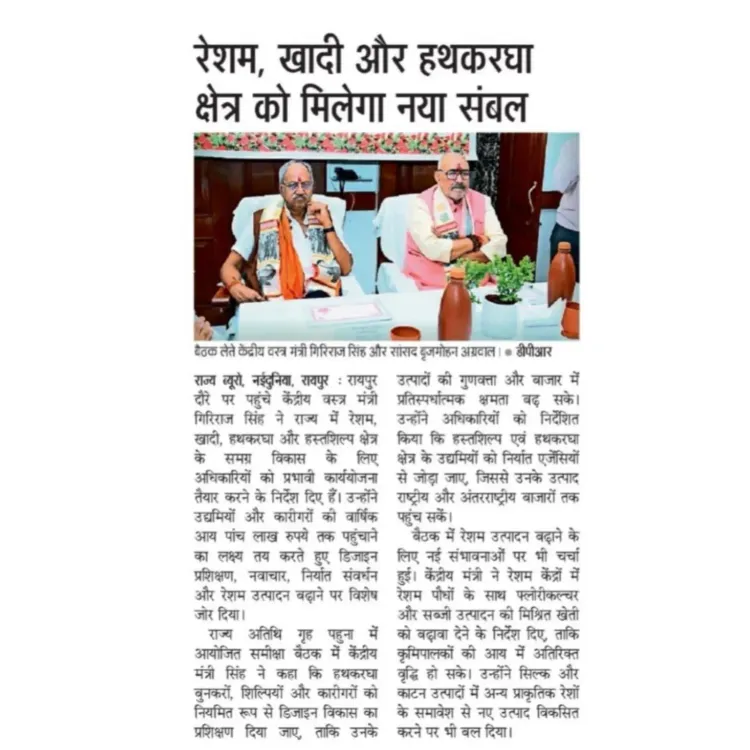
Union Textiles Minister Giriraj Singh chaired a review meeting in Raipur on 14 June 2026 to empower Chhattisgarh's traditional weavers and artisans, reaffirming the government's commitment to raising incomes and giving the handloom and handicraft sector fresh momentum under the Vocal for Local campaign.
Key Takeaways
Union Textiles Minister Giriraj Singh held a review meeting in Raipur, Chhattisgarh on 14 June 2026 focused on traditional weavers and artisans.
The minister called the meeting 'extremely meaningful' and pledged to raise the living standards and income of skilled weavers and artisans.
The meeting aligns with the Vocal for Local campaign under the Atmanirbhar Bharat package launched in 2020 .
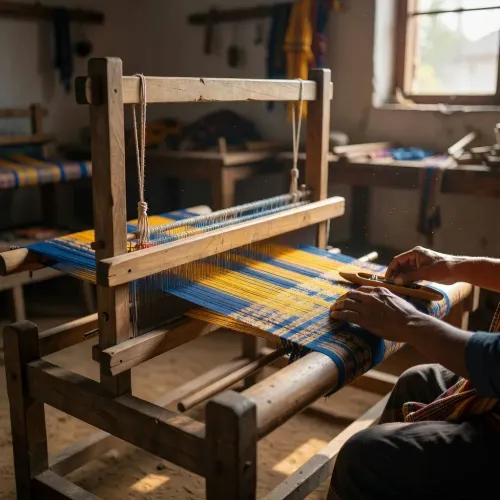
Chhattisgarh has established handloom and handicraft traditions, particularly among rural and tribal communities.
The review continues a pattern of central government engagement with state-level textile clusters to link welfare schemes with local production.
Follow-up focus will be on state-specific allocations and rollout of handloom welfare components in Chhattisgarh .
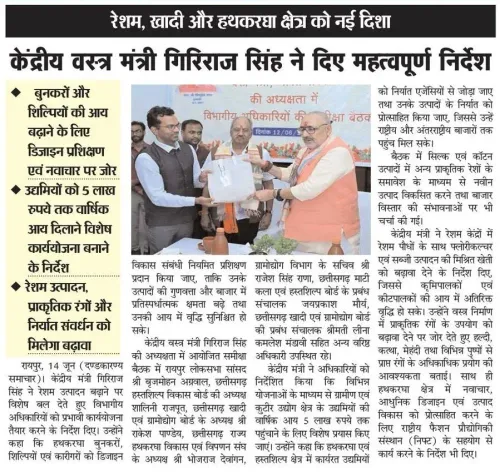
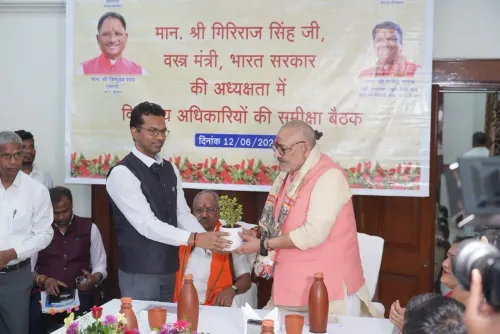
Union Textiles Minister Giriraj Singh chaired a review meeting in Raipur, Chhattisgarh, on Sunday, 14 June 2026, focused on empowering traditional weavers and artisans and raising their income levels. The minister described the meeting as 'extremely meaningful' and reaffirmed the government's commitment to giving the handloom and handicraft sector fresh momentum.
Context
Posting on X, Giriraj Singh wrote: 'पारंपरिक बुनकरों और शिल्पकारों को सशक्त बनाने के उद्देश्य से रायपुर में आयोजित समीक्षा बैठक अत्यंत सार्थक रही' — 'The review meeting held in Raipur with the aim of empowering traditional weavers and artisans was extremely meaningful.' He added that the government is 'fully committed to raising the living standards of our skilled weavers and artisans, increasing their income, and giving the entire sector a new momentum.'
The meeting was held in Raipur, the capital of Chhattisgarh, a state with deep handloom and handicraft traditions rooted in its rural and tribal communities. The minister's visit signals continued central government engagement with state-level textile clusters.
Policy Backdrop
The Raipur meeting sits within the broader Vocal for Local campaign, a pillar of the Atmanirbhar Bharat package announced in 2020, which was designed to boost domestic production in sectors such as khadi, handloom, and handicrafts. The campaign has sought to integrate regional craft traditions into national value chains while sustaining rural employment.
Chhattisgarh's handloom base — spanning tribal weaving clusters and traditional craft communities — makes it a natural focus for such reviews. Periodic ministerial-level meetings of this kind are used to assess how central welfare schemes are reaching artisan households at the ground level.
Stakeholders and Impact
The primary beneficiaries of the policy push are traditional weavers and handicraft artisans in Chhattisgarh, many of whom belong to rural and tribal communities for whom handloom income is a primary livelihood source. Raising earnings in this segment has long been a stated priority of the Textiles Ministry.
A sustained focus on income enhancement and market linkage for these communities could strengthen the state's handloom output and improve the economic resilience of artisan households. The minister's use of hashtags #VocalForLocal, #Khadi, #Handloom, and #Handicraft underscores the alignment of this meeting with national campaign messaging.
What's Next
Attention will now turn to the rollout of handloom welfare components in Chhattisgarh and whether the Raipur review translates into state-specific allocations or scheme expansions in the next Textiles Ministry cycle. Any follow-up announcements on income-support mechanisms or market-access programmes for local artisans will be closely watched by the sector.
As the government deepens its engagement with regional textile clusters, the Chhattisgarh model could serve as a template for similar review exercises in other states with established handloom traditions.
Point of View
Reinforcing the Centre's Vocal for Local narrative ahead of what is likely a busy policy calendar for the Textiles Ministry. By personally chairing a review in Chhattisgarh — a state with a significant tribal and rural weaver base — the minister signals that the ministry is moving beyond Delhi-centric policymaking toward on-ground accountability. The emphasis on income enhancement rather than just scheme rollout reflects a subtle shift in messaging: outcomes over announcements. Whether this translates into measurable wage gains for artisan households will determine the political and economic credibility of the exercise.
NationPress
15 Sept 2026
Frequently Asked Questions
Why did Giriraj Singh visit Raipur in June 2026?
Union Textiles Minister Giriraj Singh visited Raipur on 14 June 2026 to chair a review meeting aimed at empowering traditional weavers and artisans in Chhattisgarh and assessing how central textile schemes are benefiting them.
What is the Vocal for Local campaign in textiles?
Vocal for Local is a national campaign launched under the Atmanirbhar Bharat package in 2020 to promote indigenous products, including khadi, handloom, and handicrafts, by boosting domestic production and integrating regional crafts into national value chains.
What is Chhattisgarh's role in India's handloom sector?
Chhattisgarh has established handloom and handicraft traditions rooted in its rural and tribal communities, making it a significant state for central government schemes aimed at sustaining rural employment in the textiles sector.
What did Giriraj Singh say about weavers and artisans?
Giriraj Singh said the government is fully committed to raising the living standards of skilled weavers and artisans, increasing their income, and giving the handloom and handicraft sector new momentum.
What will happen after the Raipur textiles review meeting?
The focus will shift to whether the Raipur review leads to state-specific allocations or expanded welfare schemes for Chhattisgarh's weavers and artisans in the next Textiles Ministry cycle.